

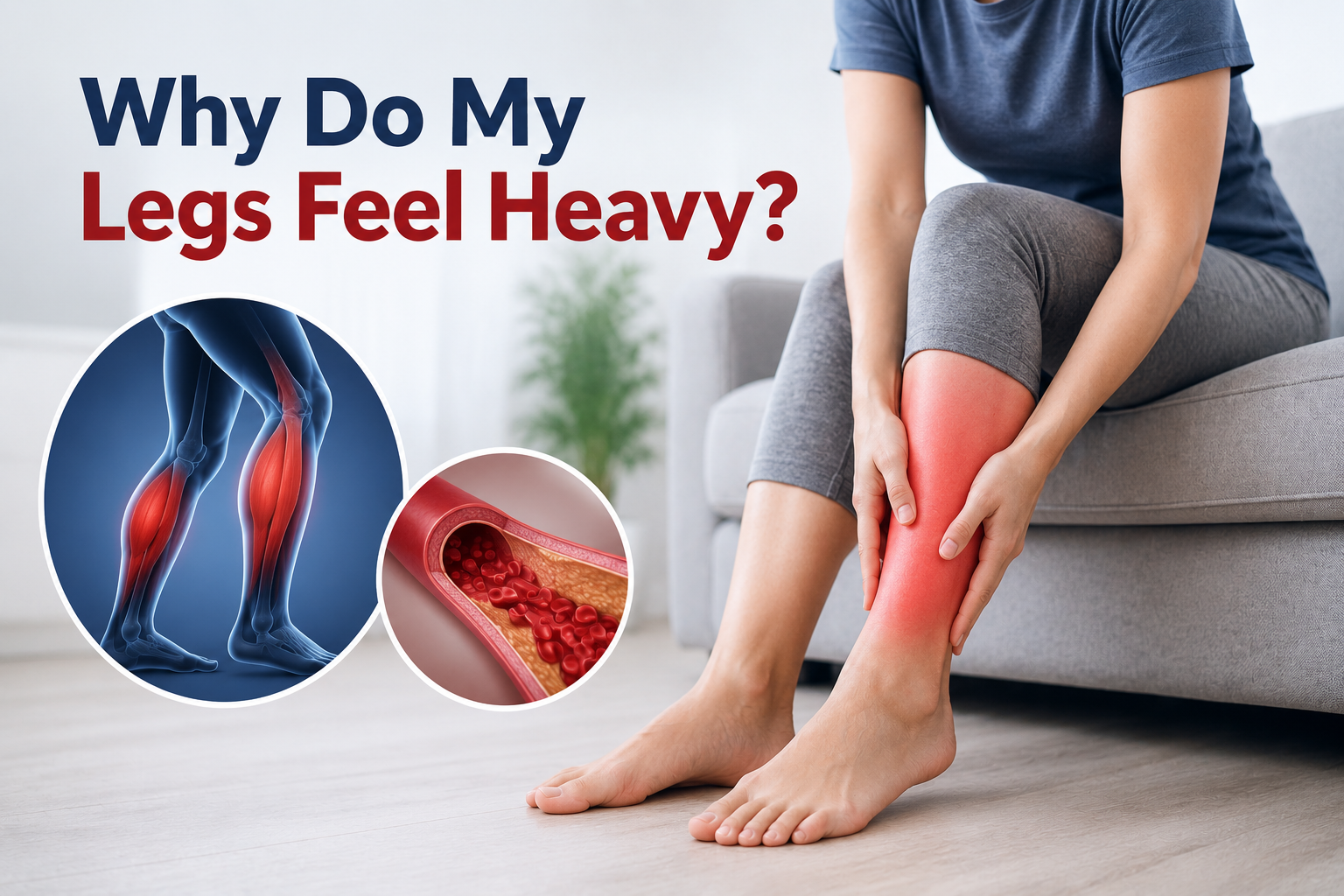
Heavy legs happen when blood struggles to flow properly back to the heart, causing a tired, weighted, or sluggish feeling in the lower limbs. This sensation is commonly linked to poor circulation, prolonged standing, dehydration, or muscle fatigue. It can also signal underlying issues like varicose veins, peripheral artery disease, or fluid retention.
Hormonal changes during pregnancy and certain medications may worsen the feeling as well. In most cases, heavy legs improve with rest, movement, and hydration. However, if swelling, pain, or skin discoloration accompanies it, a medical evaluation is strongly recommended.
Many people experience heavy legs at some point, especially after long work hours, travel, or intense physical activity. While it is often harmless and temporary, understanding the root cause helps in choosing the right remedy. This guide breaks down the common triggers, medical conditions, lifestyle factors, and practical solutions to help you feel lighter and move more comfortably.
Common Causes of Heavy Legs
Heavy legs are usually triggered by everyday habits rather than serious illness. Circulation problems, posture, hydration levels, and muscle strain are the most frequent culprits behind this uncomfortable sensation.
Poor Blood Circulation / Venous Insufficiency
When veins struggle to push blood upward against gravity, it pools in the lower legs and creates heaviness. This condition, called venous insufficiency, often worsens by evening after a full day of activity. Wearing compression socks and elevating the legs can noticeably ease the discomfort.
Prolonged Standing or Sitting
Staying in one position for hours reduces blood flow to the leg muscles, causing stiffness and fatigue. Jobs requiring long standing or desk work with minimal movement are common contributors. Taking short walking breaks every hour helps maintain healthy circulation.
Dehydration and Electrolyte Imbalance
Low fluid levels thicken the blood, making it harder for veins to circulate efficiently. A lack of potassium, magnesium, or sodium can also cause muscle heaviness and cramping. Drinking adequate water throughout the day supports smoother blood flow and muscle function.
Muscle Fatigue and Overexertion
Intense workouts or unfamiliar physical activity can leave leg muscles feeling drained and weighted. This happens due to lactic acid buildup and micro-tears in muscle fibers. Rest, stretching, and light massage typically resolve this within a day or two.


Fluid Retention (Edema)
Excess fluid trapped in leg tissues adds extra weight and pressure, making movement feel harder. This can stem from high salt intake, hormonal shifts, or prolonged inactivity. Reducing sodium and staying active helps the body release retained fluid naturally.
Medical Conditions Linked to Heavy Legs
Sometimes heavy legs point to an underlying health condition rather than a temporary lifestyle factor. Recognizing these patterns early can prevent complications and guide appropriate treatment.
Peripheral Artery Disease (PAD)
PAD occurs when narrowed arteries restrict blood flow to the legs, especially during walking or exercise. It often causes cramping, heaviness, and pain that eases with rest. This condition requires medical attention since it raises cardiovascular risk over time.
Deep Vein Thrombosis (DVT) — Warning Signs
DVT is a blood clot forming in a deep leg vein, and it can cause sudden heaviness, swelling, and warmth. Unlike normal fatigue, DVT symptoms usually affect one leg and worsen quickly. This is a medical emergency requiring immediate evaluation to prevent complications.
Varicose Veins
Enlarged, twisted veins near the skin’s surface disrupt normal blood flow and create a heavy, aching sensation. They are more common in people who stand for long periods or have a family history of vein issues. Compression therapy and leg elevation often provide relief.
Diabetes and Nerve Damage
High blood sugar levels can damage nerves and blood vessels in the legs over time, a condition known as diabetic neuropathy. This often leads to heaviness, tingling, or numbness alongside poor circulation. Managing blood sugar levels helps slow nerve-related complications.
Heart and Kidney Issues
When the heart or kidneys cannot regulate fluid properly, excess fluid accumulates in the legs, causing heaviness and swelling. This is often accompanied by fatigue, shortness of breath, or reduced urination. Persistent symptoms like these should be evaluated by a doctor promptly.
Lifestyle and Hormonal Triggers
Beyond medical conditions, everyday lifestyle choices and natural body changes significantly influence how heavy your legs feel. These factors are often reversible with simple adjustments.
Pregnancy
Increased blood volume and hormonal changes during pregnancy place extra pressure on leg veins. This commonly results in heaviness, swelling, and mild discomfort, especially in later trimesters. Resting with elevated legs and wearing supportive footwear can ease these symptoms.
Obesity and Sedentary Lifestyle
Carrying excess body weight increases pressure on leg veins and muscles, making movement feel more strenuous. A lack of regular physical activity further weakens circulation and muscle tone over time. Gradual weight management and daily movement improve overall leg comfort.
Hot Weather and Heat Sensitivity
High temperatures cause blood vessels to expand, which can lead to fluid pooling in the legs. This often results in a heavy, swollen feeling during summer months or after hot showers. Staying cool and hydrated helps counteract this seasonal effect.
Medication Side Effects
Certain medications, including blood pressure drugs, hormonal treatments, and steroids, may cause fluid retention as a side effect. This can manifest as heaviness or mild swelling in the legs. Discussing symptoms with a prescribing doctor can help identify alternatives if needed.
When to See a Doctor
While occasional heaviness is usually harmless, certain warning signs indicate a need for professional evaluation. Ignoring persistent symptoms can allow underlying conditions to progress unnoticed.
Red Flag Symptoms
Sudden swelling, one-sided leg pain, skin discoloration, or warmth around the affected area should never be ignored. These symptoms may indicate a blood clot or vascular issue requiring urgent care. Seeking prompt medical attention can prevent serious complications.
Diagnostic Tests Doctors May Recommend
Doctors may use ultrasound imaging to check for clots or vein abnormalities in the legs. Blood tests can assess kidney function, blood sugar, and clotting factors. In some cases, an ankle-brachial index test evaluates blood flow to detect arterial disease.
Home Remedies and Prevention Tips
Simple daily habits can significantly reduce the frequency and severity of heavy legs. Consistency with these practices often brings noticeable long-term improvement.
Leg Elevation and Compression
Raising your legs above heart level for 15–20 minutes helps blood flow back toward the heart more easily. Compression stockings apply gentle pressure that supports vein function throughout the day. Both methods are simple, affordable ways to ease heaviness.
Exercise and Stretching
Regular walking, swimming, or cycling strengthens calf muscles that assist in pumping blood upward. Stretching before and after activity reduces stiffness and improves flexibility. Even short movement breaks during a sedentary day make a noticeable difference.
Hydration and Diet Adjustments
Drinking enough water keeps blood at a healthy consistency for efficient circulation. Reducing salty and processed foods helps prevent fluid retention in the legs. Including potassium-rich foods like bananas and leafy greens supports muscle and vein health.
| Cause Category | Common Trigger | Simple Relief Method |
| Circulation | Venous insufficiency | Compression socks, elevation |
| Lifestyle | Prolonged sitting/standing | Movement breaks every hour |
| Hydration | Low fluid/electrolytes | Increase water intake |
| Medical | PAD, DVT, varicose veins | Doctor evaluation |
| Hormonal | Pregnancy, medications | Rest, supportive footwear |
FAQs
Why do my legs feel heavy after standing all day?
Standing for long periods reduces blood flow efficiency, causing it to pool in the lower legs. This creates a tired, weighted sensation by evening. Elevating your legs and stretching can help relieve it quickly.
Can dehydration cause heavy legs?
Yes, insufficient water intake thickens blood and disrupts electrolyte balance needed for muscle function. This often results in heaviness and cramping. Drinking water consistently throughout the day helps prevent this.
Is heavy legs a sign of heart problems?
In some cases, yes, especially if heaviness is paired with swelling, fatigue, or shortness of breath. This may indicate the heart isn’t pumping blood efficiently. A medical checkup is recommended if these symptoms persist.
When should I worry about heavy legs?
Seek medical attention if heaviness comes with sudden swelling, one-sided pain, or skin discoloration. These could signal a blood clot or vascular issue. Early diagnosis prevents complications from worsening.
Conclusion
Heavy legs are often caused by everyday factors like prolonged sitting, dehydration, or muscle fatigue, but they can sometimes point to circulation or vascular conditions.
Paying attention to accompanying symptoms like swelling, pain, or discoloration helps determine whether home care is enough or medical evaluation is needed.
Simple habits such as staying hydrated, moving regularly, and elevating your legs can make a meaningful difference in how light and energized your legs feel each day.
RELATED POSTS
Does Everyone Have Wisdom Teeth? Here’s What the Research Shows
Why Are My Eyes Burning? Causes, Symptoms & Relief
Can You Have 2 Health Insurances?
How to Tell If You Have a Broken Bone in Your Hand?
Signs of a Sinus Infection: Early Symptoms, Severe Signs & When to See a Doctor