Understanding what does ovulation pain feel like helps women recognize their body’s fertility signals and tell the difference between a normal monthly occurrence and something needing medical attention.
Many notice this pain for the first time and worry something is wrong, when it is actually one of the most common, harmless parts of the menstrual cycle. This article explains the sensation in detail, when it happens, what symptoms come with it, and how to tell it apart from pelvic pain that needs a doctor’s attention.
Understanding Ovulation Pain
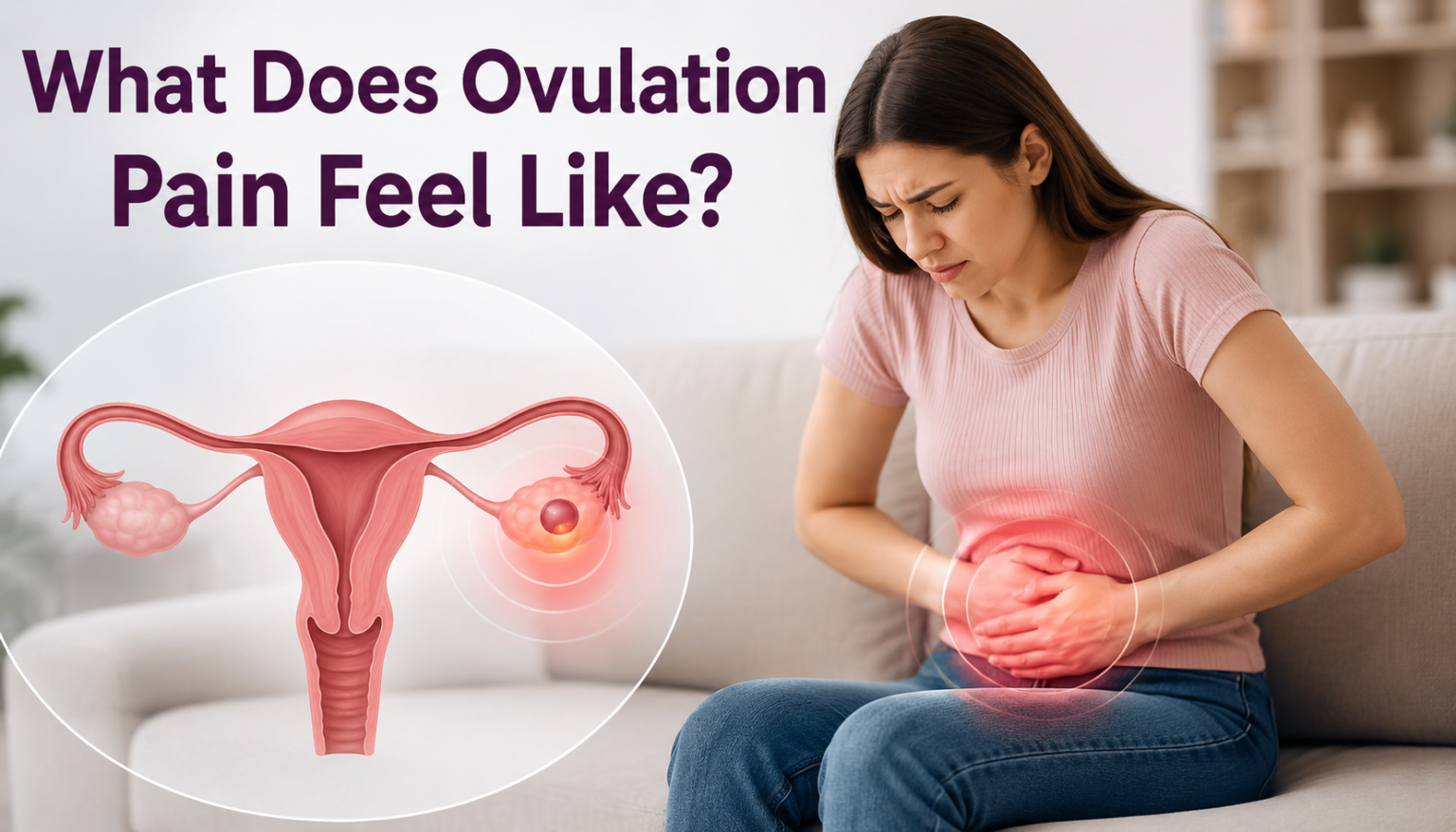
Ovulation pain has a medical name, mittelschmerz, which comes from German words meaning “middle” and “pain.” It refers specifically to the discomfort some women feel around the time an egg is released from the ovary. Not every woman experiences it, and among those who do, the intensity and frequency can vary quite a bit from cycle to cycle.
What Is Mittelschmerz
Mittelschmerz describes the one-sided pelvic discomfort linked to ovulation, and it is considered a normal physiological event rather than a medical condition. Doctors use this term specifically to separate it from other causes of pelvic pain. It is estimated that roughly one in five women notice this sensation regularly, while others may feel it occasionally or not at all.
Why It Happens
Each month, a follicle on the ovary grows to house a maturing egg, and when ovulation occurs, that follicle ruptures to release the egg into the fallopian tube. This rupture can cause mild irritation to the surrounding tissue, and the follicular fluid released during the process may also irritate the lining of the pelvis. Both of these factors are thought to contribute to the cramping or twinging sensation many women describe.
How Common It Is
Ovulation pain is far more common than many realize, even though it is discussed less often than period cramps. Some women feel it every cycle like clockwork, while others only notice it during certain months or life stages. Hormonal shifts, stress, and hydration can all influence whether it is noticeable in a given cycle.
What Ovulation Pain Feels Like — Detailed Sensations
Describing what does ovulation pain feel like is not always straightforward, because the sensation differs from person to person and even from cycle to cycle in the same individual. Some women describe it as a fleeting twinge, while others compare it to a dull, persistent ache.
Type of Sensation
The pain can present as a sharp, sudden stab that catches a woman off guard, or as a duller, more constant cramping feeling similar to mild period pain. Some describe a pulling or tugging sensation deep in the pelvis, while others notice a pressure-like feeling that builds gradually. There is no single “correct” way it should feel, since nerve sensitivity and follicle size can differ each month.



Location and Side
Because ovulation alternates between the left and right ovary in most cycles, the pain typically shows up on just one side of the lower abdomen at a time. It sits below the belly button and slightly to the left or right, roughly where the ovary is located. If a woman tracks which side hurts each month, she may notice a pattern of alternating sides, although this is not guaranteed since ovulation does not always switch sides in perfect rotation.
Intensity Range
For most women, the discomfort stays mild and barely disrupts daily life, feeling more like a passing twinge than true pain. In other cases, it can become moderate enough to require rest or a change in position, and a smaller number of women experience it intensely enough that it briefly interferes with work or exercise. Severe, debilitating pain is less typical and usually warrants a closer look from a healthcare provider.
Timing and Duration
Knowing when ovulation pain tends to occur makes it much easier to connect the sensation to the correct point in the cycle rather than mistaking it for something else.
When in the Cycle It Occurs
Ovulation generally happens about fourteen days before the next period starts, which places it roughly midway through a typical twenty-eight-day cycle. For women with shorter or longer cycles, this timing shifts accordingly, so tracking cycle length is the most reliable way to anticipate when the discomfort might appear.
How Long It Typically Lasts
In most cases, the sensation passes within a few minutes to a few hours, disappearing almost as quickly as it arrived. Occasionally, a milder ache can persist for a full day or two, especially if the follicular fluid takes longer to be reabsorbed by the body. Pain that stretches beyond two or three days is less typical of ovulation alone.
Pattern Across Months
Some women find that their ovulation pain follows a fairly predictable rhythm, appearing at the same point in the cycle and lasting a similar amount of time each month. Others notice more variation, with certain cycles producing no noticeable pain at all and others bringing a stronger sensation. Tracking these patterns over several months can reveal a woman’s personal baseline, making it easier to spot anything unusual later on.
Associated Symptoms
Ovulation pain rarely shows up completely on its own. It is often accompanied by a handful of other physical signs that occur around the same point in the cycle.
Spotting or Discharge Changes
Light spotting or a small amount of pink or brown discharge sometimes appears alongside the pain, caused by the minor hormonal shift and follicle rupture. Cervical mucus also tends to become clearer, stretchier, and more slippery around ovulation, which is one of the most reliable natural fertility signs.
Bloating and Breast Tenderness
Many women notice mild bloating in the lower abdomen during ovulation, similar to but usually less intense than premenstrual bloating. Breast tenderness or sensitivity can also appear around this time, driven by the rise in estrogen and the approaching increase in progesterone.
Mood or Energy Shifts
Hormonal fluctuations around ovulation can bring a temporary lift in mood and energy for some women, while others notice mild irritability or fatigue instead. These shifts are generally short-lived and settle down within a day or so as hormone levels stabilize after the egg is released.
Ovulation Pain vs. Other Causes of Pelvic Pain
Because ovulation pain shares some features with other pelvic conditions, it helps to compare the patterns side by side rather than relying on a single symptom to tell them apart.
Ovulation Pain vs. Ovarian Cyst
A simple ovarian cyst often causes pain similar to mittelschmerz, but the discomfort from a cyst tends to last longer and can become more intense, especially if the cyst grows large or ruptures. Persistent pain that continues well past the expected ovulation window is more suggestive of a cyst than a normal follicle rupture.
Ovulation Pain vs. Appendicitis or UTI
Appendicitis usually causes pain that starts near the belly button and moves to the lower right abdomen, often accompanied by fever, nausea, and worsening pain over hours rather than the brief twinge typical of ovulation. A urinary tract infection tends to bring burning during urination, urgency, and lower abdominal discomfort that does not follow the mid-cycle timing pattern.
Ovulation Pain vs. Endometriosis
Endometriosis-related pain is often more severe, occurs at multiple points in the cycle rather than just mid-cycle, and may worsen over time or with intercourse. Unlike the brief, self-limiting nature of ovulation pain, endometriosis pain frequently requires ongoing medical management.
| Condition | Pain Pattern | Typical Duration | Red Flags |
| Ovulation pain (mittelschmerz) | Sharp or dull, one-sided, mid-cycle | Minutes to 1–2 days | None if mild and predictable |
| Ovarian cyst | Similar but often more intense | Days to weeks | Sudden severe pain, swelling |
| Appendicitis | Starts central, shifts to lower right | Worsens over hours | Fever, vomiting, rigid abdomen |
| UTI | Lower abdomen, burning urination | Until treated | Fever, blood in urine |
| Endometriosis | Recurs at multiple cycle points | Ongoing, chronic | Pain with intercourse, heavy bleeding |
When to See a Doctor
While ovulation pain is usually harmless, certain warning signs suggest it is time to get checked rather than waiting it out.
Warning Signs
Pain that is severe, sudden, and unrelenting is not typical of normal ovulation and deserves prompt medical attention. Fever, heavy vaginal bleeding, dizziness, or pain that lasts several days beyond the expected ovulation window are all signals that something else may be going on.
Diagnostic Tests Doctors May Use
A doctor evaluating persistent or unusual pelvic pain may order a pelvic ultrasound to look for cysts or other structural issues, along with blood tests to check for infection or hormonal imbalance. In some cases, a pelvic exam is done first to help narrow down the likely cause before further testing.
When Pain Suggests a Fertility-Related Issue
If ovulation pain is consistently severe, occurs alongside irregular cycles, or is paired with difficulty conceiving, it may be worth discussing fertility-focused testing with a healthcare provider. Conditions such as endometriosis or ovarian cysts can sometimes affect fertility and are easier to manage when identified early.
Managing and Relieving Ovulation Pain
For most women, mild ovulation pain does not require medical treatment, but a few simple strategies can make the day more comfortable.
At-Home Remedies
Applying a heating pad to the lower abdomen can relax the muscles and ease cramping, while resting in a comfortable position often helps the sensation pass more quickly. Over-the-counter pain relievers such as ibuprofen can be used for stronger twinges, and staying hydrated may also reduce general pelvic discomfort during this phase of the cycle.
Medical Options
For women who experience ovulation pain every month and find it disruptive, hormonal birth control can prevent ovulation altogether, which in turn eliminates the associated discomfort. This option is usually discussed with a doctor after ruling out other causes of pelvic pain.
Tracking Tools for Pattern Awareness
Keeping a simple cycle journal or using a period-tracking app can help identify exactly when ovulation pain tends to occur each month. Recording the side, intensity, and duration of the pain over a few cycles builds a personal pattern that makes it easier to notice if something changes.
FAQs
Is ovulation pain normal every month?
Yes, for many women it is a normal, recurring part of the cycle, though not everyone experiences it every single month.
Can ovulation pain mean you’re pregnant?
Ovulation pain itself happens before pregnancy is possible, though some women mistake early pregnancy cramping for a similar sensation later in the cycle.
Does ovulation pain confirm ovulation occurred?
It is a helpful sign but not a guaranteed confirmation, since ovulation predictor kits or ultrasound tracking offer more reliable confirmation.
Can ovulation pain happen without ovulation?
Occasionally, similar pelvic twinges can occur without an actual egg release, often linked to follicle activity that does not fully complete ovulation.
Conclusion
Ovulation pain is a common, usually harmless sensation that shows up midway through the menstrual cycle as a sharp or dull ache on one side of the lower abdomen.
Recognizing what does ovulation pain feel like helps women distinguish it from more serious conditions and manage it with simple at-home care when needed.
Persistent, severe, or unusual pain should always be checked by a doctor to rule out other causes.
RELATED ARTICLES
Can You Get Arthritis in Your Neck? Symptoms, Causes & Treatment
Why Is My Stomach Bigger After Hernia Surgery? Causes, Recovery, and When to Worry
How to Fix Knock Knees: Causes, Treatment, Prevention Guide
How Does the Digestive System Work With the Circulatory System?
What Is Commonly Misdiagnosed as Pink Eye? Conditions to Know