The digestive and circulatory systems never work alone inside the human body. Food enters through the mouth, but it becomes useful only after the digestive system breaks it into tiny nutrient particles. Once broken down, these nutrients need a transport system to reach every cell, and that is exactly where the circulatory system steps in.
Understanding how does the digestive system work with the circulatory system helps explain why a person feels weak when they skip meals or why poor blood flow affects nutrient delivery. This connection is one of the most important teamwork examples inside the human body, keeping every organ alive and functioning properly.
Introduction to the Digestive and Circulatory Partnership
The human body depends on organ systems that constantly cooperate rather than work in isolation, and digestion combined with circulation is a perfect example of this teamwork. Food alone cannot power the body until it is broken down and carried to the cells that need it.
Why the Body Needs Multiple Systems Working Together
No single organ system can complete a full task independently, because each one is designed to perform a specific job that supports the next stage of a larger process. The digestive system extracts nutrients, but it has no way of moving them to distant organs like the brain or muscles. This is why the circulatory system becomes necessary, acting as the delivery network that carries everything the digestive system prepares.
Overview of the Digestive System’s Role
The digestive system’s main responsibility is breaking down large food particles into smaller molecules that the body can actually use. It involves organs such as the stomach, small intestine, and liver, each contributing enzymes or acids that dismantle proteins, carbohydrates, and fats. Without this breakdown stage, nutrients would remain too large to enter the bloodstream at all.
Overview of the Circulatory System’s Role
The circulatory system consists of the heart, blood vessels, and blood, functioning as a continuous transport highway throughout the body. Once nutrients are ready, this system picks them up and distributes them to tissues, organs, and cells that require energy. It also carries away waste products that the body no longer needs.
The Big Picture: From Food to Fuel for Cells
Food starts as a solid substance and ends up as usable energy inside a cell, and this transformation only happens because digestion and circulation work in sequence. First digestion prepares the raw material, then circulation delivers it, and finally the cell converts it into usable energy. This entire chain answers the core question of how does the digestive system work with the circulatory system to keep the body alive.
Understanding the Digestive System
The digestive system is a long tube-like pathway supported by several organs that each perform a unique function during food processing. Every organ contributes something specific, whether it is mechanical crushing or chemical breakdown.



Main Organs Involved in Digestion
The digestive tract includes the mouth, esophagus, stomach, small intestine, and large intestine, supported further by the liver, pancreas, and gallbladder. Each organ has a specialized role, such as the stomach churning food or the pancreas releasing digestive enzymes. Together, these organs form a coordinated system rather than isolated parts.
Mechanical Digestion Explained
Mechanical digestion refers to the physical breakdown of food through chewing, swallowing, and the churning motion of the stomach. This process increases the surface area of food particles, making chemical digestion far more effective afterward. Without mechanical breakdown, enzymes would struggle to interact with large food chunks.
Chemical Digestion Explained
Chemical digestion uses enzymes, stomach acid, and bile to break food down at a molecular level. Saliva starts this process in the mouth, stomach acid continues it, and pancreatic enzymes finish breaking down complex molecules in the small intestine. This step converts food into simple units the body can absorb.
Understanding the Circulatory System
The circulatory system acts as the body’s internal transport network, moving blood continuously through a closed loop of vessels. It ensures that every organ receives what it needs while removing what it does not.
Main Components of the Circulatory System
The circulatory system is built around the heart, arteries, veins, and capillaries, with blood serving as the transport medium. The heart pumps blood outward through arteries, capillaries allow exchange at the tissue level, and veins return blood back to the heart. This closed-loop structure keeps circulation efficient and continuous.
How Blood Flows Through the Body
Blood flow begins at the heart, moves through arteries toward tissues, passes through capillaries for nutrient exchange, then returns via veins. This cycle repeats constantly, ensuring a steady nutrient and oxygen supply. Any disruption in this flow directly affects how well nutrients reach the body’s cells.
Composition of Blood
Blood is made up of plasma, red blood cells, white blood cells, and platelets, each serving a different purpose. Plasma carries nutrients, hormones, and waste products in liquid form, while red blood cells transport oxygen. This composition allows blood to serve as both a transport and defense system.
Functions of Circulation Beyond Transport
Circulation does more than move nutrients, since it also regulates body temperature and supports immune responses through white blood cells. It maintains a stable internal environment by adjusting blood flow according to the body’s needs. These added functions make circulation essential for overall survival, not just nutrient delivery.
Where the Two Systems Meet: Absorption
Absorption is the exact point where digestion ends and circulation begins, making it the most important link between the two systems.
Structure of the Small Intestine
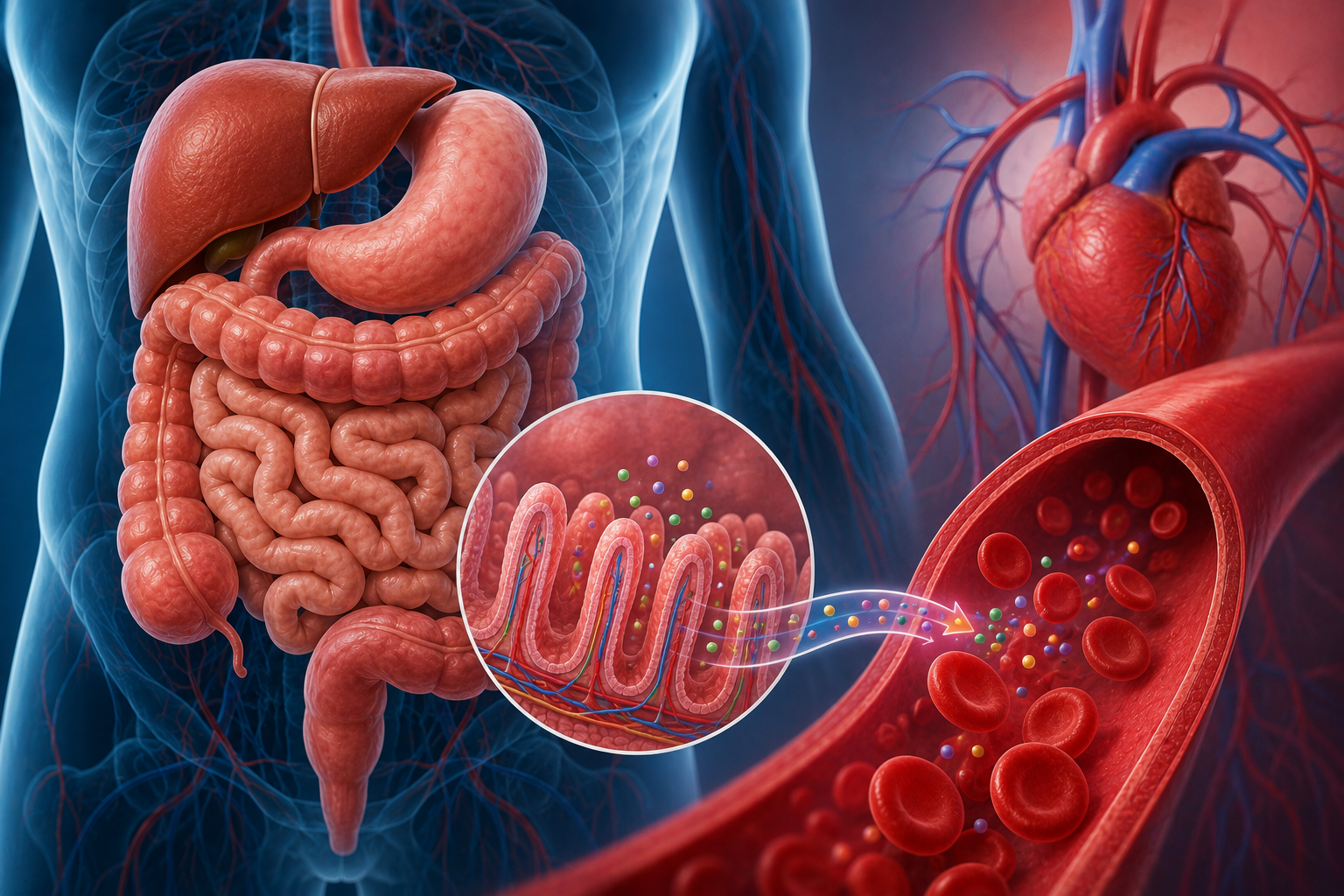
The small intestine is lined with finger-like projections called villi, and each villus contains even smaller structures called microvilli. This design dramatically increases surface area, allowing maximum nutrient absorption. Blood capillaries sit close to this lining, ready to receive nutrients as soon as they cross the intestinal wall.
How Nutrients Cross Into the Bloodstream
Nutrients pass through the intestinal lining and enter tiny capillaries embedded within the villi. This transfer happens through specialized transport mechanisms designed for glucose, amino acids, and other small molecules. Once inside these capillaries, nutrients officially become part of the circulatory system.
Blood Absorption Versus Lymphatic Absorption for Fats
Most nutrients enter the blood directly, but fats follow a slightly different route through the lymphatic system before joining circulation. Fatty acids are packaged into structures that first enter lymphatic vessels rather than blood capillaries. Eventually, these lymphatic vessels drain into the bloodstream near the neck region.
Capillary Networks in the Intestinal Wall
The intestinal wall contains a dense network of capillaries specifically positioned to absorb nutrients efficiently. This close arrangement minimizes the distance nutrients must travel before entering circulation. Such structural efficiency is a major reason digestion and circulation work so smoothly together.
The Nutrient Highway: Hepatic Portal System
Before nutrients reach the rest of the body, they take a special detour through the liver, making this system a crucial checkpoint.
Why Blood Goes to the Liver First
Blood is routed to the liver first so that harmful substances or excess nutrients can be filtered before reaching the rest of the body. This protective step prevents toxins or imbalanced nutrient levels from overwhelming other organs. The liver essentially acts as a quality control checkpoint.
Liver’s Role in Filtering, Storing, and Processing Nutrients
The liver filters toxins, stores excess glucose, and processes nutrients into forms the body can use later. It converts certain nutrients into proteins or energy reserves depending on the body’s current needs. This processing stage ensures a balanced and steady nutrient supply.
Glucose Storage as Glycogen
When glucose levels are higher than immediately needed, the liver converts excess glucose into glycogen for storage. This stored glycogen can later be converted back into glucose during periods of low energy intake. This mechanism helps maintain stable blood sugar levels throughout the day.
Distribution to the Body
Once nutrients pass through the liver, the heart takes over the responsibility of distributing them throughout the entire body.
How the Heart Pumps Nutrient-Rich Blood
The heart pumps nutrient-rich blood outward through powerful contractions, pushing it into the arterial system. This continuous pumping action ensures a steady and uninterrupted nutrient supply. Any weakness in heart function can directly reduce nutrient delivery efficiency.
Arteries Carrying Nutrients to Tissues and Organs
Arteries branch out extensively, carrying nutrient-filled blood toward specific tissues and organs based on their needs. Vital organs such as the brain and heart itself receive a rich blood supply due to their high energy demands. This branching network ensures nutrients reach even the smallest tissues.
Capillary Exchange at the Cellular Level
At the capillary level, nutrients finally exit the bloodstream and enter individual cells through diffusion. This exchange also allows waste products from cells to enter the blood for removal. Capillaries are extremely thin, making this exchange process fast and efficient.
The Return Journey: Waste Removal
After nutrients are used, the body must remove leftover waste products, and circulation plays a major role in this process too.
Carbon Dioxide Transport to the Lungs
Cells produce carbon dioxide as a byproduct of energy production, and blood carries this gas back to the lungs for removal. This exchange happens continuously alongside nutrient delivery. Efficient gas transport keeps the body’s internal environment balanced.
Metabolic Waste Transport to the Kidneys
Metabolic waste products generated during nutrient use are filtered out through the kidneys with the help of blood circulation. The kidneys remove these waste substances and expel them through urine. This filtering process prevents toxin buildup within the bloodstream.
Undigested Waste Elimination via the Large Intestine
Not everything consumed gets absorbed, and undigested material moves into the large intestine for elimination. This waste never enters the bloodstream and is expelled separately from metabolic waste. This distinction highlights those two different waste removal pathways working within the body.
Hormonal and Nervous Connections
Beyond direct nutrient transport, hormones and nerves also influence how digestion and circulation coordinate with each other.
Hormones That Link Digestion and Circulation
Hormones such as insulin and glucagon regulate how nutrients move between blood and body tissues. Insulin helps cells absorb glucose from the bloodstream, while glucagon signals the liver to release stored glucose. These hormones ensure nutrient levels remain balanced at all times.
Blood Sugar Regulation
Blood sugar regulation depends heavily on communication between the pancreas, liver, and circulatory system. When blood sugar rises after eating, insulin lowers it by encouraging cellular absorption of glucose. This regulation prevents dangerous spikes or drops in energy availability.
What Happens When Something Goes Wrong
When either system malfunctions, the effects often spread beyond just digestion or circulation alone.
Poor Nutrient Absorption and Its Effects on Circulation
When the intestines fail to absorb nutrients properly, blood becomes deficient in essential elements needed for energy and repair. This deficiency can lead to fatigue, weakness, and slower healing throughout the body. Poor absorption ultimately weakens the entire circulatory delivery system.
High Cholesterol and Fat Digestion Issues Affecting Blood Vessels
Excess fat absorption can lead to high cholesterol levels, which may damage blood vessel walls over time. This damage restricts blood flow and increases strain on the heart. Such issues clearly show how digestive imbalances directly harm circulatory health.
Diabetes as an Example of Digestive-Circulatory Imbalance
Diabetes disrupts the natural balance between digestion and circulation, particularly regarding glucose regulation. When insulin function is impaired, blood sugar levels remain unstable, affecting multiple organs over time. This condition demonstrates how deeply connected these two systems truly are.
Frequently Asked Questions
How does the digestive system work with the circulatory system? The digestive system breaks food into nutrients, and the circulatory system absorbs and transports these nutrients to every cell in the body.
Why does blood go to the liver before the rest of the body? Blood passes through the liver first so nutrients can be filtered, processed, and balanced before reaching other organs.
What role do capillaries play in digestion? Capillaries in the intestinal wall absorb nutrients directly from digested food and carry them into the bloodstream.
How does poor digestion affect circulation? Poor digestion leads to nutrient deficiencies in the blood, weakening the circulatory system’s ability to fuel cells properly.
Conclusion
The digestive and circulatory systems form one of the body’s most essential partnerships, working together from the moment food enters the mouth until waste is finally removed.
Digestion prepares nutrients, while circulation delivers them and carries away what the body no longer needs. This connection keeps every organ functioning properly and highlights why both systems must remain healthy together.
Related Posts
How to Tell If You Have a Broken Bone in Your Hand?
How Long Until a Tooth Infection Kills You? The Real Timeline
Can Eye Dryness Cause Blurred Vision? Causes & Relief
What Causes Fluid on the Knee? Symptoms,& Treatment Option
Does Lack of Sleep Cause Headaches? Causes, Symptoms, and Effective Relief