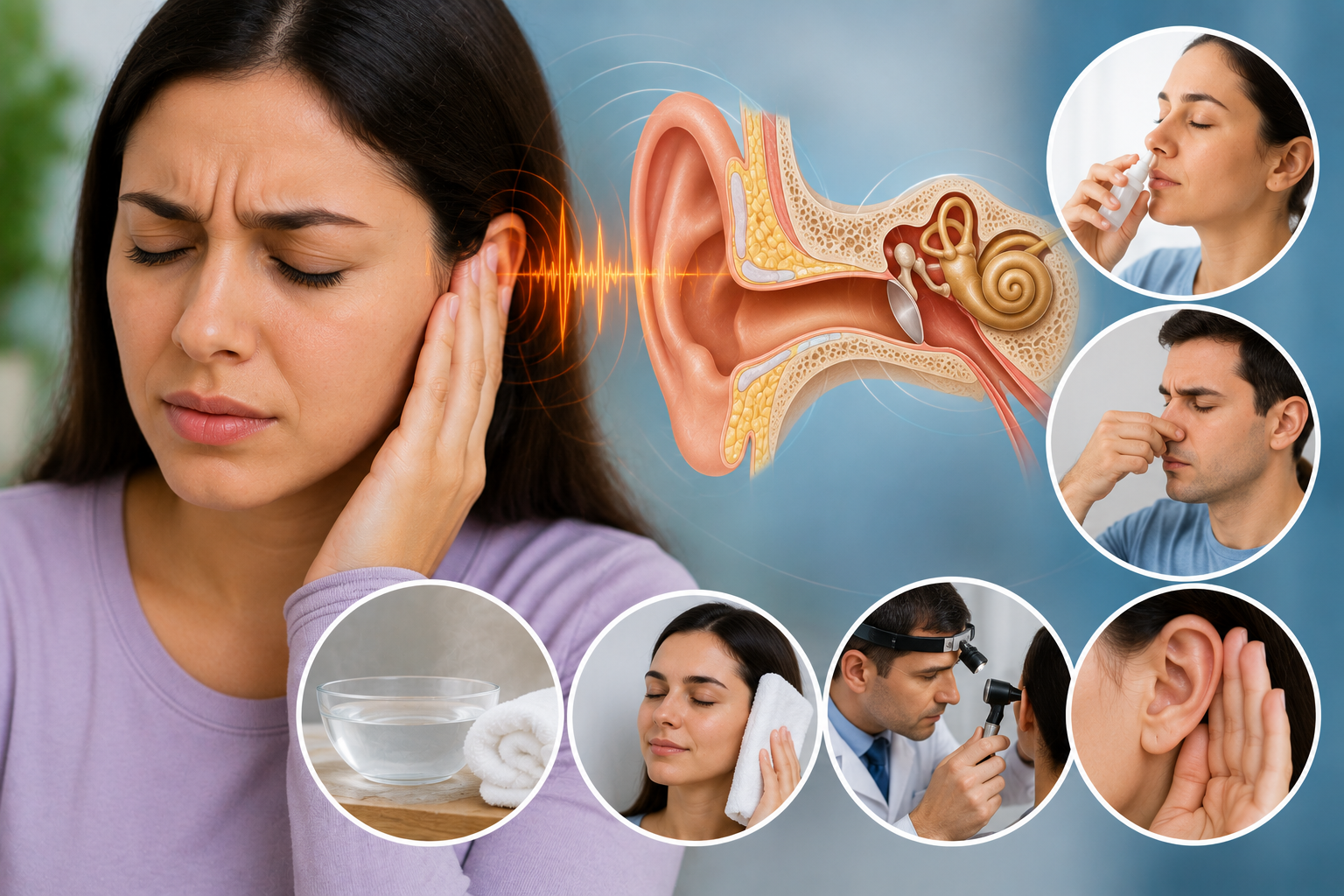
Learning how to get rid of crackling sound in ear starts with understanding why it happens in the first place. That faint crackling, popping, or clicking noise every time you swallow, yawn, or chew can be distracting enough to interrupt sleep, conversations, and focus at work. This guide walks through the real causes behind ear crackling, nine practical fixes you can try today, and the warning signs that mean it’s time to call a doctor.
Most cases trace back to the eustachian tube, the narrow passage that balances pressure between your middle ear and throat. You’ll also learn how earwax buildup, allergies, and colds contribute, plus when a hypothetical timeline shows what recovery typically looks like.
| Key Takeaways• Eustachian tube dysfunction causes most ear crackling, and it usually clears up within one to two weeks as colds or allergies resolve.• Earwax buildup is a separate, common trigger and often responds to over-the-counter softening drops within days.• Simple jaw and swallowing exercises can reopen a blocked eustachian tube without medication in many mild cases.• Persistent crackling with pain, sudden hearing loss, or dizziness needs prompt evaluation by an ENT specialist.• Steroid nasal sprays and decongestants are the most common first-line medical treatments when home care doesn’t help. |
What Causes Crackling Sound in Ear?
The most common cause is eustachian tube dysfunction (ETD), a condition where the tube connecting your middle ear to the back of your throat fails to open and close smoothly. According to the Cleveland Clinic (2026), ETD symptoms include ear fullness, clicking or popping sounds, muffled hearing, and sometimes dizziness or tinnitus.
A well-functioning eustachian tube stays closed most of the time and only opens briefly when you swallow, yawn, or chew. When inflammation from a cold, sinus infection, or allergies blocks that tube, pressure builds unevenly and the eardrum can’t vibrate normally, which produces the crackling sound you hear.
The Three Types of Eustachian Tube Dysfunction
• Obstructive: the tube stays closed when it should open, the most frequent type after colds or allergies.
• Baro-challenge induced: the tube fails to adjust to altitude changes, common during flights or mountain drives.
• Patulous: the rarer type, where the tube stays open too much, causing an echoing or crackling sound with your own voice.
Beyond ETD, Healthline notes that impacted earwax, acute middle ear infections (otitis media), and TMJ (jaw joint) issues can all mimic or worsen the same crackling symptom, which is why an accurate diagnosis matters before treating it.



Ways to Get Rid of Crackling Sound in Ear at Home
Most mild cases of crackling in ear when swallowing respond well to simple self-care. Try these steps in order before considering a doctor’s visit.
Steps to Relieve Ear Crackling Naturally
1. Swallow, yawn, or chew gum. These motions activate the muscles that open the eustachian tube and can release trapped pressure within seconds.
2. Try the Valsalva maneuver. Pinch your nose, close your mouth, and gently blow to equalize pressure — stop immediately if it causes pain.
3. Use a warm compress. Holding warmth against the ear and jaw for 10–15 minutes can loosen congestion and ease tension around the tube.
4. Stay hydrated and use steam. Warm steam from a shower or bowl of hot water helps thin mucus that’s blocking the eustachian tube.
5. Take an antihistamine or decongestant. Over-the-counter options can reduce swelling when allergies or a cold are the trigger.
6. Try a saline nasal rinse. Rinsing sinuses clears the passage that connects to the eustachian tube, especially useful with sinus congestion.
7. Avoid smoke and irritants. Tobacco smoke irritates the eustachian tube lining and can prolong dysfunction, per the Ear & Sinus Institute.
8. Chew gum during flights or drives. This keeps the tube actively opening during rapid altitude or elevation changes.
9. Give it time. Most cold- or allergy-related crackling resolves within one to two weeks as the underlying inflammation clears.
| Pro TipCombine two remedies at once — for example, a warm compress plus a saline rinse — rather than relying on a single fix. Congestion-related crackling often needs pressure relief and drainage support together. |
Home Remedies vs. Medical Treatments for Ear Crackling
Here’s how self-care compares with clinical options, based on guidance from Girgis ENT and Amplifon USA.
| Approach | Best For | Typical Timeline | Cost | Needs a Doctor? |
| Swallowing/yawning exercises | Mild pressure after flights or colds | Minutes to hours | Free | No |
| Steam & saline rinse | Congestion from colds or sinus issues | 2–5 days | Under $10 | No |
| OTC decongestant/antihistamine | Allergy- or cold-related ETD | 3–7 days | $8–$15 | No, unless symptoms persist |
| Earwax softening drops | Impacted earwax buildup | 3–5 days | $6–$12 | No, unless wax doesn’t clear |
| Steroid nasal spray (prescription) | Persistent ETD from allergies | 1–3 weeks | Varies by insurance | Yes |
| Ear tube placement (in-office procedure) | Chronic or severe ETD not responding to other care | 1–2 minute procedure, relief is often immediate | Varies by provider/insurance | Yes |
A quick in-office ear tube procedure, described by Girgis ENT, typically takes one to two minutes and creates an alternative ventilation pathway that can bring immediate relief for chronic cases that haven’t responded to medication.
When Ear Crackling Signals Something Serious
Occasional crackling when you swallow or yawn is normal. It simply means your eustachian tube is opening to balance pressure, and it shouldn’t cause concern on its own.
| WarningSeek medical attention if crackling comes with ear pain, sudden hearing loss, dizziness, fluid drainage, or if it worsens instead of improving after two weeks. These symptoms can point to an infection, sensorineural hearing loss, or a patulous eustachian tube that needs professional care. |
A 2026 case series published in PMC / NCBI found that patulous eustachian tube dysfunction affects an estimated 0.3–6.6% of the population, with weight loss identified as the most frequently cited risk factor.
How Earwax Buildup Causes Crackling in Ear When Swallowing?
Earwax, or cerumen, normally protects the ear canal from dust and bacteria. Problems start when it accumulates faster than it clears and becomes impacted against the eardrum.
Impacted wax can trap tiny air bubbles or press directly on the eardrum, producing crackling or popping sounds that intensify when you chew or swallow, according to Auglaize Audiology.
Signs the Crackling Is Wax-Related, Not ETD
• The sound is paired with a feeling of fullness rather than sharp pressure changes.
• You notice muffled hearing that improves temporarily after cleaning around the outer ear.
• There’s no recent cold, flight, or allergy flare-up to explain the timing.
Over-the-counter softening drops usually clear mild buildup within three to five days. If wax remains impacted, an audiologist can remove it safely using irrigation or manual tools — never use cotton swabs to dig deeper into the canal.
How to Unclog Eustachian Tube Naturally Before Seeing a Doctor
If home remedies haven’t worked after a few days, a few targeted techniques can help unclog the eustachian tube before you escalate to medication.
Techniques Worth Trying
• Toynbee maneuver: pinch your nose and swallow at the same time to gently equalize pressure.
• Frequent yawning drills: deliberately yawning every hour keeps the tube actively cycling open.
• Elevate your head while sleeping: this reduces overnight sinus congestion that can block the tube.
• Limit dairy during a cold: some people find it thickens mucus, though evidence here is anecdotal rather than clinical.
Midwest ENT Centre notes that swallowing, yawning, or chewing gum can help open the eustachian tubes, and nasal decongestants or antihistamines are useful when allergies or sinus congestion are the underlying trigger.
A Realistic Recovery Timeline
| Hypothetical Example (for illustration purposes):Imagine someone develops crackling in one ear after a head cold. Days 1–3: crackling is constant, paired with mild fullness. They start saline rinses and OTC decongestants. Days 4–7: crackling becomes intermittent, mainly during swallowing. By day 10, symptoms are mostly resolved, with occasional popping during flights that clears with a Valsalva maneuver.Note: This scenario is illustrative. Actual results vary by underlying cause, overall health, and how quickly treatment starts. |
Frequently Asked Questions
Q: Why does my ear crackle when I swallow?
Swallowing activates the eustachian tube, which briefly opens to balance ear pressure. If it’s inflamed or blocked from a cold or allergies, that normal motion produces an audible crackle instead of a silent adjustment.
Q: Is crackling in the ear a sign of something serious?
Usually not. Occasional crackling is normal eustachian tube activity. It becomes concerning only when paired with pain, sudden hearing loss, dizziness, or drainage, which warrant prompt evaluation.
Q: Can earwax cause a crackling sound in the ear?
Yes. Impacted earwax can press against the eardrum or trap air bubbles in the canal, creating crackling or popping sounds, especially when chewing or swallowing.
Q: How do you get rid of eustachian tube crackling?
Try swallowing, yawning, steam inhalation, saline rinses, or an OTC decongestant first. If crackling persists beyond two weeks, a doctor may prescribe a steroid nasal spray or recommend a minor in-office procedure.
Q: Should I see a doctor for crackling in my ear?
See a doctor if crackling lasts more than two weeks, comes with pain or dizziness, or affects your hearing. An ENT can rule out infection, impacted wax, or patulous eustachian tube dysfunction.
Q: Can allergies cause crackling in the ear?
Yes. Allergy-related inflammation swells the tissue around the eustachian tube opening, blocking normal pressure equalization and producing crackling, popping, or a feeling of ear fullness.
Q: Does crackling in the ear go away on its own?
In most cases tied to a cold or mild allergies, yes — symptoms typically clear within one to two weeks as the underlying inflammation resolves without any medical treatment.
Q: What’s the difference between ear crackling and tinnitus?
Crackling is usually linked to physical movement like swallowing, while tinnitus is a persistent ringing or buzzing unrelated to motion and can stem from noise exposure or hearing loss.
Final Thoughts
Crackling in your ear is almost always tied to eustachian tube dysfunction or earwax buildup, and both respond well to simple home care within one to two weeks. Start with swallowing exercises, steam, and saline rinses, and escalate to a doctor if pain, hearing changes, or dizziness show up alongside the sound.
RELATED POST
Knee Hurts After Bending: Common Reasons and How to Fix It
Signs of a Sinus Infection: Early Symptoms, Severe Signs & When to See a Doctor
Is Diabetes Genetic? What Science Says About Family Risk
Is Cheese Gluten-Free? Your Complete Guide to Safe and Unsafe Cheeses
Are Dentists Physicians? Understanding the Difference Between Dentists and Medical Doctors