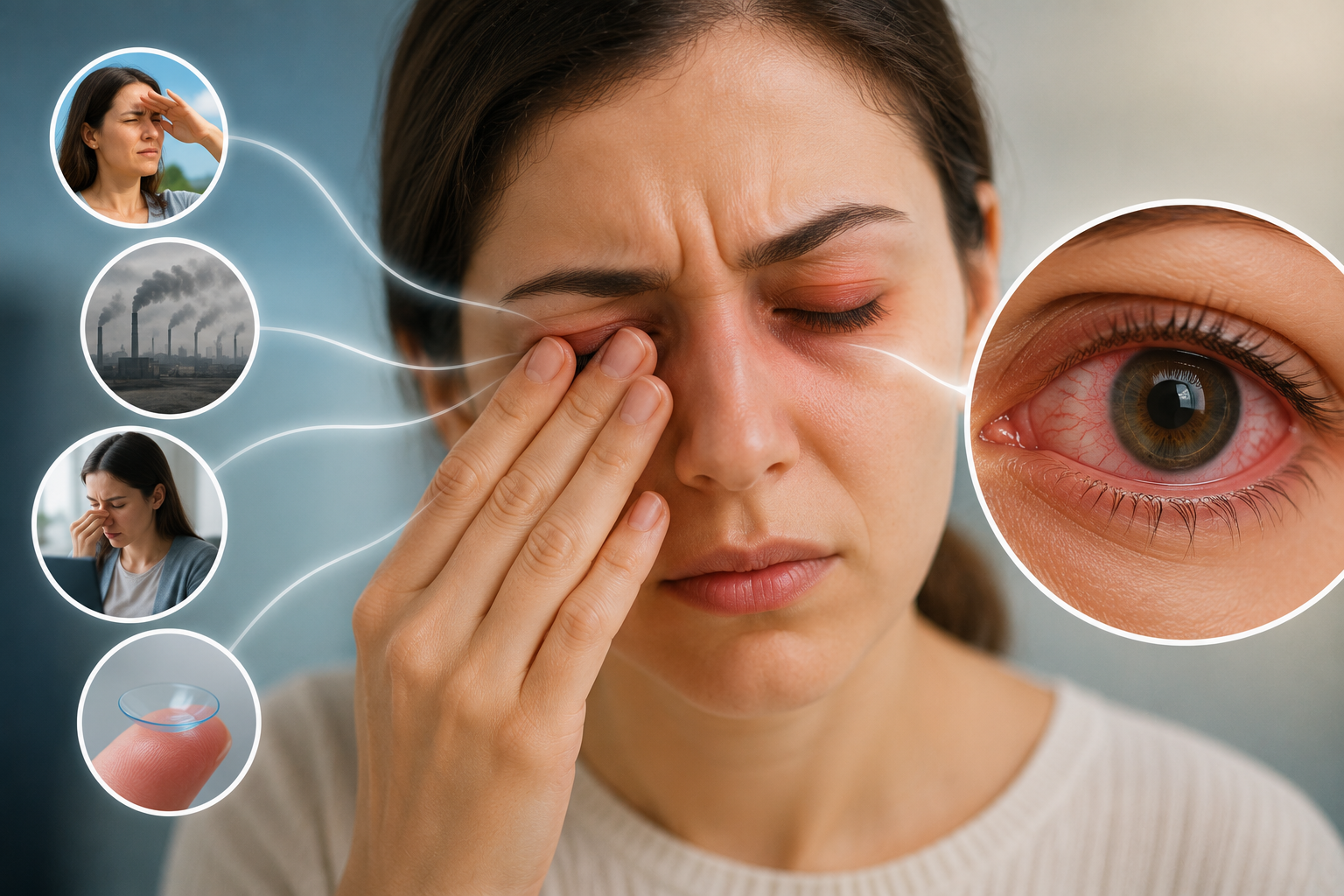
If you have been asking yourself why are my eyes burning, you are not alone, since this is one of the most common eye complaints people search for every day. The sensation can range from a mild, gritty discomfort to a sharp, stinging feeling that makes it hard to focus on anything else.
In most cases, burning eyes happen because of dryness, irritation, allergies, or simple overuse from screens and daily activities. The good news is that most causes are minor and respond well to simple home care.
However, some underlying conditions need proper medical attention before they get worse. This guide walks you through the most common causes, warning signs, and practical relief options in simple language.
Key Takeaways
- Burning eyes are usually linked to dryness, allergies, screen strain, or environmental irritants.
- Redness, watering, and light sensitivity often accompany the burning sensation.
- Simple home remedies like cold compresses and artificial tears help in mild cases.
- Persistent burning with vision changes or discharge needs prompt medical evaluation.
- Prevention through proper hygiene and eye care reduces future flare-ups significantly.
What Causes Burning Eyes?
There are many everyday reasons why are my eyes burning becomes a common concern, ranging from simple dryness to more specific irritants. Understanding each cause below helps you pinpoint what might be triggering your discomfort.
Dry Eye Syndrome
Dry eye happens when your eyes do not produce enough tears or when the tears evaporate too quickly. This leaves the surface of the eye exposed and irritated, leading to a burning or scratchy feeling. It is especially common in air-conditioned rooms, windy weather, or with prolonged screen use.
Allergies (Seasonal & Environmental)
Allergens like pollen, dust mites, and pet dander trigger histamine release in the eyes, causing burning along with itching and redness. Seasonal allergies tend to flare up during spring and fall when pollen counts rise. Environmental allergies can occur year-round depending on household triggers.
Digital Eye Strain (Screen Use)
Staring at phones, computers, or tablets for long hours reduces your natural blink rate, which dries out the eyes. This digital strain often causes burning, fatigue, and blurry vision by the end of the day. Taking regular breaks helps reduce this effect significantly.
Environmental Irritants (Smoke, Pollution, Wind, Chlorine)
Exposure to smoke, vehicle exhaust, dust, or chlorinated pool water can directly irritate the sensitive surface of the eye. These irritants strip away natural moisture and trigger an inflammatory response. Burning usually improves once you leave the irritating environment and rinse your eyes.



Conjunctivitis (Pink Eye)
Conjunctivitis is an inflammation of the eye’s outer membrane caused by viruses, bacteria, or allergens. Along with burning, it often brings redness, discharge, and a gritty sensation. This condition is contagious in viral and bacterial forms, so hygiene matters greatly.
Contact Lens-Related Irritation
Wearing lenses for too long, poor cleaning habits, or an improper fit can cause the eyes to dry out and burn. Bacterial buildup on unclean lenses is a common contributor to irritation. Switching to proper lens care routines often resolves this quickly.
Common Symptoms That Accompany Burning Eyes
Burning eyes rarely occur alone, and they are often paired with other noticeable symptoms that offer clues about the underlying cause. Recognizing these patterns can help you decide the best next step.
Redness and Watering
Redness happens when blood vessels in the eye dilate due to irritation or inflammation. Watering is the eye’s natural defense mechanism trying to flush out the irritant. Together, these symptoms often point toward allergies or environmental exposure.
Itching or Grittiness
An itchy, gritty feeling usually suggests dryness or an allergic reaction affecting the eye’s surface. This sensation can make you want to rub your eyes, which often worsens irritation. Avoiding rubbing is important to prevent further damage.
Blurred Vision
Temporary blurriness alongside burning often results from dryness or excess tearing affecting the tear film. If blurred vision persists or worsens, it may indicate a more serious underlying issue. This symptom should never be ignored for long.
Sensitivity to Light
Light sensitivity, or photophobia, frequently accompanies inflammation-related eye conditions like conjunctivitis or corneal irritation. Bright environments can intensify the burning sensation during these episodes. Wearing sunglasses temporarily can offer relief.
When Burning Eyes Signal Something More Serious
Warning: Seek prompt medical attention if burning eyes are accompanied by sudden vision loss, severe pain, thick discharge, chemical exposure, or symptoms following an eye injury. These signs may indicate infection, corneal damage, or another condition requiring urgent care rather than home treatment.
How to Diagnose the Underlying Cause?
Since burning eyes can stem from many different sources, a proper diagnosis often requires professional evaluation rather than guesswork. Knowing when and how to seek help makes the process much easier.
When to See an Eye Doctor vs. General Physician
If burning is linked to vision changes, injury, or persistent discharge, an eye doctor or ophthalmologist is the right choice. For symptoms tied to colds, sinus issues, or general allergies, a general physician can often help first. Choosing the right specialist saves time and ensures accurate treatment.
What to Expect During an Eye Exam
A basic eye exam typically includes a vision test, an external check of the eyelids and surface, and sometimes a tear-production test. The doctor may use a special dye to check for surface damage under a blue light. This process is quick and generally painless.
Home Remedies and Self-Care Tips
Many mild cases of burning eyes improve with simple, consistent self-care rather than medication. These remedies focus on restoring moisture and reducing irritation naturally.
Cold Compresses
Applying a clean, cold washcloth over closed eyes for a few minutes helps reduce inflammation and soothes burning quickly. This method works especially well for allergy-related or strain-related discomfort. Repeating this two to three times daily can offer noticeable relief.
Artificial Tears / Lubricating Drops
Over-the-counter lubricating drops help restore moisture to dry, irritated eyes throughout the day. Preservative-free options are gentler for frequent use. These drops are widely considered a first-line, low-risk relief method.
Reducing Screen Time (20-20-20 Rule)
The 20-20-20 rule suggests looking at something 20 feet away for 20 seconds every 20 minutes of screen use. This simple habit reduces strain-related dryness and burning significantly. Adjusting screen brightness and distance also helps.
Avoiding Known Allergens/Irritants
Identifying and limiting exposure to dust, smoke, or specific allergens can prevent repeated flare-ups. Using air purifiers indoors and wearing sunglasses outdoors reduces contact with irritants. Small environmental changes often make a big difference over time.
Pro Tip: Keep a small bottle of preservative-free artificial tears in your bag or desk drawer for quick relief whenever burning starts, especially during long screen sessions or allergy season.
Medical Treatments for Burning Eyes
When home remedies are not enough, medical treatments target the specific cause behind the burning sensation. A doctor can recommend the right option based on diagnosis.
Prescription Eye Drops
For chronic dry eye or inflammation, doctors may prescribe stronger drops that increase tear production or reduce swelling. These are typically used for longer-term management rather than one-time relief. Follow-up visits help track improvement.
Allergy Medications
Antihistamine eye drops or oral allergy medications can reduce the histamine response causing burning and itching. These are especially effective during high-pollen seasons. A doctor can help determine the right dosage and type.
Treating Underlying Conditions (Blepharitis, Conjunctivitis)
Conditions like blepharitis may require lid hygiene routines or antibiotic ointments, while conjunctivitis treatment depends on whether it is viral, bacterial, or allergic. Correct diagnosis is essential since treatments differ significantly between these causes. Untreated cases can worsen or spread.
How to Prevent Burning Eyes
Prevention focuses on protecting the eyes from common triggers before irritation begins. Building small daily habits can significantly reduce future episodes.
Proper Contact Lens Hygiene
Always wash hands before handling lenses, replace them as scheduled, and avoid sleeping in lenses not designed for overnight wear. Proper cleaning solutions should never be substituted with water. Good hygiene prevents most lens-related burning.
Protective Eyewear
Sunglasses with UV protection and safety goggles during chemical or dusty work environments shield the eyes from harmful exposure. This simple habit prevents both short-term irritation and long-term damage. Choose eyewear that fits snugly for full coverage.
Managing Allergies Proactively
Taking allergy medication before symptoms peak, keeping windows closed during high-pollen days, and washing bedding regularly can reduce flare-ups. Proactive management is more effective than reacting after symptoms start. Consistency is key during allergy seasons.
Workplace/Screen Ergonomics
Positioning screens at eye level, reducing glare, and maintaining proper lighting all reduce strain-related burning at work. Blinking exercises and scheduled breaks further support eye comfort. These adjustments benefit overall productivity as well.
Comparison Table: Common Causes at a Glance
| Cause | Typical Trigger | Common Relief |
| Dry Eye Syndrome | Low humidity, screen use | Artificial tears |
| Allergies | Pollen, dust, pet dander | Antihistamine drops |
| Digital Eye Strain | Prolonged screen time | 20-20-20 rule |
| Conjunctivitis | Viral, bacterial, allergic | Doctor-directed treatment |
| Blepharitis | Clogged oil glands | Lid hygiene routine |
| Chemical Exposure | Cosmetics, cleaning agents | Immediate rinsing |
Frequently Asked Questions
Can burning eyes be a sign of something serious?
In most cases, burning eyes are linked to mild dryness or irritation, but persistent symptoms with vision changes or discharge should be checked promptly.
How long does eye burning from allergies last?
Allergy-related burning typically lasts as long as exposure continues, often easing within hours after the allergen is removed or treated.
Is it safe to use eye drops every day?
Preservative-free artificial tears are generally safe for daily use, though prescription drops should follow a doctor’s specific guidance.
Can stress cause burning eyes?
Stress can indirectly contribute by reducing blink rate and increasing screen use, both of which commonly lead to dryness and burning.
When should I go to the ER for burning eyes?
Seek emergency care if burning follows chemical exposure, injury, or comes with sudden vision loss or severe pain.
Conclusion
Understanding why are my eyes burning starts with recognizing the wide range of possible causes, from simple dryness to more specific conditions like allergies or blepharitis.
However, persistent or severe symptoms deserve timely medical attention to prevent complications. Paying attention to your eyes’ signals today can save you from bigger discomfort tomorrow.
RELATED POSTS
Can IBS Cause Back Pain? Causes, Symptoms, Treatment, and Relief Tips
Burning Eyes: Causes, Relief, and When to See a Doctor
Can Allergies Cause Swollen Lymph Nodes?
Can a Torodol Shot Help Neck Pain? Benefits, Risks, and What to Expect