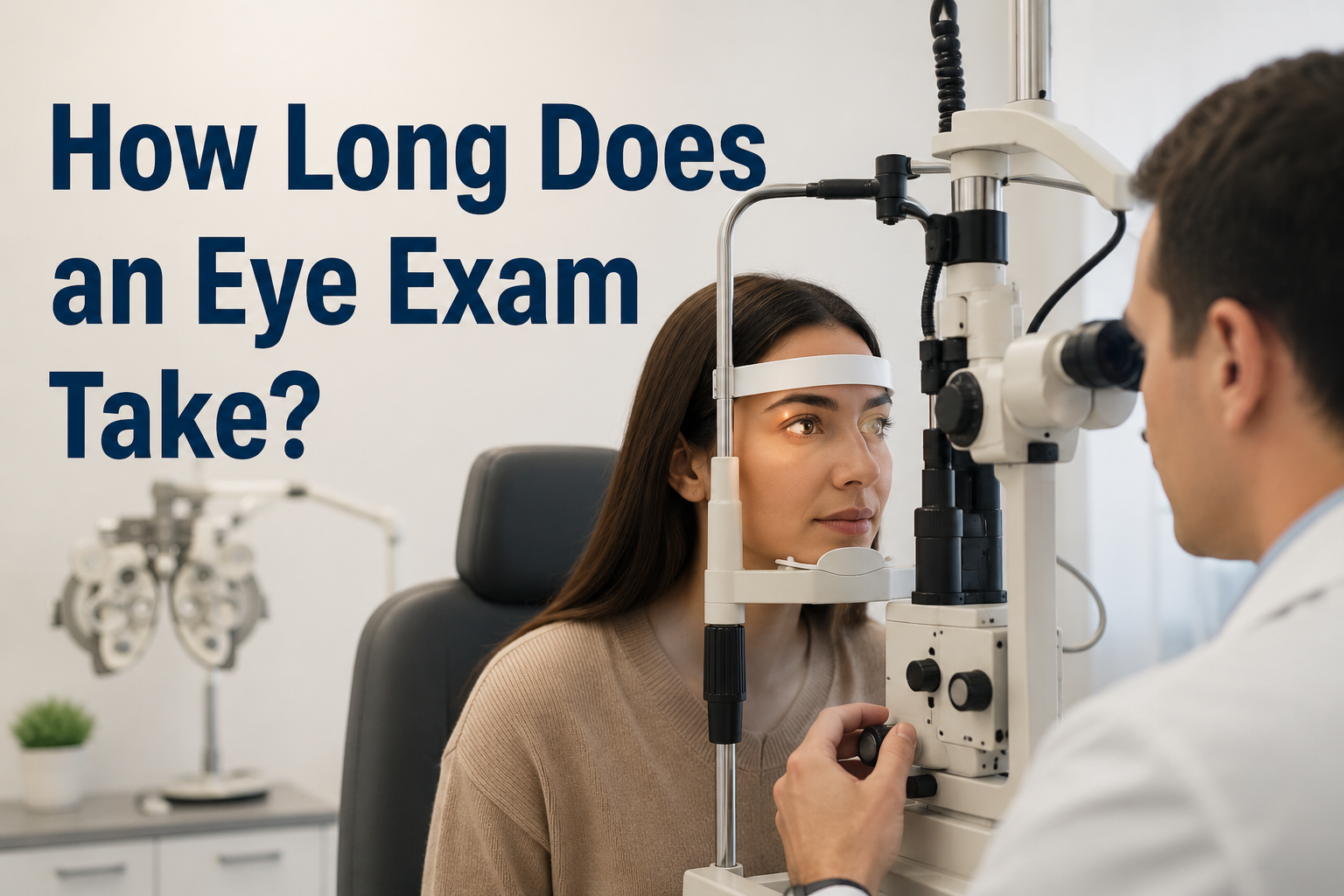
Most people ask how long does an eye exam take before booking an appointment, and the honest answer depends on the type of exam you are getting.
A basic vision screening can be done in fifteen to twenty minutes, while a full comprehensive eye exam usually runs between thirty and sixty minutes.
If your doctor needs to dilate your pupils or run extra tests, the visit can stretch closer to ninety minutes. Knowing this range ahead of time helps you plan your day and avoid feeling rushed during your appointment.
Key Takeaways
- A routine eye exam generally takes thirty to sixty minutes from start to finish.
- Dilation is the single biggest factor that can add extra time to your visit.
- First-time patients usually need more time than returning patients.
- Arriving a few minutes early with the right information can keep your visit on schedule.
What Happens During a Standard Eye Exam?
A standard eye exam follows a set order of steps that build on each other. Each step below plays a role in the total time your appointment takes.
Medical History Review
Your visit usually starts with a short conversation about your vision history, any current symptoms, and your general health background. Your eye doctor may also ask about family history of conditions like glaucoma or macular degeneration. This step is quick but important, since it shapes which tests come next.
Visual Acuity Test
This is the part of the exam most people already recognize, where you read letters on a chart from across the room. It measures how clearly you see at different distances and helps confirm whether you have twenty-twenty vision. The test itself only takes a few minutes per eye.
Refraction Test
During this test, your doctor uses a device called a phoroptor to fine-tune your exact prescription. You will be asked which of two lens options looks clearer as the doctor switches between them. This back-and-forth process is what determines the strength of your glasses or contact lens prescription.
Eye Pressure Test
This test checks the pressure inside your eye, which is one of the main ways doctors screen for glaucoma. A small puff of air or a gentle instrument is used, and most patients feel little to no discomfort. It is a brief step but a critical one for long-term eye health screening.



Retinal Examination
Your doctor will examine the back of your eye, including the retina and optic nerve, often using a bright light or specialized lens. This step allows early detection of issues like diabetic retinopathy or retinal detachment. If dilation is required for a clearer view, this is the stage where it adds the most extra time.
Factors That Affect Exam Duration
Not every eye exam takes the same amount of time, since several personal and clinical factors can shift the total length of your visit.
Pupil Dilation
Dilation drops need time to take full effect, which typically means an extra fifteen to twenty minutes of waiting before your doctor can examine your retina properly. Some patients also experience temporary light sensitivity afterward, so this waiting period is built into the appointment. Dilation is one of the most common reasons an exam runs past the standard time estimate.
First Visit Versus Returning Patient
If this is your first time seeing a particular eye doctor, expect a longer appointment since your full medical and vision history needs to be recorded. Returning patients usually move faster through the process because their records and prior prescriptions are already on file. This difference alone can add fifteen minutes or more to a first appointment.
Contact Lens Fitting
If you wear contacts or want to start wearing them, a separate fitting is usually required in addition to the standard exam. This fitting includes corneal measurements and a trial lens check, which typically adds fifteen to thirty minutes to your visit. Skipping this step is only possible if you plan to stick with glasses only.
Age of the Patient
Children and older adults often need more time during an eye exam compared to healthy working-age adults. Young children may need extra patience during the visual acuity test, while older patients may require additional screening for age-related conditions. Pediatric and senior exams commonly fall on the longer end of the typical time range.
Existing Eye Conditions
Patients with diabetes, high blood pressure, or a family history of eye disease often need additional testing during their exam. These added checks are meant to catch early changes before they affect vision permanently. If you fall into one of these higher-risk groups, it is reasonable to expect your appointment to run longer than a standard visit.
Exam Type Versus Typical Duration
The table below breaks down how long does an eye exam take across different common exam types, so you can estimate your own appointment length more accurately.
| Exam Type | Typical Duration |
| Basic vision screening | 15 to 20 minutes |
| Comprehensive eye exam | 30 to 60 minutes |
| Comprehensive exam with dilation | 45 to 90 minutes |
| Contact lens fitting add-on | 15 to 30 minutes extra |
| Pediatric eye exam | 30 to 60 minutes |
| Senior eye exam (65 and older) | Up to 60 minutes |
How to Prepare for a Faster Eye Exam?
A little preparation before your appointment can help your exam stay closer to the shorter end of the expected time range.
Bring the Right Information
Carry your current glasses or contact lens prescription, along with your insurance details and a list of any medications you take. Having this information ready means your doctor will not need to pause the exam to track it down. It also helps your provider give more accurate advice based on your medical background.
Arrange Transportation If Needed
If there is a chance your pupils will be dilated, plan for someone else to drive you home afterward, since your vision may be blurry and light-sensitive for a few hours. Trying to arrange a ride at the last minute can add unnecessary stress to your visit. Planning this in advance keeps your day running smoothly after the appointment ends.
Arrive a Few Minutes Early
Getting to the clinic ten to fifteen minutes before your scheduled time gives you room to complete any paperwork without cutting into your actual exam time. Walking in right at your appointment time or late often pushes the whole visit back. This small habit can make a noticeable difference in how rushed your exam feels.
What If You Need Additional Testing?
Sometimes your doctor may recommend extra testing beyond the standard exam, especially if something unusual shows up during your initial checks.
Tests like optical coherence tomography, visual field testing, or retinal photography can each add ten to twenty minutes to your visit.
While this extends your total appointment time, these tools give your doctor a much clearer picture of your eye health and can catch problems long before you notice any symptoms yourself.
Frequently Asked Questions
Does dilation always happen during an eye exam? Not every exam requires dilation, since it depends on your age, risk factors, and what your doctor wants to check. Many routine visits skip this step unless there is a specific reason to look closely at the retina.
Can I drive myself home after an eye exam? If your pupils were not dilated, driving home is usually fine. If dilation drops were used, it is safer to have someone else drive you due to temporary blurry vision and light sensitivity.
How often should I schedule an eye exam? This depends on your age and health, with the American Academy of Ophthalmology recommending exams every one to two years for adults over sixty-five, and less frequent visits for younger adults without risk factors.
Is a school or DMV vision screening the same as a full eye exam? No, a basic screening only checks general visual acuity and does not include the detailed health checks found in a comprehensive eye exam. A full exam is needed to properly assess overall eye health.
Why did my exam take longer than I expected? Extra time is usually caused by dilation, additional testing, or being a first-time patient at that clinic. Each of these factors adds a predictable amount of time to the standard appointment length.
Conclusion
So, how long does an eye exam take overall? For most people, a visit falls somewhere between thirty and ninety minutes, depending on whether dilation, contact lens fitting, or extra testing is involved. Knowing what to expect ahead of time, along with a little preparation, can help your appointment feel efficient rather than rushed.
Related Articles
Texas Health Surgery Center: Services, Benefits, Insurance, Recovery & Patient Care Guide
Understanding Eye Pressure Pain: Causes, Symptoms, and Relief
Does Sleep Apnea Go Away? What Really Happens
How Long Does a Fractured Toe Take to Heal? (And What Affects Your Recovery)