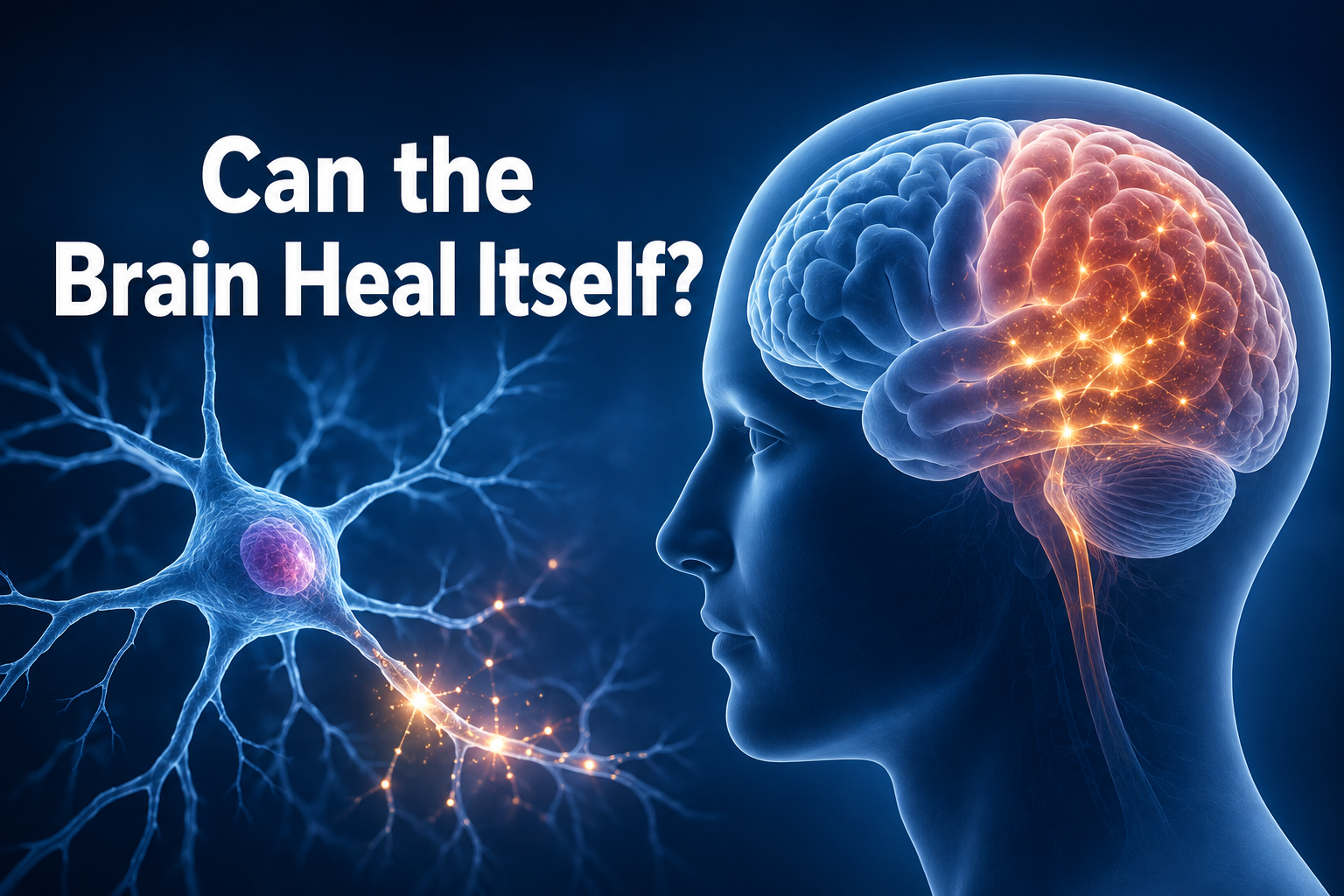
Many people wonder, can the brain heal itself after an injury, a stroke, or years of accumulated stress? The brain is a remarkably adaptive organ, and modern neuroscience shows that it does have real healing abilities, though they work differently from how skin or bone repairs itself.
Instead of regrowing damaged tissue in large amounts, the brain relies on rewiring, cellular support, and functional adjustment to recover lost abilities. This process is shaped by the type of damage, its location, and how quickly proper care and rehabilitation begin.
Understanding how the brain heals itself can help patients, caregivers, and anyone curious about brain health set realistic expectations for recovery. The sections below explain exactly how this healing happens and what can be done to support it.
Can the Brain Really Heal Itself?
The brain can heal itself to a meaningful degree, though it does not fully regenerate damaged neurons the way other body tissues regenerate. This ability relies on natural repair systems that scientists only fully understood in recent decades.
The Short Answer
When people ask can the brain heal itself, the honest answer is yes, but with clear limits. The brain uses processes like rewiring nerve pathways and supporting damaged areas rather than replacing every lost cell. Recovery is often partial rather than complete, and the extent depends heavily on the severity of the original damage.
Why the Brain Was Once Thought Incapable of Healing
For much of the twentieth century, doctors believed the brain could not heal itself at all after damage occurred. This view came from early research showing that adult neurons rarely divided, unlike cells in skin or liver tissue. Newer imaging and laboratory studies have since revealed that the brain does adapt and partially repair itself through mechanisms unrelated to simple cell division.
How the Brain Repairs Itself
The brain uses several natural mechanisms to repair itself after injury or damage. Together, these processes explain why some recovery is possible even after serious neurological events.
Neuroplasticity
Neuroplasticity is the brain’s ability to form new connections between neurons and reorganize existing ones. When one area is damaged, nearby or even distant regions can sometimes take over its functions through repeated practice and stimulation. This adaptability is strongest early in life but continues, to a lesser extent, throughout adulthood.



Neurogenesis
Neurogenesis refers to the creation of new neurons, and it does occur in adults, though in a limited way. This process is mainly observed in the hippocampus, a region tied closely to memory and learning. While neurogenesis alone cannot repair widespread damage, it contributes to the brain’s overall capacity to heal itself over time.
Glial Cell Support
Glial cells, including astrocytes and microglia, play a supporting role whenever the brain heals itself after injury. These cells clear away damaged tissue, reduce harmful inflammation, and create an environment where surviving neurons can function better. Without this cleanup process, recovery from brain injury would be significantly slower and less effective.
Collateral Sprouting
Collateral sprouting happens when healthy neurons grow new branches to reconnect with brain regions that lost their original input. This process helps restore some communication between areas affected by injury or disease. It is one of the clearest examples of how the brain heals itself by rerouting signals rather than repairing the original damaged pathway.
Functional Reorganization
After a stroke or significant injury, other parts of the brain can gradually take on responsibilities once handled by the damaged area. This reorganization is often supported by consistent rehabilitation, practice, and repetition of specific tasks. Over months or years, this shift can lead to noticeable improvement even when the original tissue never fully recovers.
What the Brain Can and Cannot Heal From?
The brain’s ability to heal itself varies significantly depending on the underlying condition. Some types of damage respond well to natural repair and rehabilitation, while others involve ongoing loss that current medicine cannot reverse.
Conditions With Better Recovery Potential
Mild traumatic brain injuries and concussions often show good recovery because the damage is usually not severe enough to destroy large numbers of neurons. Ischemic strokes, when treated quickly, also allow the brain to heal itself through neuroplasticity and rehabilitation therapy. Many patients regain a significant portion of lost function within the first year after these events.
Conditions With Limited Self-Repair
Neurodegenerative diseases such as Alzheimer’s and Parkinson’s involve progressive neuron loss that outpaces the brain’s natural repair systems. Severe traumatic injuries, especially those involving widespread tissue death, also limit how much the brain can heal itself. In these cases, treatment focuses on slowing progression and preserving function rather than achieving full recovery.
Recovery Potential at a Glance
| Condition | Typical Recovery Potential | Role of Rehabilitation |
| Mild Concussion | High, often within a few weeks | Rest and gradual return to activity support recovery |
| Ischemic Stroke | Moderate to high with early treatment | Physical and speech therapy significantly improve outcomes |
| Severe Traumatic Brain Injury | Variable, often partial | Long-term, structured rehabilitation is essential |
| Alzheimer’s Disease | Low, progressive decline | Therapy can slow symptoms but not reverse the damage |
| Parkinson’s Disease | Low, progressive decline | Movement-based therapy helps manage symptoms |
Factors That Affect the Brain’s Ability to Heal
Not everyone recovers from brain injury at the same pace, even when the damage looks similar on paper. Several individual factors influence how effectively the brain heals itself.
Age and Recovery Speed
Younger brains generally show greater plasticity, which allows faster and more complete recovery after injury. As people age, the brain’s capacity to form new connections gradually declines, though it never disappears entirely. This is one reason children often recover from certain brain injuries more fully than older adults.
Severity and Location of Damage
The extent of the original injury has a direct impact on how well the brain can heal itself afterward. Damage to areas responsible for essential functions, such as breathing or basic movement, tends to have more serious consequences. Smaller or more isolated areas of damage generally allow for better compensation from surrounding brain tissue.
Overall Health and Lifestyle
Underlying health conditions such as diabetes, high blood pressure, or poor cardiovascular health can slow the brain’s natural repair processes. Lifestyle factors, including smoking, alcohol use, and chronic stress, may also interfere with effective healing. Maintaining good overall health creates a more favorable environment for the brain to heal itself after injury.
How to Support Brain Healing Naturally?
While the brain heals itself through built-in biological processes, certain habits can actively support and strengthen this recovery. These lifestyle choices work alongside medical treatment rather than replacing it.
Physical Exercise
Regular physical activity increases blood flow to the brain, delivering oxygen and nutrients that support cellular repair. Exercise has also been linked to higher levels of proteins that encourage the growth of new neural connections. Even moderate activity, such as walking, can meaningfully support the brain’s ability to heal itself over time.
Sleep
During deep sleep, the brain clears out waste products that accumulate during waking hours through a process known as the glymphatic system. Poor or insufficient sleep interferes with this cleanup process and can slow recovery after injury. Consistent, quality sleep is one of the simplest ways to support the brain as it heals itself.
Diet and Nutrition
Nutrients such as omega-3 fatty acids, antioxidants, and B vitamins play a supporting role in maintaining healthy brain cells. A diet rich in fruits, vegetables, whole grains, and lean protein provides the building blocks needed for cellular repair. Poor nutrition, on the other hand, can slow down the natural processes involved in brain recovery.
Mental Stimulation
Engaging in learning, puzzles, or new skills encourages the brain to form new neural pathways through neuroplasticity. This kind of mental stimulation is often used in rehabilitation programs to help patients regain lost cognitive abilities. Consistently challenging the brain, even in small ways, supports its long-term capacity to heal itself.
Social Engagement
Regular social interaction has been associated with better cognitive function and a slower decline in brain health. Conversations, shared activities, and emotional connection stimulate multiple brain regions at once. Isolation, by contrast, has been linked to poorer recovery outcomes after brain injury or illness.
Medical and Rehabilitation Support
Beyond natural healing and lifestyle habits, structured medical care plays an important role in recovery. Professional rehabilitation often makes the difference between partial and more complete improvement.
Therapy Options
Physical therapy helps retrain movement and coordination after injuries affecting motor function. Occupational therapy focuses on relearning daily tasks, while speech therapy addresses communication and swallowing difficulties. These structured programs give the brain repeated, guided practice, which strengthens the neuroplastic changes needed for recovery.
When to See a Doctor
Sudden neurological symptoms should never be ignored, since early diagnosis and treatment significantly improve the chances that the brain will heal itself effectively over time. Even mild head injuries deserve evaluation if symptoms linger. The list below highlights signs that call for prompt medical attention.
• Sudden, severe headache unlike any experienced before
• Confusion, slurred speech, or difficulty understanding others
• Weakness or numbness on one side of the body
• Loss of balance, coordination, or vision problems
• Memory issues or dizziness that persist after a head injury
Frequently Asked Questions
Can a severely damaged brain fully heal?
Full healing is uncommon after severe damage, though partial recovery is often possible with rehabilitation and time. The extent of improvement depends largely on the location and severity of the original injury.
How long does it take for the brain to heal after an injury?
Recovery timelines vary widely, ranging from a few weeks for mild injuries to months or years for more serious ones. Most significant improvement tends to occur within the first year, though gradual progress can continue afterward.
Does the brain heal faster in children than in adults?
Children generally show greater neuroplasticity, which often allows faster and more complete recovery from certain injuries. This advantage tends to decrease gradually as the brain matures into adulthood.
Can lifestyle changes help reverse brain damage?
Lifestyle changes cannot reverse structural damage, but they can support the brain’s natural repair processes and improve overall function. Exercise, sleep, nutrition, and mental engagement all contribute to better recovery outcomes.
Conclusion
Through neuroplasticity, limited neurogenesis, and supportive cellular activity, the brain works to restore function after injury or damage. The extent of this healing depends on factors like age, severity of damage, and overall health, along with consistent rehabilitation.
Much of the existing content on this topic covers only the biology of healing without addressing the everyday habits that support it, a gap this guide has aimed to close. With the right combination of medical care and healthy lifestyle choices, many people see meaningful improvement even after significant brain injury.
Related Articles
Does CPR Break Ribs? Here’s What Really Happens
How Long Until a Tooth Infection Kills You? The Real Timeline
Does Sleep Apnea Go Away? What Really Happens
How to Know If You Have a Cavity: Warning Signs and Symptoms