Many people are surprised to learn that a simple cavity can sometimes lead to a throbbing headache. When tooth decay reaches deep enough, the resulting nerve irritation does not always stay confined to the mouth.
Instead, the discomfort can spread toward the jaw, temple, or even one side of the head, making it feel like an unrelated headache rather than a dental problem. So yes, a cavity can cause a headache, and understanding why this happens is the first step toward getting the right treatment.
This guide walks through how tooth decay connects to head pain, what symptoms to watch for, and when it is time to visit a dentist rather than reach for painkillers alone. By the end, you will have a clear picture of whether your headache might actually be coming from a cavity.
What Is a Cavity?
A cavity, also known as tooth decay, is a small hole that forms in the hard outer surface of a tooth. It develops when bacteria in the mouth produce acid from sugars and starches, gradually wearing away the enamel.
If left untreated, this decay can spread deeper into the tooth, eventually reaching the sensitive inner layers where nerves are located. At this stage, the discomfort is no longer limited to occasional sensitivity; it can turn into persistent, radiating pain that many people describe as a headache rather than a toothache.
Can a Cavity Really Cause a Headache?
It might seem unusual for a problem inside a tooth to affect the head, but the connection is well recognized in dental care. The explanation lies in how facial nerves are wired and how the brain interprets pain signals coming from different areas of the face and jaw, which the sections below explain in more detail.
How Tooth Nerves Are Connected to the Head?
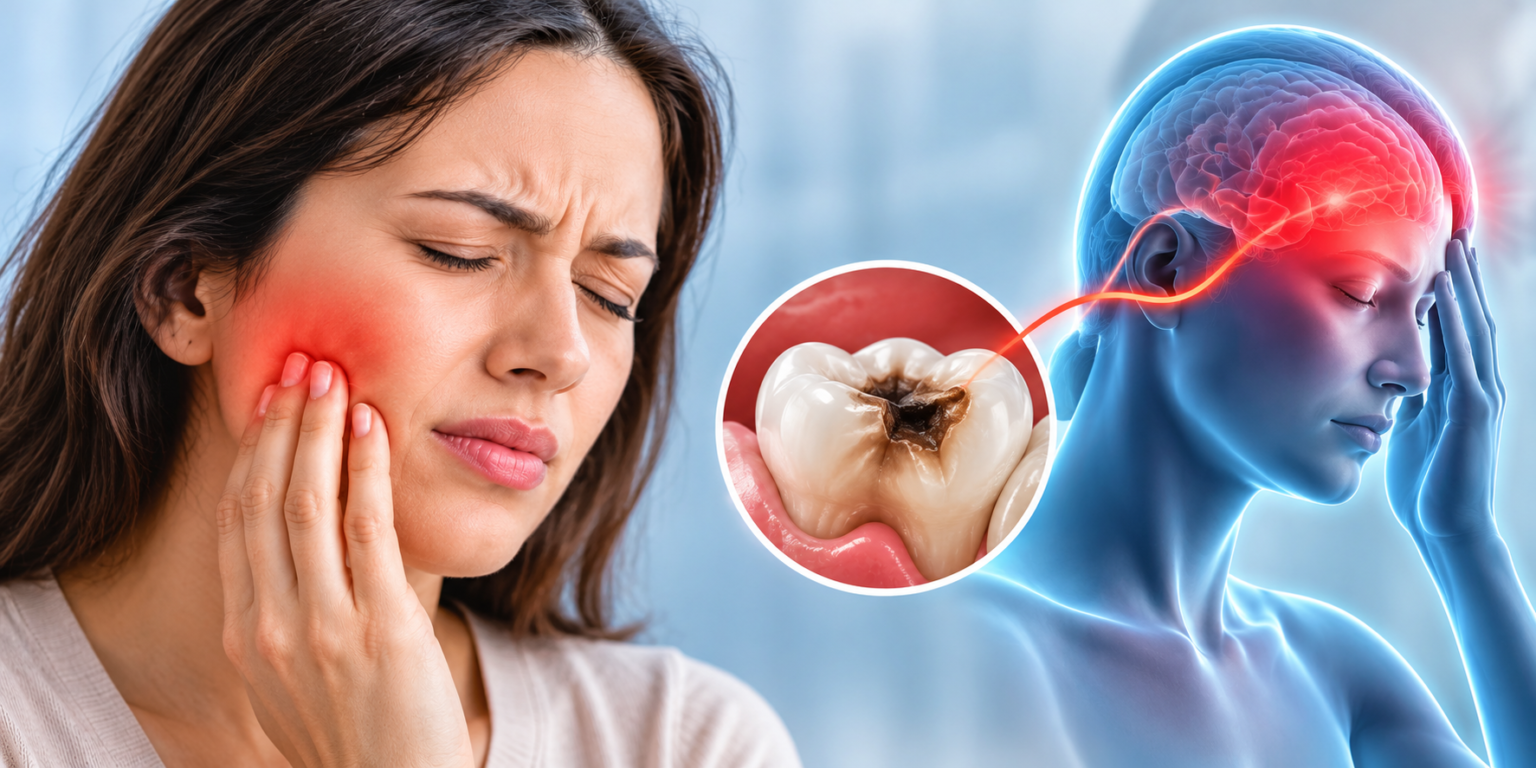
The teeth, jaw, and much of the face are supplied by the trigeminal nerve, which is also one of the main nerves responsible for sensation in the head. Because this nerve branches out to cover such a wide area, irritation starting in a decayed tooth can travel along the same pathway toward the temple or forehead. This shared nerve network is the main reason dental pain and headache pain often feel connected.
Referred Pain Explained
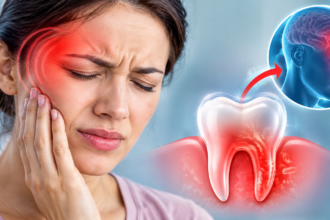
Referred pain happens when the brain has trouble pinpointing the exact source of discomfort because multiple areas share the same nerve pathways. A deep cavity irritating the tooth’s nerve can therefore be felt as pain in the jaw, ear, or head instead of the tooth itself. This is why someone with an untreated cavity might attribute their discomfort to a headache without realizing the real cause is dental.


When It’s More Likely (Deep Cavities or Back Teeth)
Cavities in the molars, or back teeth, are more likely to trigger headache-like pain because these teeth sit closer to the jaw joint and chewing muscles. Deep cavities that have reached the pulp, the tooth’s inner nerve tissue, cause stronger and more constant pain that is more likely to radiate outward. Surface-level cavities, on the other hand, rarely cause noticeable head pain until they progress further.
Signs Your Headache Is Coming From a Cavity
Not every headache is dental in origin, so it helps to know which symptoms point toward a tooth-related cause. Paying attention to when and how the pain occurs can make it easier to connect the dots, as outlined below.
Pain Location Clues
A headache linked to a cavity usually appears on one side of the head, matching the side where the decayed tooth is located. The discomfort often centers around the temple, jaw, or upper cheek rather than spreading evenly across the head. If the pain seems to start near the mouth and move upward, a dental cause becomes more likely.
Sensitivity to Hot, Cold, or Chewing
One of the clearest signs of a cavity-related headache is that the pain worsens with specific triggers, such as eating something cold, drinking hot beverages, or chewing on that side of the mouth. Ordinary headaches are rarely affected by food or drink temperature. If a headache flares up right after eating or drinking, it is worth checking for a possible cavity.
Swelling, Fever, or Bad Taste (Infection Signs)
When a cavity progresses into an infection or abscess, additional symptoms often appear alongside the headache, including facial swelling, a mild fever, or an unpleasant taste in the mouth. These signs suggest the infection may be spreading beyond the tooth itself and require prompt attention. Ignoring them can allow the infection to worsen and lead to more serious complications.
Cavity-Related Headache vs. Other Headache Types
To make the difference easier to spot, the table below compares a cavity-related headache with common headache types such as tension headaches or migraines.
| Feature | Cavity-Related Headache | Tension Headache / Migraine |
| Trigger | Chewing, hot or cold food/drinks | Stress, bright light, hormonal changes |
| Location | One-sided, near jaw or temple | Whole head, forehead, or both temples |
| Relief Method | Dental treatment of the cavity | Rest, hydration, OTC pain relief |
| Accompanying Signs | Tooth sensitivity, swelling, bad taste | Nausea, light sensitivity, aura |
Why This Happens? (Underlying Causes)
There are several dental issues that can lead to headache-like pain, and understanding the root cause helps guide the right treatment. Each of the causes below affects the nerves or muscles around the jaw in a slightly different way.
Tooth Decay Reaching the Nerve
When a cavity deepens, it eventually exposes or irritates the pulp, the soft tissue inside the tooth that contains nerves and blood vessels. This exposure triggers inflammation, which can produce sharp or throbbing pain that radiates outward. The closer the decay gets to the nerve, the more likely it is to cause noticeable head pain.
Abscess or Infection
An untreated cavity can develop into a dental abscess, a pocket of infection that builds pressure inside or around the tooth root. This pressure often causes intense, persistent pain that spreads toward the jaw and head. An abscess is considered a more serious dental problem and typically requires prompt professional treatment.
Jaw Clenching From Tooth Pain
People experiencing tooth pain often clench their jaw or bite differently without realizing it, especially while sleeping. This unconscious clenching puts strain on the jaw muscles and joints, which can lead to tension-type headaches on top of the original tooth pain. Over time, this muscle strain can make the headache feel more constant.
When to See a Dentist
It is a good idea to schedule a dental visit if a headache consistently appears alongside tooth sensitivity, jaw pain, or discomfort while chewing.
Seek care urgently if there is facial swelling, fever, or pain severe enough to disrupt sleep or daily activities, since these can indicate a spreading infection.
Treating a cavity early is generally simpler and more comfortable than waiting until the problem worsens.
How Dentists Diagnose and Treat It?
A dentist can usually determine whether a headache is linked to a cavity through a straightforward examination. From there, treatment options depend on how far the decay has progressed, as explained below.
Diagnosis (Exam and X-rays)
During a dental visit, the dentist typically examines the teeth visually and checks for sensitivity using gentle taps or temperature tests. Dental X-rays are often used to see how deep a cavity extends and whether it has reached the nerve or caused any infection below the gumline. This combination allows for an accurate diagnosis before deciding on treatment.
Treatment Options (Filling, Root Canal, Extraction)
Smaller cavities are usually treated with a simple filling, which removes the decayed portion and restores the tooth’s shape. If decay has reached the nerve, a root canal may be needed to remove the infected tissue while preserving the tooth. In severe cases where the tooth cannot be saved, extraction becomes the recommended option to stop the pain and prevent further infection.
Frequently Asked Questions
Can a cavity cause a headache on one side of the head only?
Yes, since dental pain often follows the nerve pathway on the same side as the affected tooth, the headache is usually more noticeable on that side.
Will painkillers fix a cavity-related headache?
Painkillers may temporarily ease the discomfort, but they do not treat the underlying cavity, so the headache is likely to return until the tooth is treated.
How do I know if my headache is from a cavity or a migraine?
Cavity-related headaches usually worsen with chewing or temperature changes and are tied to a specific tooth, while migraines often involve other symptoms like light sensitivity or nausea.
Can a cavity headache go away on its own?
The headache may fade temporarily, but the underlying cavity will not heal without dental treatment, so the pain is likely to return.
Conclusion
A cavity can absolutely cause a headache, particularly when the decay is deep, affects a back tooth, or has progressed into an infection. Because the nerves in the teeth and head are closely connected, dental pain can easily be mistaken for an ordinary headache.
Paying attention to triggers like chewing or temperature sensitivity, along with any swelling or fever, can help identify a dental cause early. Visiting a dentist for proper diagnosis and treatment remains the most reliable way to resolve both the cavity and the headache it may be causing.
Related Article’s
How Much Is an MRI Without Insurance? Full Cost Guide
How Long Does Pre-Workout Last? Duration, Factors & Timing Guide
Lower Back Pain and Heart Attacks: Signs, Symptoms, Causes, and When to Seek Help
Can You Get Arthritis in Your Neck? Symptoms, Causes & Treatment
Is a Bypass the Same as Open Heart Surgery? Full Explanation