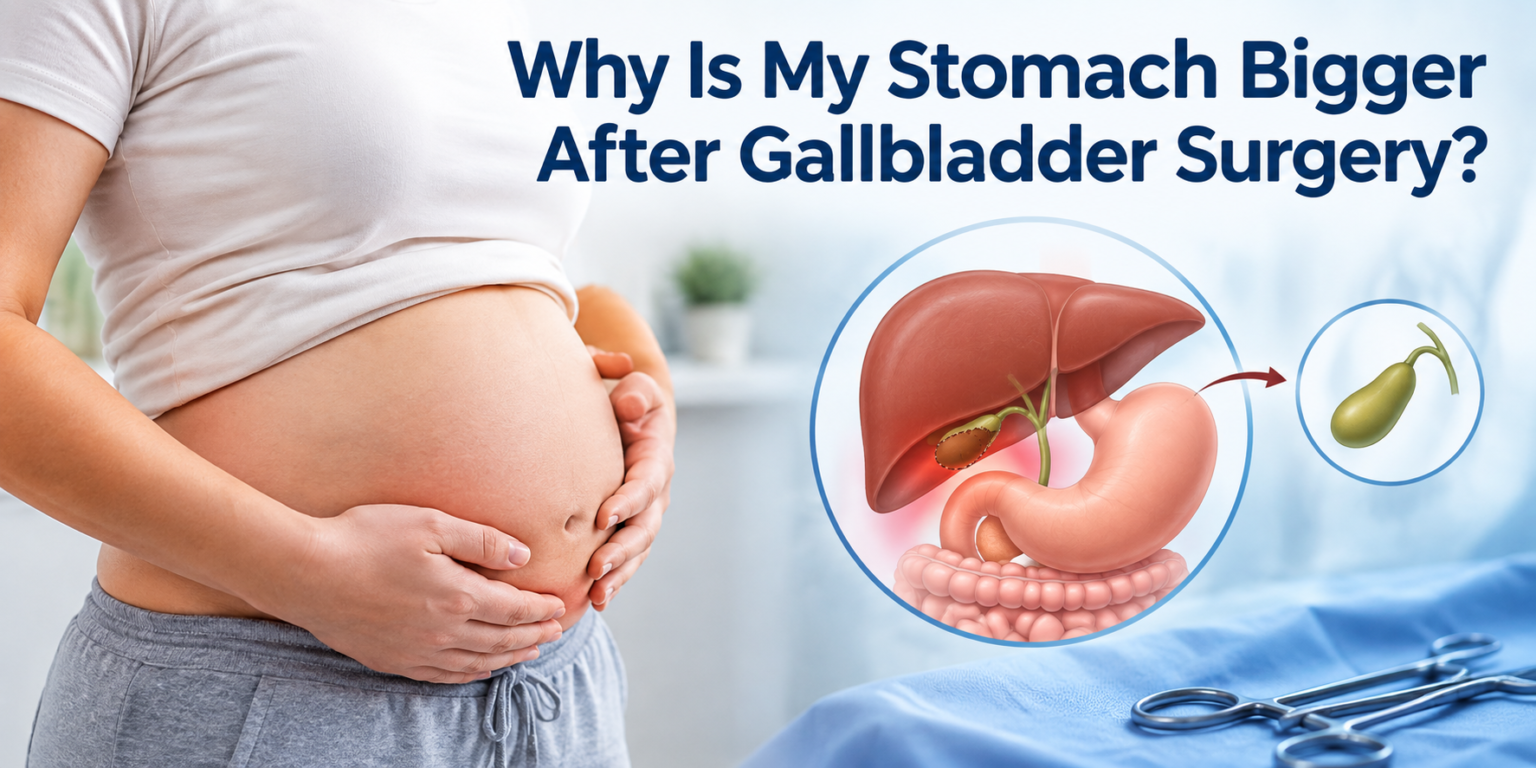
A bigger-looking stomach after gallbladder surgery is one of the most common concerns people bring up in the days and weeks following the procedure, and in most cases it has nothing to do with the surgery going wrong.
The abdomen can look puffier, feel tighter, and even resemble early pregnancy bloating, which naturally makes patients uneasy. This reaction usually comes from a mix of surgical gas, swelling, changes in how bile now reaches the intestine, and simple lifestyle shifts during recovery. None of these causes are unusual, and almost all of them settle down on their own within a short period.
Understanding exactly why is my stomach bigger after gallbladder surgery makes it much easier to tell normal recovery from something that genuinely needs medical attention. The sections below walk through the main causes, a realistic recovery timeline, practical relief tips, and the warning signs worth watching for.
Common Reasons Your Stomach Looks Bigger After Gallbladder Removal
There is rarely a single cause behind post-surgery bloating; it is usually a combination of factors working together during the healing process. The six explanations below cover almost every situation patients describe after a laparoscopic or open cholecystectomy.
Leftover Surgical Gas (CO₂ Bloating)
During laparoscopic gallbladder removal, surgeons pump carbon dioxide gas into the abdomen to create room to work with small instruments. Not all of this gas is removed before the incisions are closed, so pockets of it remain trapped inside the belly and under the diaphragm. This trapped gas is one of the most common and most temporary reasons the stomach looks noticeably larger right after surgery.
Post-Surgical Inflammation and Fluid Retention
Any surgical procedure triggers a natural inflammatory response as the body starts repairing the affected tissue. Around the incision sites and the area where the gallbladder used to sit, mild swelling and fluid buildup are completely expected. This inflammation adds visible puffiness to the abdomen and can make clothes feel tighter for several days after the operation.
Continuous Bile Flow Without a Gallbladder
Before surgery, the gallbladder stored bile and released it in concentrated bursts whenever fatty food entered the digestive system. After removal, bile drips continuously and less efficiently from the liver straight into the small intestine. This steady, less controlled flow can make fat digestion less efficient for a while, leading to gas, bloating, and occasional loose stools until the body adjusts.
Reduced Physical Activity During Recovery
Most patients move around far less than usual in the first week after surgery, whether because of pain, tiredness, or simple caution around the incision sites. Reduced movement slows down the normal contractions of the digestive tract that help push gas and waste along. The result is gas accumulation and a stomach that looks and feels more distended than usual.



Constipation From Pain Medication
Opioid pain relievers, which are commonly prescribed after gallbladder surgery, are well known for slowing down bowel movements. When stool moves through the intestines more slowly, it sits longer and contributes to a feeling of fullness and visible bloating. This is one of the easiest causes to manage with simple diet and hydration adjustments.
Minor Weight Gain After Surgery
Some patients notice a small amount of weight gain in the weeks following surgery, often linked to lower activity levels or changes in eating habits during recovery. This extra weight tends to settle around the midsection first, which can make the belly appear larger even after the initial surgical swelling has faded. It is usually mild and reversible once normal activity resumes.
How Long Does the Bloating Last?
Gas-related bloating from the surgery itself typically eases within three to five days as the body naturally reabsorbs the leftover carbon dioxide. Swelling around the incisions tends to calm down over one to two weeks, matching the general pace of surgical healing.
The digestive adjustment to continuous bile flow is a slower process and can take anywhere from a few weeks up to a couple of months before fat digestion feels fully normal again. If the abdomen still looks unusually large or feels tight and painful well beyond this window, it is worth mentioning to a doctor rather than assuming it will resolve by itself.
Symptoms That Are Normal vs. Symptoms That Need Attention
Not every kind of post-surgery bloating carries the same level of concern, and knowing the difference can save unnecessary worry. The two categories below separate the expected recovery symptoms from the signs that call for prompt medical review.
Normal Post-Op Symptoms
Mild swelling, occasional gas pain, a tender belly around the incision sites, and short bursts of shoulder-tip pain from residual gas are all considered typical after gallbladder removal. These symptoms tend to gradually improve rather than get worse day by day. Light walking, adequate hydration, and time are usually enough to see steady improvement.
Warning Signs of Complications
A stomach that keeps growing larger, becomes increasingly painful, or is accompanied by fever, yellowing of the skin or eyes, persistent nausea, or an inability to pass gas or stool needs urgent medical evaluation. These signs can point to a bile leak, internal infection, or a bile duct stone that was missed during surgery. Complications like these are uncommon, but they are serious enough that they should never be self-managed at home.
Tips to Reduce Bloating and Abdominal Swelling After Surgery
Small, consistent habits in the first couple of weeks make a noticeable difference in how quickly post-surgery bloating settles down. The table below compares helpful actions against habits that are best avoided during this recovery window.
| Do This | Avoid This |
| Take short, gentle walks several times a day to help release trapped gas. | Staying in bed for long stretches, which slows digestion further. |
| Drink plenty of water throughout the day to ease constipation. | Carbonated drinks, which add more gas to an already bloated belly. |
| Eat smaller, more frequent meals instead of large portions. | Heavy, greasy, or fried meals that are harder to digest right now. |
| Use a heating pad on the abdomen for gentle gas relief if approved by your doctor. | Skipping prescribed stool softeners if pain medication is causing constipation. |
Diet Changes That Can Help Your Stomach Settle
What you eat in the weeks after surgery plays a direct role in how quickly bloating fades, since the body is still adjusting to a new bile flow pattern. The two categories below outline what to scale back on and what to lean toward instead.
Foods to Limit
Fried and fatty foods, heavy cream-based sauces, red meat, and highly processed snacks are harder for the body to break down without concentrated bile bursts. High-fiber foods, while healthy long-term, can also worsen gas and bloating if reintroduced too quickly after surgery. Cutting back on these items for the first few weeks gives the digestive system time to adapt.
Foods That Support Digestion
Lean proteins such as chicken, fish, and eggs, along with low-fat dairy and cooked vegetables, are generally much easier on the digestive system during recovery. Eating in smaller portions spread across the day, rather than three large meals, also reduces the burden on the intestines. Gradually increasing fiber intake over several weeks, rather than all at once, helps prevent additional bloating while still supporting regular bowel movements.
When to Call Your Doctor
Reach out to a doctor promptly if abdominal swelling keeps increasing instead of gradually improving, or if it is paired with a fever, chills, or a fast heartbeat. Sharp or worsening pain, yellowing of the skin or eyes, dark urine, or pale stools are also signs that should not be brushed aside as ordinary bloating.
Redness, warmth, or discharge around the incision sites can point to a wound infection that needs prompt treatment. When in doubt about whether a symptom is normal, a quick call to the surgical team is always the safer option.
Frequently Asked Questions
Is it normal to look pregnant after gallbladder surgery?
Yes, trapped surgical gas and post-operative swelling can genuinely make the abdomen look rounded and pregnancy-like for the first several days. This appearance usually fades steadily as the gas is absorbed and the swelling goes down.
Can bloating after gallbladder removal be permanent?
For most people, bloating is temporary and connected to the body adjusting to a new bile flow pattern. If it continues well beyond a couple of months or keeps getting worse, it is worth having a doctor check for an underlying digestive cause.
Does gallbladder removal cause weight gain?
Gallbladder removal itself does not directly cause weight gain, but reduced activity and dietary changes during recovery sometimes lead to a small amount of extra weight. This is usually mild and tends to reverse once normal routines resume.
How can I tell gas pain apart from a complication?
Gas pain tends to come and go, often shifting to the shoulder, and gradually improves with movement and time. Pain from a complication is usually persistent or worsening, and is often paired with fever, yellowing skin, or an abdomen that keeps growing larger rather than settling down.
Conclusion
A larger-looking stomach after gallbladder surgery is, in the vast majority of cases, a normal part of healing rather than a sign that something has gone wrong. Trapped gas, surgical swelling, a new bile flow pattern, reduced activity, and pain-medication-related constipation together explain most of what patients notice in the first few weeks.
Gentle movement, good hydration, smaller low-fat meals, and a little patience are usually enough to see steady improvement. The main exception is when swelling keeps increasing or comes with fever, jaundice, or worsening pain, in which case prompt medical review is the right next step rather than waiting it out.
RELATED POSTS
How Long Does Pre-Workout Last? Duration, Factors & Timing Guide
Cancer Misdiagnosis: Causes, Consequences, Prevention, and Patient Rights
Is Shoulder Pain a Sign of a Heart Attack? (Left, Right & Both Sides)