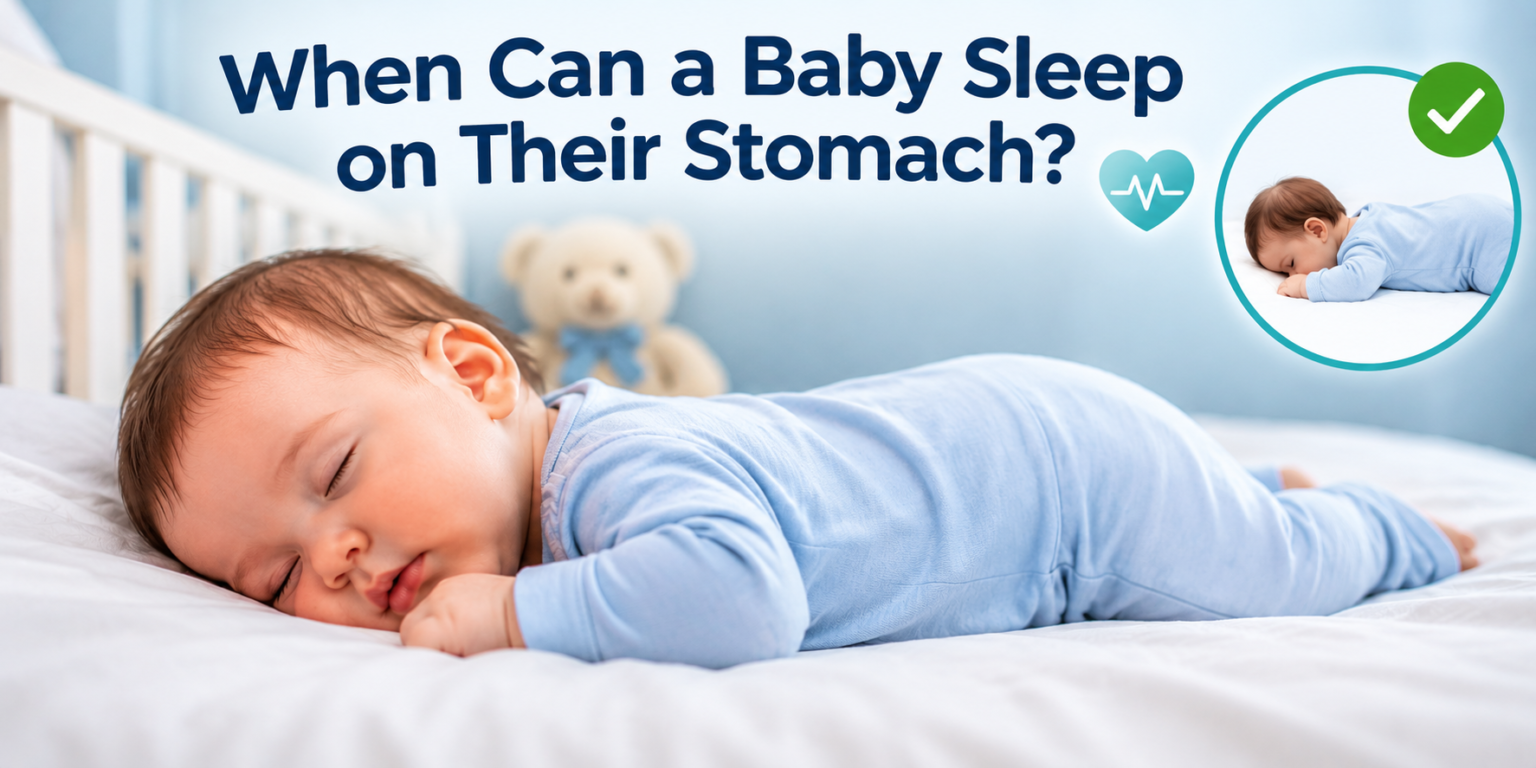
Every new parent eventually asks the same worried question late at night: when can a baby sleep on their stomach without any risk? It’s a fair concern, because sleep position is one of the biggest factors linked to infant safety during the first year.
Doctors have spent decades studying this exact issue, and the answer isn’t based on a fixed calendar date but on a specific physical milestone your baby reaches on their own.
Once you understand what that milestone is, the confusion around stomach sleeping becomes much easier to manage. This guide breaks down the science, the timeline, and the everyday habits that keep your baby safe while they grow.
Quick Answer: The Short Version
A baby can safely sleep on their stomach once they can roll over independently in both directions, from back to front and from front to back, without any assistance. This usually happens somewhere between five and six months of age, though every baby develops at their own pace. Before this stage is reached, babies should always be placed on their back for every single sleep, including naps.
Why Back Sleeping Is Recommended for Infants?
Back sleeping is recommended because it significantly lowers the risk of Sudden Infant Death Syndrome during the first year of life. Below, the connection between sleep position and SIDS is explained in more depth so parents understand why this rule exists in the first place.
What Is SIDS and How Is It Linked to Sleep Position?
SIDS refers to the unexplained death of an otherwise healthy infant, usually during sleep, and it remains one of the leading causes of infant mortality worldwide. Research collected over the years shows that babies placed on their stomachs or sides face a noticeably higher risk compared to those placed on their backs. This is why pediatric organizations continue to push the “back to sleep” message so strongly to new parents.
The Rolling Milestone: When Babies Are Ready
The real marker of readiness isn’t age alone but a physical skill. Once a baby can roll both ways confidently, their body has developed enough control to reposition itself safely during sleep.
Rolling Back-to-Front
Rolling from back to front is often the first rolling skill a baby masters, typically appearing between four and five months old. At this stage, a baby may flip onto their stomach during tummy time or play but still needs supervision, since this skill alone doesn’t mean they’re ready to sleep unsupervised in that position.



Rolling Front-to-Back
Rolling from front to back usually follows shortly after and is just as important for sleep safety. This direction allows a baby to reposition themselves out of a face-down position if needed, which is a critical safety skill before stomach sleeping becomes acceptable overnight.
Typical Age Range (5–6 Months)
Most babies reach both rolling milestones somewhere between five and six months of age, though some reach it earlier and others take a bit longer. Development speed depends on individual growth, muscle strength, and how much tummy time practice a baby gets during the day, so slight variation is completely normal and not a cause for concern.
What to Do Once a Baby Can Roll Both Ways?
Reaching the rolling milestone changes what’s considered safe, but it doesn’t remove every rule. Parents still need to follow a few consistent habits even after this stage begins.
Continue Placing Baby on Their Back
Even after a baby can roll independently, it’s still recommended to start every sleep session by placing them on their back. This keeps the safest starting position consistent while allowing the baby the freedom to move into a different position on their own once they fall asleep.
Letting Baby Self-Settle
If a baby who has mastered both rolling directions turns onto their stomach during sleep, there’s generally no need to keep flipping them back. At this stage, their neck and body strength are developed enough to move their head and clear their airway if needed, so parents can let them settle naturally.
Safe Sleep Practices to Maintain
Regardless of sleep position, certain safety habits should remain part of the nightly routine throughout the first year of a baby’s life.
Firm, Flat Sleep Surface
A crib mattress should always be firm and flat, never soft or angled, since soft surfaces increase suffocation risk. Waterbeds, couches, and adult mattresses are not appropriate substitutes for a proper crib mattress.
Keep the Crib Bare
The sleep space should stay completely bare, with no pillows, loose blankets, bumper pads, or stuffed toys inside. These items can obstruct breathing and are considered unnecessary risk factors that offer no real benefit to a sleeping infant.
Room-Sharing Without Bed-Sharing
Keeping the baby’s crib in the parents’ room for at least the first six months is widely recommended, while actually sharing the same bed is discouraged. This setup allows parents to respond quickly at night without introducing the risks that come with adult bedding and mattresses.
| Safe Sleep Element | Recommendation |
| Sleep Position (before rolling) | Always on the back |
| Sleep Position (after rolling both ways) | Baby may self-settle in any position |
| Mattress | Firm and flat only |
| Crib Contents | Bare — no pillows, blankets, or toys |
| Room Setup | Room-sharing, not bed-sharing |
| Typical Rolling Milestone Age | 5 to 6 months |
Signs Your Baby Isn’t Ready Yet
Not every baby reaches this milestone on the same timeline, and that’s completely normal. If a baby can only roll in one direction, tires quickly during tummy time, or hasn’t shown consistent head and neck control, it’s a sign they aren’t quite ready for unsupervised stomach sleeping yet. In these cases, continuing to place them on their back for every sleep remains the safer choice until both rolling skills are fully developed.
When to Talk to Your Pediatrician
Some babies need extra guidance before this transition, particularly those born prematurely, diagnosed with low muscle tone, or facing other developmental delays.
If a baby seems significantly behind typical rolling timelines, or if parents simply feel unsure about when to stop repositioning them at night, a quick conversation with the pediatrician can offer personalized reassurance based on the baby’s specific growth pattern.
Common Questions Parents Ask
A few concerns come up repeatedly among parents navigating this transition, so they’re addressed individually below.
Is It Safe If My Baby Rolls Over During a Nap?
Yes, if the baby has already mastered rolling in both directions, rolling over during a nap is considered safe and doesn’t require intervention. The same rules that apply to nighttime sleep apply equally to daytime naps.
Should I Flip My Baby Back Onto Their Back?
Once a baby can roll both ways independently, there’s no need to keep flipping them back onto their back throughout the night. Constantly repositioning them can actually disrupt sleep without providing any additional safety benefit at this stage.
Does Stomach Sleeping Increase SIDS Risk After Rolling?
The elevated SIDS risk connected to stomach sleeping mainly applies to babies who haven’t yet developed the strength to move their head and reposition themselves. Once rolling both ways is achieved, that added risk drops significantly, which is exactly why this milestone is used as the safety marker.
Conclusion
Knowing when can a baby sleep on their stomach comes down to one clear milestone rather than a strict age cutoff: independent rolling in both directions. Until that point, back sleeping remains the safest choice for every nap and nighttime sleep.
Once a baby rolls both ways confidently, usually around five to six months, they can be allowed to settle into their own preferred position. Alongside this milestone, maintaining a firm mattress, a bare crib, and a shared sleeping room continues to matter throughout the first year, giving parents a consistent, science-backed approach to infant sleep safety.
RELATED ARTICLES
How to Get Rid of Wrinkles Under Eyes: Causes, Treatments & Prevention
How to Cure Gum Disease Without a Dentist: Natural Ways to Heal Gums at Home
Balance Care Health Insurance: Plans, Benefits, Costs, and Enrollment Guide
Does Beer Help Kidney Stones? What Science Actually Says
Does Lack of Sleep Cause Headaches? Causes, Symptoms, and Effective Relief