


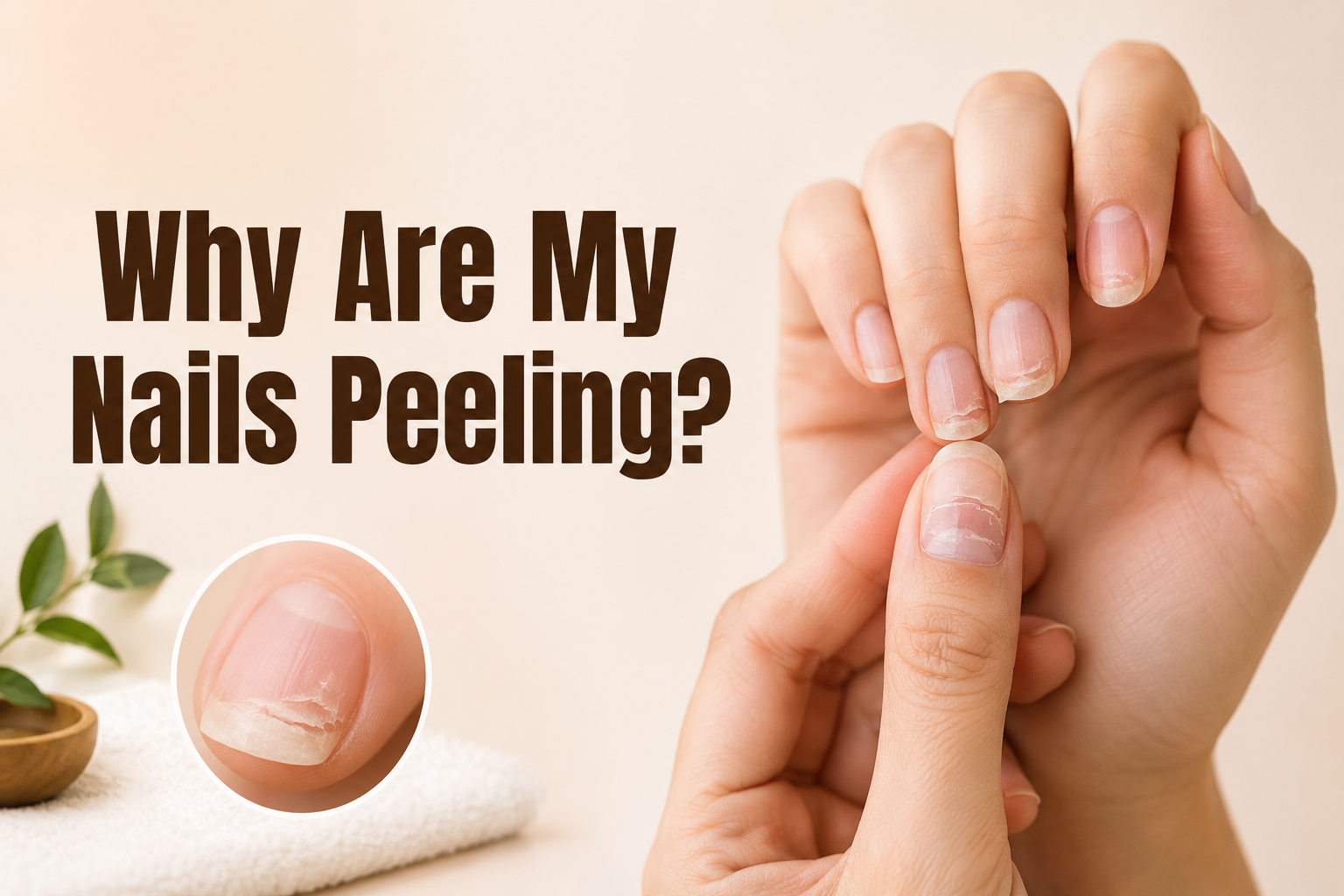
If you keep asking yourself why are my nails peeling, you are not alone, since this is one of the most common nail concerns people search for online. Peeling nails usually happen when the layers of the nail plate separate or flake away, and this can be caused by everyday habits, environmental exposure, or an underlying health issue.
In most cases, the problem is manageable once you understand what is triggering it. The good news is that peeling nails rarely indicate anything dangerous, but they can still be uncomfortable and affect the appearance of your hands. This guide walks you through the causes, practical fixes, and warning signs that mean it is time to see a doctor.
What Does Nail Peeling Actually Mean?
Nail peeling refers to the thin layers of the nail separating and flaking off, a condition doctors often describe using a specific medical term. Understanding the pattern of peeling can help you identify whether the cause is environmental or related to your overall health.
Onychoschizia — The Medical Term Explained
The clinical name for peeling nails is onychoschizia, and it describes the splitting of the nail plate into thin layers. This condition is extremely common, especially among people whose hands are frequently exposed to water or chemicals. It is not usually painful on its own, though it can make nails look rough and uneven over time.
Common Patterns: Horizontal Splitting vs Layered Peeling
Nails can peel in different ways depending on the underlying cause. Horizontal splitting usually happens at the free edge of the nail and is often linked to dryness or repeated trauma. Layered peeling, where thin sheets separate from the nail surface, is more commonly tied to chemical exposure or nutrient deficiencies.
Common Causes of Peeling Nails
Several everyday habits and lifestyle factors can weaken the nail plate over time. Below is a closer look at the most frequent reasons nails begin to peel.
Excess Moisture and Frequent Hand-Washing
Repeated exposure to water, especially without proper drying, causes nails to swell and then shrink as they dry out. This constant cycle weakens the bonds between nail layers. People who wash dishes often or work in wet environments tend to notice peeling more frequently.
Overuse of Nail Polish, Gel, and Acetone Removers
Gel manicures and frequent use of acetone-based removers strip natural oils from the nail plate. This repeated drying effect makes nails brittle and prone to separating. Giving your nails occasional breaks from polish can help restore some of their natural strength.



Nutrient Deficiencies: Biotin, Iron, Zinc, and Protein
A lack of certain nutrients can directly affect nail structure and strength. Biotin, iron, zinc, and protein all play a role in keeping nails firm and resistant to splitting. When these nutrients are low, nails often become thin, brittle, and more likely to peel.
Frequent Physical Trauma or Manual Labor
Jobs or hobbies that involve repeated use of the hands, such as typing, gardening, or manual labor, can gradually wear down the nail plate. Small repeated impacts weaken the structure of the nail over time, making peeling more likely at the tips.
Aging and Natural Nail Thinning
As people age, nails naturally grow more slowly and become thinner. This makes them more vulnerable to splitting and peeling, even without any additional external cause. Reduced circulation and slower cell turnover also contribute to this age-related change.
Underlying Health Conditions Linked to Peeling Nails
While most causes are related to daily habits, some medical conditions can also lead to peeling nails as a visible symptom. It is worth recognizing these so you know when a health check might be useful.
Hypothyroidism
An underactive thyroid can slow down the body’s overall metabolism, which affects nail growth and strength. People with hypothyroidism often notice their nails becoming dry, brittle, and prone to peeling alongside other symptoms like fatigue.
Psoriasis and Eczema
Skin conditions such as psoriasis and eczema can extend to the nail bed, disrupting normal nail growth. This often results in pitting, thickening, or peeling of the nail surface, especially when the surrounding skin is also inflamed.
Fungal Infections
A fungal infection can weaken the nail structure from within, leading to discoloration, thickening, and peeling layers. This type of peeling is often accompanied by a change in nail color or an unpleasant odor.
Anemia
Low iron levels associated with anemia can reduce oxygen supply to the nail bed, making nails weaker and more prone to peeling. Other signs of anemia, such as fatigue and pale skin, often appear alongside nail changes.
Peeling nails combined with fatigue, unexplained weight changes, or skin issues elsewhere on the body may point to an underlying condition rather than simple dryness, so tracking accompanying symptoms is helpful before deciding on next steps.
Peeling Nails at a Glance
| Cause | Key Symptoms | Home Care | When to See a Doctor |
| Excess moisture | Soft, swollen nails that split easily | Dry hands thoroughly, use gloves for wet tasks | If splitting persists despite drying habits |
| Polish/acetone overuse | Brittle, flaking nail surface | Take polish breaks, use gentler removers | If nails don’t recover after a few weeks off polish |
| Nutrient deficiency | Thin, weak, ridged nails | Balanced diet, consider a biotin supplement | If deficiency symptoms continue despite diet changes |
| Physical trauma | Peeling at the tips or edges | Wear protective gloves during repetitive tasks | If pain or bleeding occurs |
| Thyroid or fungal issues | Peeling with discoloration or fatigue | Not typically resolved with home care alone | Recommended for proper diagnosis and treatment |
How to Fix and Prevent Peeling Nails?
Most cases of peeling nails improve with consistent care and a few adjustments to daily habits. Building a simple routine can make a noticeable difference within a few weeks.
Moisturizing and Cuticle Care Routine
Applying a nourishing hand cream or cuticle oil daily helps restore moisture that is lost through frequent washing or chemical exposure. Massaging oil into the nail bed also improves circulation, which supports healthier nail growth over time.
Dietary Changes and Supplements
Eating a diet rich in protein, iron, zinc, and biotin supports stronger nail structure from the inside out. Foods like eggs, leafy greens, nuts, and lean meats are good natural sources. Supplements can help if a deficiency is confirmed, but they should not replace a balanced diet.
Protective Habits: Gloves, Nail Hardeners, and Limiting Polish
Wearing gloves while cleaning or doing dishes reduces prolonged water exposure that weakens nails. Nail hardeners can also add a protective layer, though they should be used carefully since overuse may cause additional dryness. Giving nails regular breaks from polish allows them to recover naturally.
Nail-Safe Manicure Practices
Choosing gentler nail care methods, such as avoiding harsh acetone removers and not filing nails too aggressively, helps preserve their natural strength. Opting for breathable, non-toxic polish formulas can also reduce the chemical stress placed on the nail plate.
When to See a Doctor
Occasional peeling is usually harmless, but certain signs suggest it is time for a professional evaluation. Pain, bleeding, spreading discoloration, or nails that thicken or separate from the nail bed should not be ignored.
Persistent peeling despite consistent home care, especially when paired with fatigue or skin changes elsewhere, may point to a thyroid issue, fungal infection, or nutritional deficiency that needs proper diagnosis and treatment.
Frequently Asked Questions
Can peeling nails heal on their own? Yes, mild peeling often improves once moisture exposure is reduced and a proper care routine is followed consistently.
Is peeling nails a sign of vitamin deficiency? It can be, particularly when biotin, iron, or zinc levels are low, though other lifestyle factors are more common causes.
Does biotin really help nail strength? Biotin supplementation has shown benefits for people with a confirmed deficiency, but it may not help if your levels are already normal.
Can peeling nails be a sign of thyroid problems? Yes, an underactive thyroid can cause nails to become dry and brittle, so persistent peeling alongside fatigue is worth checking with a doctor.
Conclusion
Understanding why are my nails peeling starts with looking at daily habits like moisture exposure, polish use, and diet, since these are the most common triggers.
In most cases, simple changes such as moisturizing regularly, eating a balanced diet, and protecting nails during wet or repetitive tasks can restore their strength within a few weeks.
If peeling continues despite these efforts or comes with other symptoms, consulting a doctor can help identify an underlying cause and get the right treatment.
RELATED POSTS
Is Walking Good for Sciatica? A Complete Guide to Safe Movement and Pain Relief
Texas Health Surgery Center: Services, Benefits, Insurance, Recovery & Patient Care Guide
Growing Pains Massage: Safe Techniques and Natural Ways to Relieve Leg Pain in Children
What Is Commonly Misdiagnosed as Pink Eye? Conditions to Know
Is Cheese Gluten-Free? Your Complete Guide to Safe and Unsafe Cheeses