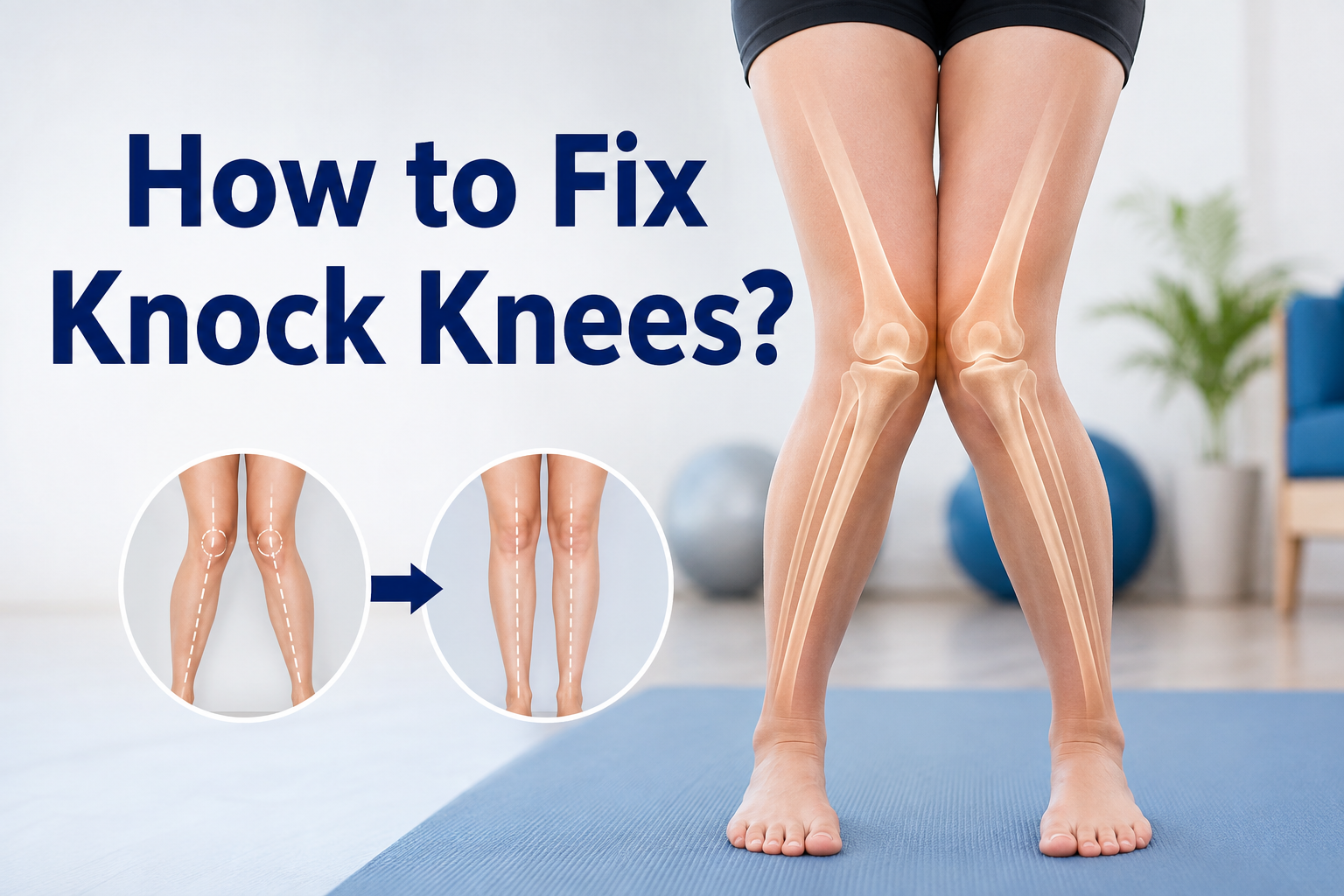
Knock knees, also called genu valgum, happens when the knees angle inward and touch while the ankles stay apart when standing straight. In children, this is often a normal part of growth and usually corrects itself by age seven or eight without any treatment.
For adults, however, knock knees can result from injury, arthritis, or long-term joint stress, and fixing it usually needs a combination of exercises, bracing, weight management, or in severe cases, surgery. The right fix depends entirely on the person’s age, the severity of the misalignment, and whether an underlying medical condition is driving it.
This guide breaks down exactly how to fix knock knees for both children and adults, covering non-surgical routes first and surgical options for cases that don’t respond to conservative care. Anyone noticing worsening knee alignment, pain, or difficulty walking should get an evaluation from an orthopedic specialist before starting any home-based routine.
What Are Knock Knees (Genu Valgum)?
Genu valgum describes a specific alignment pattern where the knees curve inward while standing, creating a noticeable gap between the ankles. Understanding what counts as normal versus concerning alignment helps determine whether treatment is even necessary.
Normal vs. Abnormal Knee Alignment
Most toddlers naturally show some degree of knock knees between ages two and six as part of typical bone development, and this is not considered a disorder. The concern arises when the inward angle is severe, asymmetrical between the two legs, or persists well past age eight. A simple visual check, comparing the distance between the ankles while the knees touch, gives a rough indication, though a physician’s measurement is far more reliable.
How Common Is It in Children vs. Adults
Nearly all young children pass through a phase of mild genu valgum, making it one of the most common pediatric orthopedic observations. In adults, true knock knees are less common and usually point to an underlying cause rather than a natural growth phase, which is why adult cases are taken more seriously from a diagnostic standpoint.
Causes of Knock Knees
Knock knees can develop from several different pathways, ranging from harmless growth patterns to serious medical conditions. Identifying the actual cause is the first step toward choosing the correct fix.
Natural Growth-Related Causes in Children
During normal childhood development, the legs pass through a bowed stage in infancy and then a knock-kneed stage between ages two and six before settling into a straighter adult alignment. This pattern is driven by normal bone growth plates and typically needs no intervention beyond periodic observation.



Underlying Medical Conditions
Conditions such as rickets, caused by vitamin D deficiency, or Blount’s disease, which affects the growth plate near the shin bone, can cause more severe or one-sided knock knees that do not resolve on their own. Obesity also places extra stress on the knee joints during growth, which can worsen the inward angle over time in both children and adults.
Injury or Arthritis-Related Causes in Adults
In adults, knock knees frequently develop after a fracture that heals improperly, ligament damage, or long-term osteoarthritis that wears down the inner side of the knee joint unevenly. These structural changes shift weight distribution across the knee, gradually pulling it into a valgus position.
Symptoms and When to See a Doctor
Most mild knock knees produce no symptoms at all, but certain warning signs indicate that professional evaluation is necessary rather than home management.
Warning Signs That Need Medical Evaluation
Persistent knee pain, a visibly worsening angle after age eight, one leg appearing more affected than the other, or difficulty walking and running are all signals that a doctor’s assessment is needed. Sudden onset of knock knees in a previously normal adult also warrants prompt attention, since it may point to arthritis or a joint injury.
Diagnostic Tests
Doctors typically start with a physical examination and gait observation, followed by standing X-rays that measure the exact angle between the thigh bone and shin bone. In some cases, blood tests are ordered to rule out vitamin D deficiency or other metabolic causes behind the misalignment.
Non-Surgical Treatment Options
For most mild to moderate cases, especially in growing children, conservative treatment is the first and often only approach needed. These methods focus on strengthening muscles, supporting joint alignment, and reducing excess load on the knees.
Targeted Exercises and Physical Therapy
Strengthening the hip abductors, glutes, and inner thigh muscles helps improve how the knee tracks during movement, which can reduce the inward pull over time. Common exercises include side-lying leg raises, clamshells, wall-sits, and controlled squats performed with proper form under guidance from a physical therapist.
Orthotics and Bracing
Custom shoe inserts or knee braces work by redistributing weight across the foot and knee joint, which can slow progression in children whose bones are still developing. Adults with mild valgus deformity sometimes use unloader braces during physical activity to reduce strain on the inner knee compartment.
Weight Management’s Role in Alignment
Carrying extra body weight increases the load transmitted through the knee joint with every step, which can accelerate the inward angling seen in genu valgum. Gradual, sustainable weight reduction through diet and low-impact activity reduces this joint stress and often slows or halts further misalignment.
Comparison of Non-Surgical and Surgical Treatments
| Treatment Type | Best Suited For | Recovery Time | Invasiveness |
| Physical therapy & exercises | Mild cases, all ages | Ongoing, weeks to months | Non-invasive |
| Orthotics/bracing | Growing children, mild adult cases | Ongoing while worn | Non-invasive |
| Weight management | Overweight individuals of any age | Months, gradual | Non-invasive |
| Guided growth surgery | Children/adolescents with significant deformity | Several months | Minimally invasive |
| Osteotomy | Adults or severe uncorrected cases | 3-6 months | Invasive |
Surgical Treatment Options
When conservative methods fail to correct significant misalignment, or when the deformity is too severe for exercises and bracing alone, surgical correction becomes the next step.
Guided Growth Surgery (Hemiepiphysiodesis)
This procedure involves placing a small plate on one side of the growth plate near the knee, which temporarily slows growth on that side while the other side continues growing normally. Over several months, this allows the bone to gradually straighten itself, and the plate is removed once correction is achieved.
Osteotomy for Severe or Adult Cases
An osteotomy involves surgically cutting the bone near the knee and repositioning it into proper alignment before securing it with plates or screws. This option is generally used for adults or severe cases where growth plates have already closed, and it comes with a longer recovery period compared to guided growth procedures.
Prevention and Long-Term Management
Ongoing monitoring and healthy habits play a significant role in preventing knock knees from worsening, particularly in children who are still developing.
Monitoring Growth in Children
Regular pediatric checkups that include a visual and measured assessment of leg alignment help catch any concerning progression early. Parents should track whether the gap between the ankles is shrinking, staying the same, or widening as the child grows.
Maintaining Joint Health in Adults
Adults can protect their knee alignment by maintaining a healthy weight, staying active with low-impact exercise, and addressing any arthritis symptoms early with a physician. Avoiding prolonged high-impact stress on the knees also helps preserve joint alignment over the long term.
FAQs
Can knock knees fix themselves without treatment?
In most children, yes, mild knock knees resolve naturally by age seven or eight as part of normal growth.
Do knock knee exercises actually work?
Targeted strengthening exercises can improve muscle balance and knee tracking, though they work best for mild cases and alongside other treatments.
Is surgery always needed for adults with knock knees?
No, surgery is only considered when conservative treatments fail or the deformity is severe enough to cause pain or mobility issues.
Can knock knees come back after surgery?
Recurrence is uncommon when the underlying cause is properly addressed, but ongoing monitoring is still recommended.
Does weight loss really help fix knock knees?
Yes, reducing excess weight lowers the mechanical stress on the knee joint, which can slow or prevent further inward angling.
Conclusion
Knock knees range from a harmless childhood growth phase to a condition needing medical correction in adults, and the right fix depends on age, cause, and severity.
Mild cases often respond well to exercises, bracing, and weight management, while severe or persistent cases may require guided growth surgery or osteotomy.
Anyone noticing pain, asymmetry, or worsening alignment should consult an orthopedic specialist for proper diagnosis and a personalized treatment plan.
RELATED ARTICLES
Can root canals cause cancer? What the science actually says
Why Does My Vision Go Black When You Stand Up? Symptoms
Can Cavities Cause Bad Breath? Full Guide to Causes, Signs
Abbeville Community Health Center: Services, Programs, Benefits, and Patient Care Guide