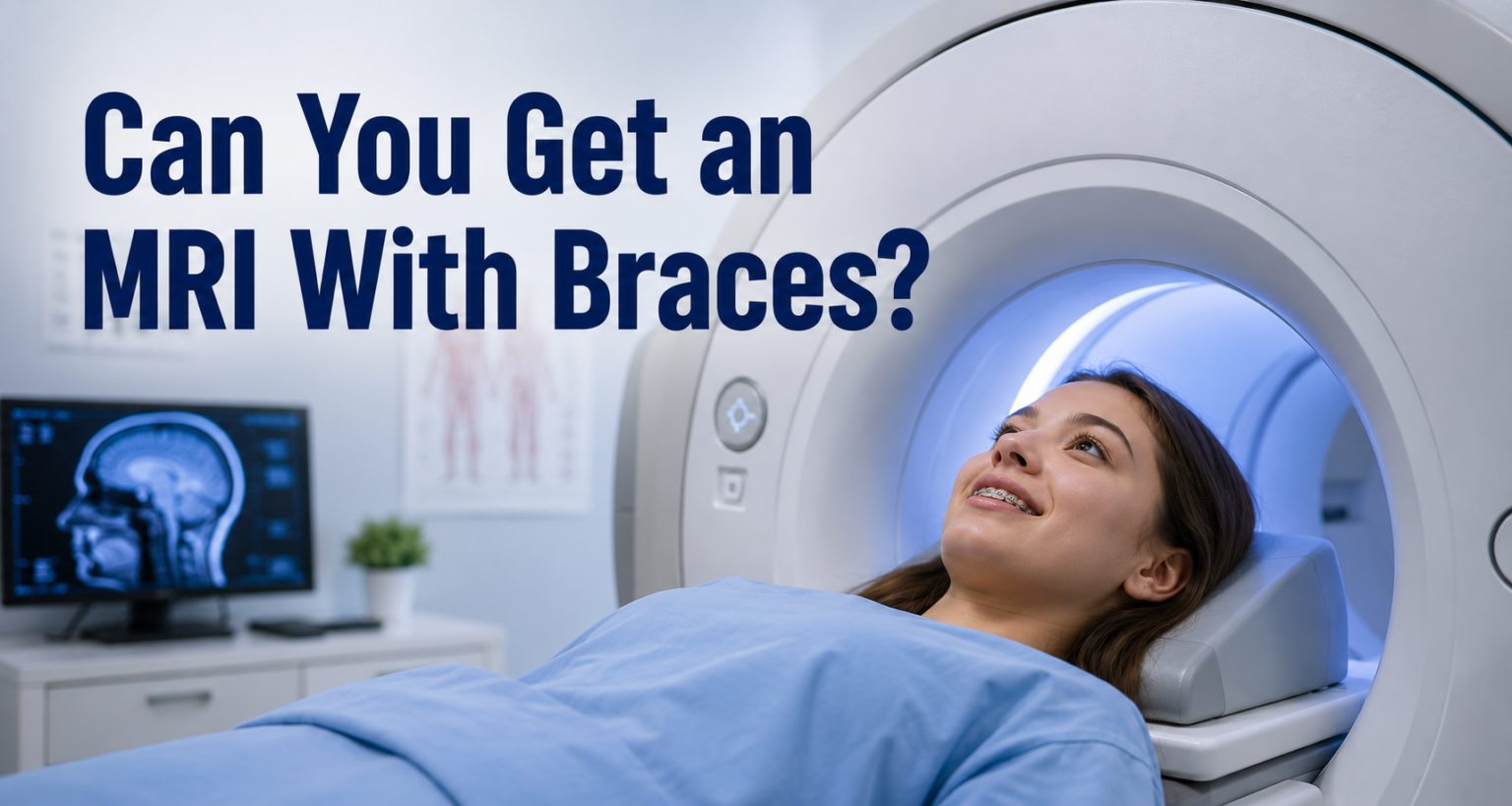
If you wear braces and your doctor has recommended an MRI, it is natural to feel a little uncertain about what to expect. Yes, you can get an MRI with braces in the vast majority of cases, since orthodontic brackets and wires are usually made from materials that are either non-magnetic or only weakly magnetic.
These materials do not typically pose a safety risk inside an MRI machine. However, braces can sometimes interfere with image clarity, particularly during scans of the head, face, or jaw area. Radiologists are often able to adjust scanning techniques to reduce this interference.
Mild warmth near the metal is possible but rarely a cause for concern. The most important step is simply telling your MRI technologist about your braces before the scan begins.
Is It Safe to Get an MRI With Braces?
Braces are generally considered safe for MRI scans because of the specific materials orthodontists use. Understanding why requires a closer look at how these materials interact with a strong magnetic field, since the science behind this reassurance is what actually makes the difference for patients.
Why Braces Are Generally MRI-Safe
Most modern braces are made from stainless steel or titanium alloys, both of which are either non-ferromagnetic or only mildly magnetic. This means they do not get forcefully pulled toward the MRI machine’s magnet the way certain other metals do, such as some older surgical implants or ferromagnetic objects.
Because of this property, braces are widely regarded as compatible with standard MRI procedures, and patients rarely need to have them removed beforehand. Orthodontists typically select these materials specifically because they are biocompatible and stable, which happens to make them well suited to MRI environments as well.
Potential Risks to Be Aware Of
Although braces are not considered dangerous during an MRI, some patients report a mild warming sensation near the metal brackets during longer scans. This happens because metal can absorb small amounts of energy from the magnetic field, though it is usually harmless and fades quickly once the scan ends.
In rare cases, patients may feel slight pressure or discomfort around the mouth, and anyone who notices unusual sensations should alert the technologist right away so adjustments can be made. Technologists are trained to monitor for these reports and can pause or modify the scan if a patient feels uneasy at any point.



How Braces Can Affect MRI Image Quality?
While braces are typically safe, they are not always invisible to the machine. Depending on which part of the body is being scanned, braces can sometimes create visual interference in the resulting images, and this is usually the bigger practical concern rather than safety itself.
Artifact Interference Near the Head and Jaw
When an MRI is focused on the brain, sinuses, or facial structures, the metal in braces can create what is known as an imaging artifact. This appears as distortion, streaking, or blurred spots near the mouth and jaw region, which can make it harder to evaluate soft tissue detail in that immediate area.
Radiologists are trained to recognize these patterns and often account for them when reading the scan, but in some cases the affected area may need to be interpreted with caution or supplemented with a different imaging approach, such as a CT scan, if extremely fine detail near the jaw is required.
When Braces Don’t Affect the Scan
For MRI scans unrelated to the head or face, such as those examining the knee, spine, shoulder, or abdomen, braces typically have no impact at all.
The magnetic field and imaging sequences used for these body regions are far enough from the mouth that the metal in braces does not interfere with clarity.
Patients undergoing these types of scans generally do not need to worry about any braces-related complications, and the presence of braces is often little more than a formality noted on the intake form.
What Happens During the MRI Process With Braces?
Knowing what to expect can help ease any anxiety about the appointment. The process for patients with braces is very similar to a standard MRI, with a few extra precautions built in to keep both safety and image quality in mind.
Before the Scan
Before the appointment, patients are usually asked to fill out a safety screening form that asks about any metal implants or dental work, including braces.
It is important to mention braces clearly, even if they seem minor, so the technologist can plan the scan accordingly and decide whether any sequence adjustments are needed for the specific body part being imaged.
Some facilities may also ask whether the braces are fixed or removable, since this can occasionally influence scanning decisions for head and neck imaging.
During the Scan
Once inside the machine, the scanning process itself does not usually feel any different for someone with braces compared to someone without them. Technologists may choose specific imaging sequences designed to minimize metal artifacts, especially if the scan involves the brain or facial area.
Most patients complete the procedure without any unusual sensations beyond the normal sounds and vibrations of the machine. If a mild warming sensation does occur, it is typically brief, localized, and resolves on its own once the scan is complete.
Comparison Table: Braces vs. Other Orthodontic and Dental Devices in MRI
The table below offers a quick comparison of how different orthodontic and dental devices typically behave during an MRI scan, which can help patients understand where braces fit relative to other common dental hardware.
| Device Type | MRI Safety | Common Imaging Concerns |
| Traditional metal braces | Generally safe | Possible artifacts near jaw and facial scans |
| Ceramic braces | Considered safe | Minimal to no artifacts |
| Clear aligners (removable) | Safe | No significant imaging concerns |
| Permanent retainers | Generally safe | Minor artifacts possible near scan area |
This comparison shows that while most orthodontic devices are compatible with MRI, the level of image interference can vary slightly depending on the material and whether the device is fixed or removable. Removable devices such as clear aligners offer the simplest solution, since they can be taken out entirely before a scan if a patient prefers extra peace of mind, though this is rarely a requirement.
Frequently Asked Questions
Do I need to remove my braces before an MRI?
In most cases, braces do not need to be removed before an MRI, since they are typically made from MRI-compatible materials. The technologist may still ask questions to confirm the type of braces being worn before proceeding.
Can braces set off metal detectors during MRI screening?
Braces are generally too small in metal content to trigger significant alarms, though screening staff are trained to ask about all metal objects, including dental work, as a standard precaution before any scan begins.
Will braces affect an MRI of the brain specifically?
Brain scans are one of the areas most likely to show some artifact interference from braces, since the mouth and jaw are close to the imaging region, though radiologists often adjust sequences to reduce this effect.
Are ceramic braces different from metal braces in MRI safety?
Ceramic braces typically cause fewer imaging artifacts than metal braces, though both are generally considered safe for MRI procedures and do not usually require removal beforehand.
Conclusion
Getting an MRI with braces is safe for most patients, and removal is rarely necessary. The main consideration is the possibility of minor image artifacts, especially during brain or facial scans, rather than any serious safety concern.
Letting the MRI technologist know about braces beforehand ensures the scan can be adjusted if needed for the clearest possible results. Patients with any specific concerns about their orthodontic hardware can always check with their orthodontist or radiologist ahead of the appointment for added peace of mind.
Related Posts
How to Sleep with a Pinched Nerve in a Shoulder Blade?
Jawline Acne: Causes, Symptoms, Treatments, and Prevention Tips
How to Get Rid of Wrinkles Under Eyes: Causes, Treatments & Prevention
How Does the Digestive System Work With the Circulatory System?
Mental Health Retreat Covered by Insurance: Complete Guide to Coverage, Costs, and Approval