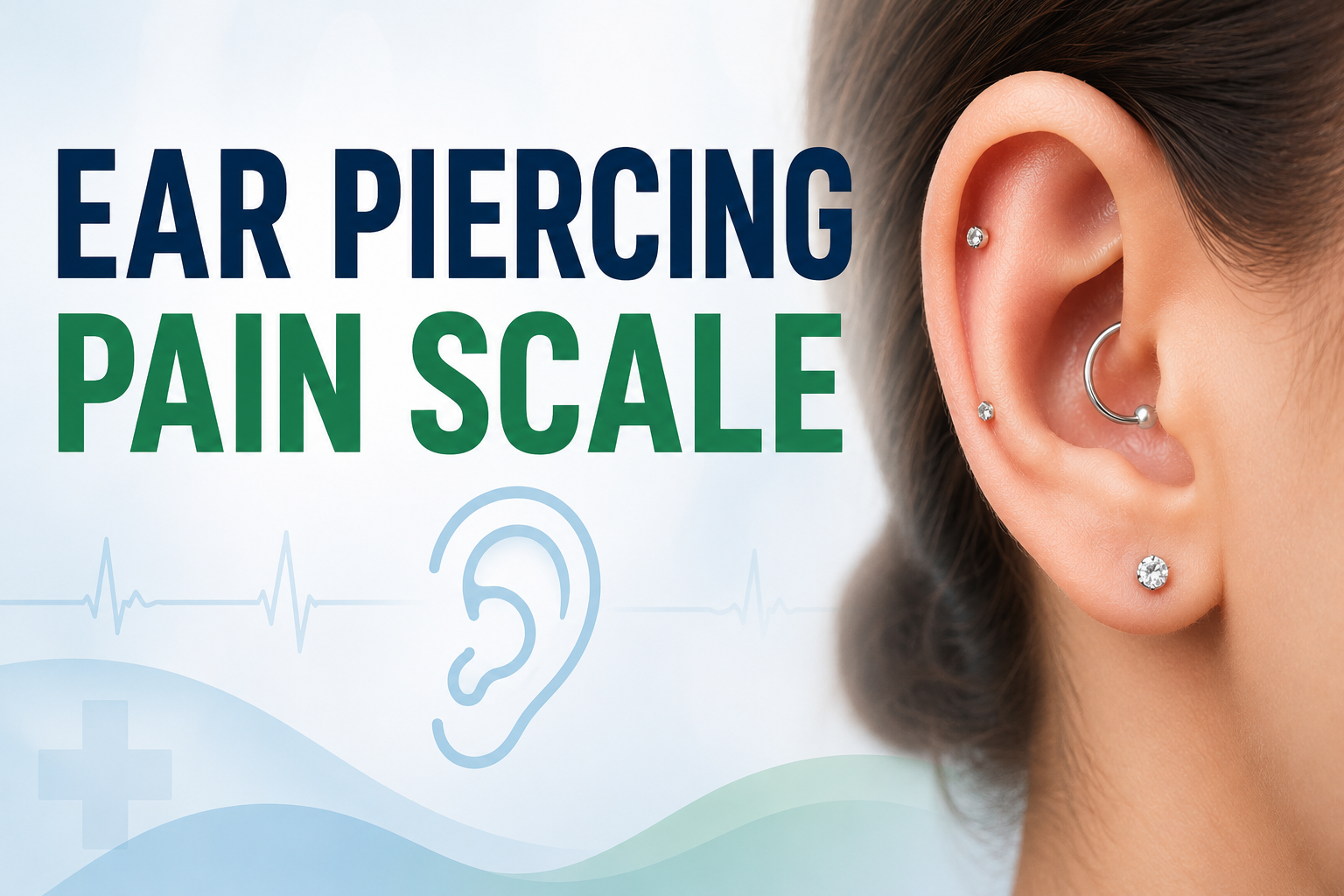
Getting a new piercing is exciting, but most people still ask one question before booking an appointment: how much will it hurt? This is exactly where the ear piercing pain scale becomes useful. It gives a simple way to compare different ear piercings based on how much discomfort they usually cause, so you can plan ahead with realistic expectations instead of guessing.
This guide breaks down the ear piercing pain scale in plain language, covering everything from the easiest lobe piercing to the more intense cartilage piercings, along with practical tips to make the whole experience smoother.
How Pain Is Measured and What Affects It?
The ear piercing pain scale is not a strict medical measurement; instead, it is based on common experiences shared by thousands of people who have gone through the process. Pain is usually rated on a scale of one to ten, where one means barely noticeable and ten means intense, sharp discomfort.
Several things influence where a piercing falls on this scale, including the thickness of the tissue being pierced, the number of nerve endings in that area, the skill of the piercer, and even your own pain tolerance on that particular day. Because of these variables, the scale should be treated as a helpful guide rather than an exact prediction for everyone.
Complete Pain Scale Chart
To make comparisons easier, here is a simple breakdown of common ear piercings ranked from the least painful to the most painful, along with a short description of what each one typically feels like.
| Piercing Type | Pain Level (1–10) | What It Usually Feels Like |
| Lobe | 2–3 | A quick, light pinch that fades almost instantly |
| Upper Lobe | 3 | Slightly sharper pinch than a regular lobe |
| Helix | 4 | A brief pressure followed by a short sting |
| Forward Helix | 4 | Similar to helix, with a bit more pinching sensation |
| Tragus | 5 | A firm pinch due to thicker cartilage |
| Conch | 5 | Noticeable pressure with a short, sharp pinch |
| Rook | 6 | A stronger pinch that lasts a few seconds |
| Daith | 6 | Sharp and sudden, but very brief |
| Industrial | 7 | Two piercings done close together, so discomfort adds up |
| Snug | 7 | Tight cartilage area, making pressure more intense |
| Orbital | 7 | Two connected piercings, increasing overall sensation |
Pain Level by Piercing Type
Each section below explains why certain piercings feel different on the ear piercing pain scale, grouped by how intense the sensation usually is.
Lobe and Upper Lobe Piercings
Lobe piercings are widely considered the easiest on the ear piercing pain scale because the earlobe is made of soft, fleshy tissue with very few nerve endings. The sensation is often compared to a quick pinch or a light snap, and it usually disappears within a few seconds.
Upper lobe piercings sit slightly higher on the ear and can feel a touch sharper since the tissue there is a little firmer, but the difference is minor. These piercings also tend to heal faster compared to cartilage piercings, which makes them a popular first choice for beginners.



Mid-Range Cartilage Piercings: Helix, Tragus, Conch and Rook
Once you move into cartilage piercings, the pain level rises noticeably because cartilage is denser and contains more nerve endings than the lobe. Helix and forward helix piercings, located on the upper outer ear, usually bring a short sting followed by mild pressure.
Tragus and conch piercings sit on thicker cartilage, so the pinch feels firmer and slightly more uncomfortable, though it still passes quickly. Rook piercings, placed on the inner cartilage fold, often feel a bit more intense because the area is narrow and sensitive, but the actual piercing process is still very fast.
Why Cartilage Piercings Hurt More Than Lobe Piercings
The main reason cartilage piercings rank higher on the ear piercing pain scale comes down to basic anatomy. The earlobe is mostly soft tissue with a simple structure, which means the needle passes through easily and quickly.
Cartilage, on the other hand, is firmer, denser, and packed with more nerve endings, so piercing through it requires a bit more pressure and time. This also explains why cartilage piercings generally take longer to heal, since the tissue itself is less flexible and takes more time to settle around new jewelry compared to the lobe area.
Personal Factors That Influence Pain
Beyond the type of piercing, several personal factors can shift where your experience lands on the ear piercing pain scale. These factors often matter just as much as the piercing location itself.
Anxiety and Mental Preparation
Feeling nervous before a piercing can actually make the pain feel worse than it really is, since stress tightens muscles and heightens sensitivity. Taking a few deep breaths beforehand and mentally preparing for a quick pinch can make the actual moment feel much more manageable than expected.
Piercer Skill and Technique
An experienced piercer who works quickly and confidently can make a huge difference in comfort level. Smooth, precise technique reduces the time the needle spends in the skin, which often makes the pain feel shorter and less intense overall.
Needle vs. Piercing Gun
Professional piercers generally prefer a sterile, single-use needle over a piercing gun, especially for cartilage. Needles create a cleaner hole with less pressure and tissue damage, while piercing guns can cause more trauma to cartilage, sometimes increasing discomfort and slowing down healing.
Tips to Reduce Pain Before and During Piercing
A few simple habits can help lower your spot on the ear piercing pain scale on the actual day. Eating a proper meal beforehand helps avoid lightheadedness, while staying hydrated keeps your body relaxed.
Avoiding caffeine and alcohol a few hours before your appointment is also helpful, since both can increase sensitivity and affect blood flow. Choosing a licensed piercer who uses a needle rather than a gun, especially for cartilage areas, tends to reduce both pain and the risk of complications.
Finally, practicing slow breathing during the actual piercing moment can make the brief sting feel much less intense.
Healing Timeline and Post-Piercing Discomfort
Pain does not completely disappear the moment the piercing is done; mild soreness and tenderness are normal for the first few days. Lobe piercings typically settle down within one to two weeks, while cartilage piercings such as helix, tragus, or conch can take anywhere from three to nine months to fully heal.
More complex piercings like industrial or orbital may take even longer because two points need to heal together. During this period, occasional throbbing or light tenderness when touched is normal, but sharp ongoing pain, swelling, or discharge usually signals that something needs attention.
Aftercare Tips to Minimize Pain and Avoid Infection
Good aftercare plays a major role in keeping discomfort low after the initial piercing pain fades. Cleaning the area gently with a saline solution twice a day helps prevent irritation and infection.
It is also important to avoid touching the piercing with unwashed hands, sleeping directly on it, or rotating the jewelry unnecessarily.
Switching pillowcases regularly and avoiding swimming pools or open water during the early healing stage can further reduce irritation. Following these simple habits consistently makes a noticeable difference in how comfortable the healing process feels overall.
Getting Multiple Piercings: Pain and Healing Considerations
Many people wonder whether getting several ear piercings in one sitting makes the overall experience more painful. While each individual piercing only takes a few seconds, getting multiple piercings at once means the cumulative discomfort and healing time can add up.
It also means more areas need careful aftercare at the same time, which can feel overwhelming for first-timers.
Spacing out piercings over a few weeks or months allows your body to heal one area before adding more, which is often more comfortable and easier to manage compared to getting everything done in a single visit.
Frequently Asked Questions
Which ear piercing hurts the least?
The standard earlobe piercing is widely considered the least painful option since it involves soft tissue with minimal nerve endings, making it a comfortable choice for first-time piercings.
Does a piercing gun hurt less than a needle?
Not necessarily; while a gun feels fast, needles used by professional piercers usually cause less tissue trauma and result in a cleaner, often less painful piercing, especially for cartilage.
How long does the pain from ear piercing last?
The sharp sensation during piercing usually lasts only a second or two, while mild soreness or tenderness can continue for a few days as the area begins to heal.
Can high pain during piercing mean something went wrong?
Brief sharp pain is normal, but ongoing intense pain, swelling, or pus after the first few days usually indicates irritation or infection and should be checked by a professional.
Is the daith piercing more painful than the tragus?
The daith generally ranks slightly higher on the ear piercing pain scale because it passes through a small, sensitive fold near the ear canal, while the tragus involves a flatter piece of cartilage that is easier for the needle to pass through cleanly.
Why do some people feel almost no pain during a lobe piercing?
This usually comes down to the soft, low-density nature of earlobe tissue combined with a calm mental state; people who feel relaxed and breathe steadily during the process often barely notice the quick pinch.
Does age affect where a piercing falls on the pain scale?
Skin and cartilage can become slightly thicker or less elastic with age, which may make certain piercings feel marginally more intense for older individuals, though piercer skill and personal pain tolerance still play a bigger role than age alone.
Conclusion
Understanding the ear piercing pain scale helps take the guesswork out of choosing your next piercing, whether you are starting with a simple lobe piercing or considering something bolder like an industrial or daith.
While cartilage piercings generally rank higher on the pain scale due to denser tissue and more nerve endings, the discomfort for almost every ear piercing is brief and very manageable.
With the right piercer, proper preparation, and consistent aftercare, the short moment of pain quickly fades, leaving you with a piercing you can enjoy for years to come.
Related Articles
Can You Have 2 Health Insurances?
When Do You Start Showing in Pregnancy?
Is Cheese Gluten-Free? Your Complete Guide to Safe and Unsafe Cheeses
Cancer Misdiagnosis: Causes, Consequences, Prevention, and Patient Rights
Chelsea Crumpler UNC Health: Career, HR Leadership, and Professional Contributions