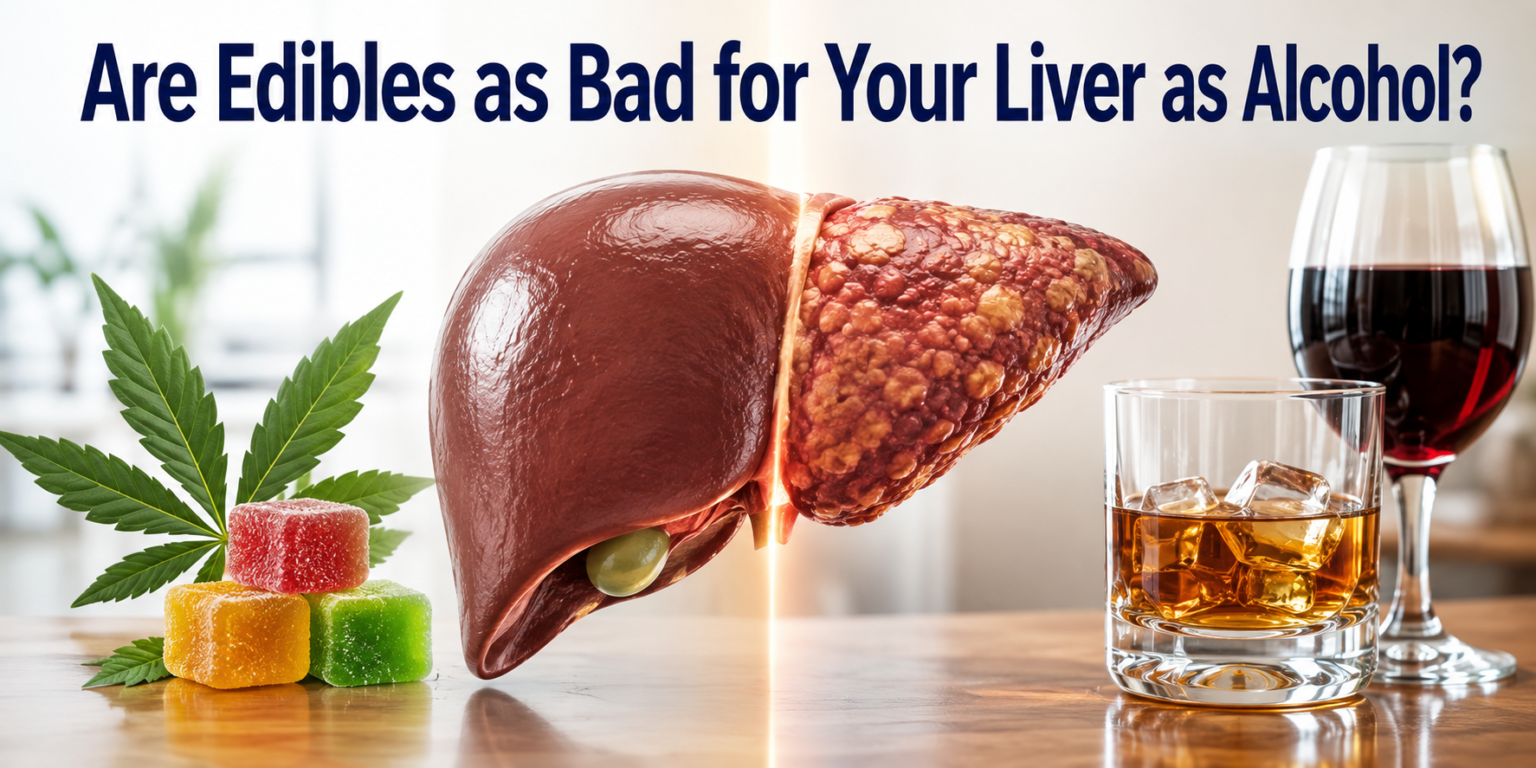
Many people who switch from drinking to using cannabis edibles assume they have made a completely liver-safe choice, but the real picture is more layered than that. The question “are edibles as bad for your liver as alcohol” comes up often because both substances are processed through the same organ, and both carry some risk when used heavily.
The honest answer is that edibles are not considered as damaging to the liver as alcohol, especially over the long term. Alcohol has a well-documented history of causing progressive, sometimes irreversible liver disease, while cannabis edibles carry a much smaller and less consistent body of evidence linking them to structural liver damage.
That does not mean edibles are risk-free, particularly for people who already have liver conditions or take medications processed by the liver. This article breaks down how each substance is metabolized, what the research actually shows, and who needs to be more careful.
How the Liver Processes Alcohol vs. Edibles?
Before comparing damage levels, it helps to understand that alcohol and THC do not travel through the liver in the same way or at the same pace. The liver treats each one as a separate chemical challenge, using different enzyme systems that produce very different byproducts.
How Alcohol Is Metabolized in the Liver?
When alcohol enters the body, the liver breaks it down mainly through an enzyme called alcohol dehydrogenase, which converts it into acetaldehyde, a toxic compound. Acetaldehyde is then converted into acetate by another enzyme before it can be cleared from the body. This process happens repeatedly with every drink, and the liver can only handle a limited amount at a time, so excess alcohol keeps circulating and causing cellular stress.
How THC/Edibles Are Metabolized in the Liver?
Edibles are absorbed through the digestive system and then processed by the liver, where THC is converted into a stronger compound called 11-hydroxy-THC. This is part of why edibles feel more intense than smoking, since the liver actively transforms the compound rather than simply filtering it out. The enzymes involved belong to the CYP450 family, the same group responsible for metabolizing many common medications.
Key Differences in Metabolic Pathways
The biggest difference is that alcohol metabolism directly produces a toxic byproduct that damages liver cells with repeated exposure, while THC metabolism does not have the same well-established cell-damaging pathway. Alcohol’s toxic byproduct accumulates with heavy or frequent drinking, whereas THC metabolites are cleared without the same pattern of direct cellular injury. This is one reason researchers do not classify edibles and alcohol as equally harmful to liver tissue.
Liver Damage Caused by Alcohol
Alcohol-related liver disease develops in stages, and each stage represents a deeper level of damage that becomes harder to reverse. Understanding these stages shows why alcohol is treated as a leading cause of liver disease worldwide.



Fatty Liver Disease
Fatty liver is usually the first stage of alcohol-related liver damage and can develop within just a few weeks of heavy drinking. Fat builds up inside liver cells because the liver prioritizes breaking down alcohol over processing fats normally. At this early stage, the condition is often reversible if drinking stops, but continued alcohol use pushes the liver toward more serious damage.
Alcoholic Hepatitis
Alcoholic hepatitis involves inflammation and swelling of the liver, which can range from mild to severe depending on how much and how long someone has been drinking. Symptoms may include fatigue, nausea, abdominal discomfort, and yellowing of the skin or eyes in more serious cases. Severe alcoholic hepatitis can be life-threatening and often requires hospital care.
Cirrhosis and Long-Term Risk
Cirrhosis is the most advanced stage, where healthy liver tissue is replaced by permanent scar tissue that cannot function like normal liver cells. This scarring builds up gradually after years of heavy drinking and significantly reduces the liver’s ability to filter toxins, produce proteins, and support digestion. Unlike fatty liver, cirrhosis is generally not reversible, which is why alcohol carries such a strong long-term liver risk.
What Edibles Actually Do to the Liver?
Cannabis edibles interact with the liver differently, and most of the concern centers on short-term strain or medication interactions rather than the kind of progressive scarring seen with alcohol.
Short-Term Effects on Liver Enzymes
High doses of edibles can temporarily raise certain liver enzyme levels, which is generally a sign of short-term stress rather than lasting injury. This effect is usually more noticeable in people who consume very large amounts at once or combine edibles with other substances. In most healthy individuals, enzyme levels tend to normalize once the THC is fully processed.
Drug Interaction Risks (CYP450 Pathway)
Because THC is broken down by the same CYP450 enzymes used for many prescription medications, edibles can interfere with how those drugs are metabolized. This can make some medications less effective or increase their concentration in the blood, depending on the drug involved. People taking blood thinners, certain antidepressants, or seizure medications should be especially cautious about this interaction.
Effects in People With Pre-Existing Liver Disease
For someone who already has hepatitis, fatty liver disease, or another liver condition, the liver has less reserve capacity to handle any added metabolic workload. Edibles are not considered a direct cause of these conditions, but they can add extra strain to a liver that is already compromised. This makes medical guidance more important for anyone with an existing diagnosis before regularly using edibles.
Comparison Table — Alcohol vs. Edibles: Liver Impact
| Factor | Alcohol | Edibles (THC) |
| Main liver pathway | Alcohol dehydrogenase enzyme system | CYP450 enzyme system |
| Toxic byproduct | Acetaldehyde, directly damages liver cells | 11-hydroxy-THC, not established as directly toxic to liver cells |
| Chronic disease risk | Fatty liver, hepatitis, cirrhosis with regular heavy use | No strong evidence of progressive structural liver disease |
| Reversibility | Early stages reversible, cirrhosis generally permanent | Short-term enzyme changes typically reversible |
| Main concern for healthy users | Long-term structural liver damage | Acute strain at very high doses |
| Main concern for at-risk users | Faster progression of existing liver disease | Reduced liver reserve, medication interactions |
Who Should Be Cautious With Edibles?
Even though edibles are not linked to the same level of liver damage as alcohol, certain groups still need to think carefully before regular use, since their liver may already be working with reduced capacity.
People With Hepatitis or Fatty Liver Disease
Anyone already diagnosed with hepatitis or fatty liver disease should talk to a doctor before using edibles regularly, since their liver has less ability to absorb additional metabolic stress. Existing inflammation or fat buildup can make the liver more sensitive to any added workload. Monitoring liver function periodically is often recommended in these cases.
People on Liver-Metabolized Medications
Because THC shares the CYP450 pathway with many prescription drugs, people on regular medication should check for possible interactions before using edibles. This is particularly relevant for blood thinners, anti-seizure medications, and certain heart or psychiatric drugs. A pharmacist or doctor can clarify whether a specific medication carries this risk.
High-Dose or Frequent Use Concerns
Consuming very high doses of edibles regularly, especially in combination with alcohol or other substances, increases the chance of temporary liver strain. Frequent heavy use also raises the likelihood of nausea, vomiting, and digestive discomfort, which indirectly affects overall liver workload. Moderation remains the safest approach even though edibles are not considered as hepatotoxic as alcohol.
Signs Your Liver May Be Under Stress
Certain symptoms can signal that the liver is struggling, regardless of whether alcohol or edibles are involved, and these should not be ignored. Persistent fatigue, loss of appetite, nausea, dark urine, yellowing of the skin or eyes, and pain or swelling in the upper right abdomen are common warning signs of liver stress.
Anyone experiencing these symptoms, especially alongside regular alcohol or heavy edible use, should seek medical evaluation rather than waiting for symptoms to worsen. Liver blood tests can often catch early changes before more serious damage develops.
FAQs
Can edibles cause liver damage over time?
Current research does not show edibles causing the same kind of progressive liver damage as alcohol, though very high or frequent use may cause temporary enzyme changes.
Is occasional edible use safer than daily drinking?
Occasional edible use is generally considered lower risk for the liver compared to daily heavy drinking, which is strongly linked to fatty liver, hepatitis, and cirrhosis.
Do edibles interact with liver medications?
Yes, THC is processed by the same CYP450 enzymes used for many medications, so interactions are possible, especially with blood thinners and certain heart or psychiatric drugs.
Should people with liver disease avoid THC?
People with existing liver disease should consult a doctor before using edibles, since their liver has reduced capacity to manage any additional metabolic load.
Conclusion
Edibles and alcohol both pass through the liver, but they are not equally harmful to it. Alcohol has a well-established path toward fatty liver, hepatitis, and cirrhosis with regular heavy use, while edibles are mainly linked to short-term enzyme changes and medication interactions rather than lasting structural damage.
People with existing liver conditions or those on liver-metabolized medications still need to be cautious with edibles, since their liver has less capacity to absorb extra strain. For most healthy individuals, moderate edible use carries a considerably lower liver risk than regular heavy drinking. Anyone noticing signs of liver stress should seek medical advice regardless of which substance they use.
Related Articles
Why does my stomach hurt when I cough? Causes, warning signs & when to see a doctor
Kill Tooth Pain Nerve in 3 Seconds Permanently: Is It Really Possible?
Will a Fatty Liver Cause Back Pain? Symptoms, Causes
How to Stretch Chest Muscles: Easy, Effective Stretches
What is PIH (Pregnancy-Induced Hypertension)? Causes, Symptoms & Management