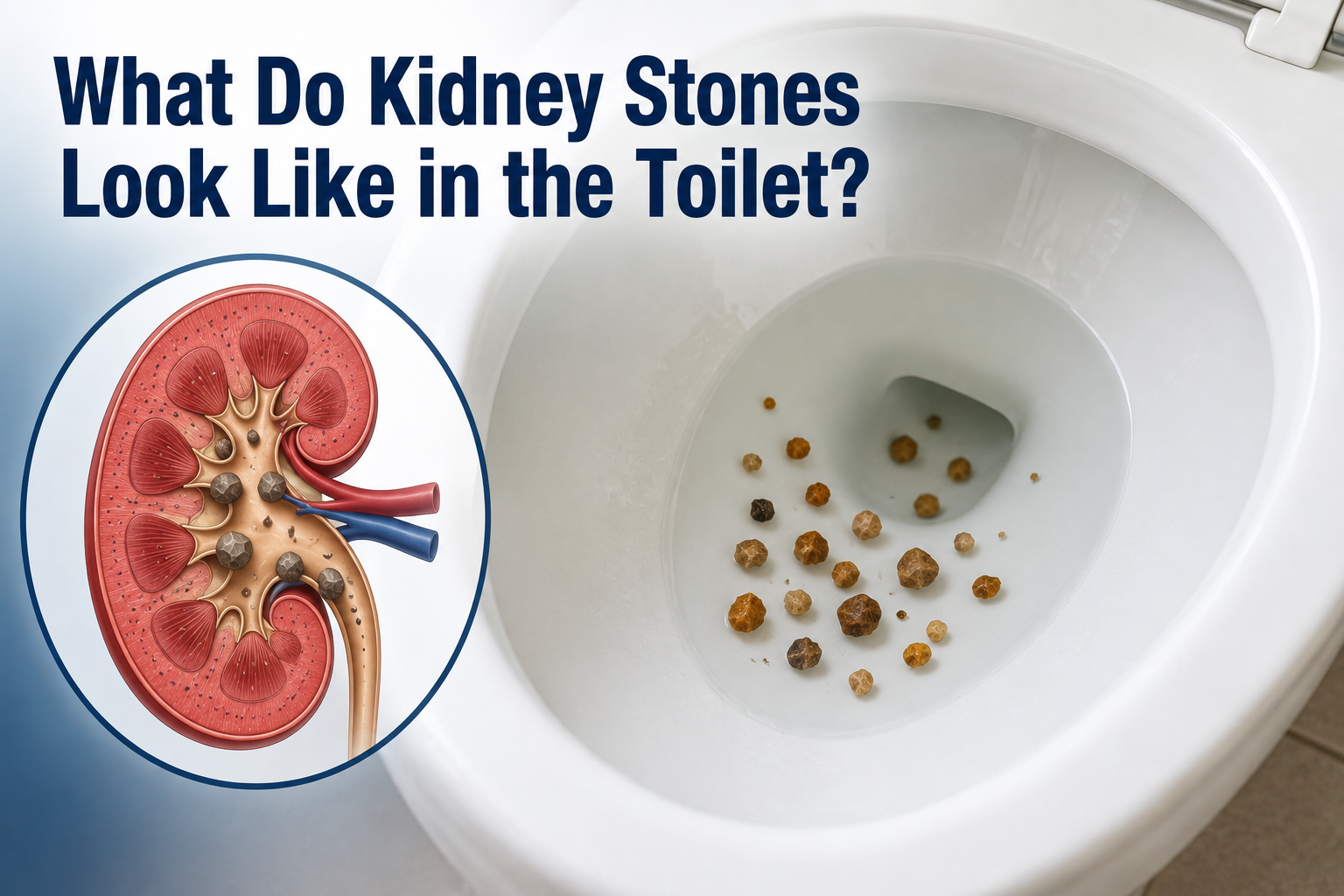
When a kidney stone passes into the toilet, it usually appears as a small, hard, gritty particle rather than a smooth pebble. Most stones range from the size of a grain of sand to a small pebble, roughly two to ten millimeters across.
Their color can be yellow, tan, brown, or occasionally black, depending on what minerals formed the stone. The surface texture may be rough, jagged, or spiky, though some stones are smoother and rounder.
Many people notice the stone sinking to the bottom of the bowl or mixed with sediment in cloudy urine. In some cases, the passed stone is accompanied by streaks of blood, which is a normal sign of irritation as it traveled through the urinary tract.
Common Appearance of Kidney Stones in Urine
Kidney stones in the toilet rarely look like a single smooth object. They tend to appear as small, irregular fragments that are hard and gritty in texture. Size is one of the biggest factors in whether a stone is even noticeable, since some pass as fine granules while others come out as a firm, pebble-sized mass.
Size Range: From Grain of Sand to Pebble
Most kidney stones that pass naturally measure between two and six millimeters, roughly the size of a grain of rice or smaller. Stones under four millimeters usually pass without much difficulty and may look like tiny specks in the water. Larger stones, sometimes reaching eight to ten millimeters, are more likely to cause noticeable pain and stand out as a distinct object in the bowl.
Shape Variations
Kidney stones are almost never perfectly round. Some have a smooth, oval shape similar to a small seed, while others are jagged and angular with sharp points. A less common type, known as a staghorn stone, branches out like antlers inside the kidney itself, though these are usually too large to pass alone and require medical removal. Shape often reflects how quickly the stone formed and which part of the tract it moved through.
Texture and Hardness
Almost all kidney stones feel hard and gritty, similar to a small piece of gravel, due to the mineral crystals that make up the stone. Unlike soft debris or mucus that can also appear in urine, a real kidney stone will not dissolve or break apart easily when touched, making it easy to distinguish from other particles.
Colors of Kidney Stones You Might See
The color of a kidney stone offers a helpful clue about what it is made of and can guide follow-up testing. Stones are not a single uniform color; shades range widely depending on mineral composition and how long the stone has been forming inside the kidney.



Yellow and Tan Stones
Yellow or tan is among the most commonly reported colors and is frequently associated with calcium-based stones, the most prevalent type overall. These stones often have a slightly rough or crystalline surface and may look pale under bright light.
Brown Stones
Darker brown stones typically form over a longer period and may contain a mix of minerals. The brown coloring often comes from pigments in the urine binding to the stone’s surface as it develops over weeks or months.
Black or Dark-Colored Stones
Black or very dark brown stones are less common but can occur, often linked to certain metabolic conditions or stones that have been present for an extended time. A stone this dark should still be saved and shown to a doctor, since color alone cannot confirm composition.
What Stone Color Indicates?
Color gives a rough hint but is not a reliable way to diagnose the stone type on its own. Lab analysis remains the only accurate method, though doctors often use color and shape as an initial visual clue before confirming with testing.
Types of Kidney Stones and Their Visual Differences
Not all kidney stones form the same way, and the mineral type affects how the stone looks, feels, and how painful it is to pass.
Calcium Oxalate Stones
The most common type, these usually appear yellow or brown with a rough, jagged surface. They form when calcium combines with oxalate, found in certain foods, and tend to be harder than other stone types.
Uric Acid Stones
Uric acid stones look smoother and more rounded, with a yellow to reddish-brown tint. They form in urine that is more acidic than normal and are sometimes linked to diet or gout.
Struvite Stones
Struvite stones grow quickly and can become large, sometimes filling parts of the kidney before symptoms appear. They are usually linked to urinary infections and can look duller and grayish compared to other types.
Cystine Stones
Cystine stones are rare, resulting from a genetic condition that causes cystine buildup in urine. They often have a smooth, waxy, yellow appearance and tend to recur without proper management.
| Stone Type | Common Color | Typical Texture |
| Calcium Oxalate | Yellow to brown | Rough, jagged |
| Uric Acid | Yellow to reddish-brown | Smooth, rounded |
| Struvite | Grayish, dull | Larger, coral-like |
| Cystine | Pale yellow | Smooth, waxy |
Signs a Kidney Stone Has Passed
Beyond simply seeing the stone, several physical signs usually confirm that a stone has successfully exited the body.
Sudden Pain Relief
One of the clearest signs is a sudden, noticeable drop in pain, especially in the back or side, right around the time urination occurs. This relief happens because the stone no longer blocks or irritates the ureter.
Gritty Sediment in the Bowl
Even when a stone is too small to see individually, gritty or sandy sediment settling at the bottom of the bowl often indicates multiple tiny fragments passed together.
Blood-Tinged or Pink Urine
Light pink or reddish urine is common right after a stone passes, caused by minor irritation to the urinary tract lining, and usually clears within a day or two on its own.
Cloudy or Foul-Smelling Urine
Urine may appear cloudy or carry an unusual odor briefly after a stone passes, particularly if any infection or irritation was involved.
How to Catch and Identify a Kidney Stone at Home?
Catching the stone is useful because it allows a lab to determine its exact composition, which guides prevention advice.
Using a Urine Strainer
A simple mesh urine strainer, available at most pharmacies, can be placed over the bowl to catch fragments as they pass. Straining every urination for a few days after symptoms begin gives the best chance of recovering the stone.
What to Do After Catching a Stone
Once caught, the stone should be rinsed gently and placed in a clean, dry container rather than left in water, since prolonged soaking can affect certain types of analysis.
Storing the Stone for Lab Analysis
The stone should be brought to a doctor or lab as soon as possible for composition testing, which often provides more useful prevention information than any other diagnostic step.
When Kidney Stones Are Too Small to See
Not every stone is large enough to notice, and many pass completely unnoticed by the person experiencing it.
Passing as Fine Sediment or Sand
Very small stones, sometimes called renal sand, may pass as fine, gritty sediment that blends into the water and is easy to miss without a strainer.
Why Some Stones Go Unnoticed?
Because these tiny fragments often cause mild discomfort or none at all, many people never realize they passed a stone until a scan or urine test reveals evidence afterward.
Microscopic Hematuria as a Clue
Doctors sometimes detect microscopic blood in urine, invisible to the eye, which can indicate small stones recently passed even without a visible object in the toilet.
Symptoms That Occur Before and During Passing
Kidney stones typically cause a recognizable pattern of symptoms before exiting the body.
Flank or Back Pain
Sharp, cramping pain in the side or back, just below the ribs, is often the first and most intense symptom, caused by the stone moving through the narrow ureter.
Pain Radiating to the Groin
As the stone moves lower, pain frequently shifts toward the lower abdomen or groin, changing location as it travels closer to the bladder.
Nausea and Vomiting
The intensity of kidney stone pain often triggers nausea or vomiting, a common accompanying symptom rather than a separate condition.
Urgency and Frequent Urination
Once the stone nears the bladder, a strong, frequent urge to urinate is common, even when only small amounts pass each time.
When to See a Doctor
Certain warning signs mean a kidney stone should not be managed at home.
Stones Larger Than 5mm
Stones above five millimeters are less likely to pass naturally and may need medical intervention such as shockwave therapy or a minor procedure.
Signs of Infection
Fever, chills, or unusual weakness alongside stone symptoms may indicate infection, needing prompt medical attention to prevent complications.
Inability to Urinate
Complete inability to urinate, paired with severe pain, is a medical emergency and should be evaluated immediately.
Severe, Unrelenting Pain
Pain that does not improve with over-the-counter medication, or continues for an extended period, should always be checked by a healthcare provider.
How Doctors Analyze a Passed Kidney Stone?
Once collected, medical testing reveals details that appearance alone cannot confirm.
Lab Stone Composition Analysis
A lab breaks down the stone’s mineral makeup, identifying whether it is calcium-based, uric acid, struvite, or cystine, shaping future prevention strategies.
Why Composition Affects Prevention
Knowing the exact stone type lets a doctor recommend specific dietary or medical changes, since prevention strategies differ significantly between stone types.
24-Hour Urine Testing
Alongside analyzing the stone itself, doctors often request a 24-hour urine collection to measure mineral levels and identify underlying risk factors for future stones.
FAQs
Can you see a kidney stone in the toilet? Yes, many stones are visible, especially those larger than a few millimeters, though tiny stones may look like sand or grit.
Does a kidney stone always cause pain when it passes? Not always. Very small stones can pass with little discomfort, while larger stones typically cause significant pain.
Should I save a kidney stone if I find one? Yes, saving it lets a lab test its composition, guiding future prevention advice from a doctor.
How long does it take for a kidney stone to pass? This varies widely, from days to weeks, depending on size and location within the urinary tract.
Conclusion
Kidney stones in the toilet typically appear as small, hard, gritty fragments in shades of yellow, brown, or black, ranging from tiny grains to small pebbles. Recognizing these signs, along with symptoms like pain relief and blood-tinged urine, helps confirm when a stone has passed. Catching and testing it provides valuable insight for preventing future episodes.
Related Posts
Do Kidney Stones Cause Constipation? Cause, Symptom, Relief
Do You Need Both Kidneys? One vs Two Kidney Health
Endometriosis Flare Up Symptoms: What They Feel Like and How to Cope
Does Everyone Have Wisdom Teeth? Here’s What the Research Shows