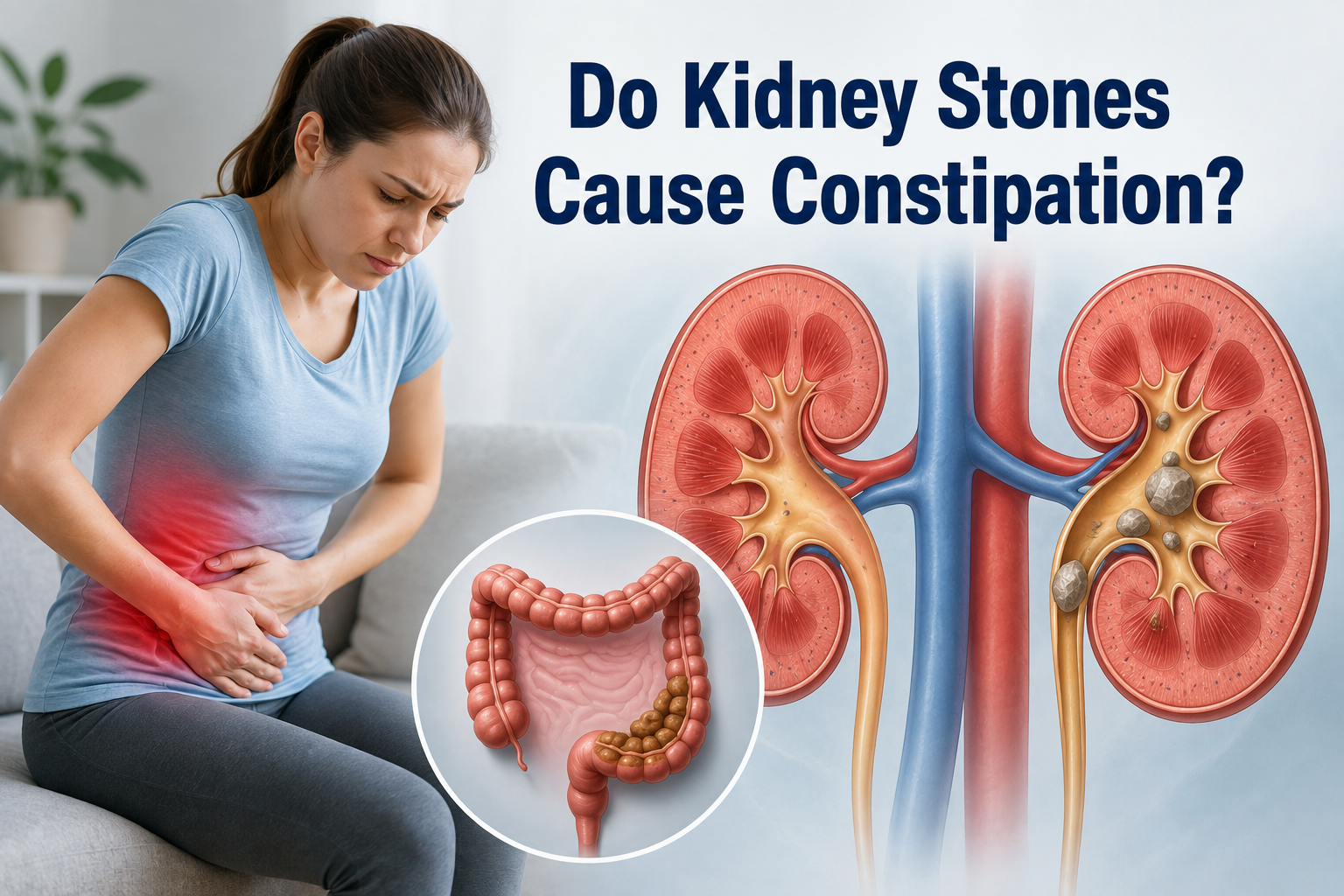
Many people who are dealing with a kidney stone start noticing changes in their bowel movements and immediately wonder if the two problems are connected. It is a fair question, because both conditions can cause abdominal discomfort, bloating, and general digestive upset at the same time.
The short answer is that kidney stones do not directly cause constipation on their own, but several related factors that come with having a stone can slow down your digestive system. Pain medication, reduced movement, dehydration, and shared nerve pathways between the urinary and digestive systems all play a role in this connection.
Understanding why this happens can help you manage both problems more comfortably while the stone passes. This article breaks down the real relationship between kidney stones and constipation in simple, easy-to-understand terms.
What Are Kidney Stones?
Kidney stones are hard deposits made of minerals and salts that form inside the kidneys when urine becomes too concentrated. They can be as small as a grain of sand or grow large enough to block the flow of urine, and passing them often causes intense pain in the back, side, or lower abdomen.
Common Symptoms of Kidney Stones
Kidney stones can produce a wide range of symptoms depending on their size and location, and recognizing them early makes treatment easier. Below is a closer look at the most frequent signs people experience.
Severe Flank and Back Pain
The most recognizable symptom of a kidney stone is a sharp, cramping pain that starts in the back or side, just below the ribs. This pain often comes in waves and can shift toward the lower abdomen and groin as the stone moves through the urinary tract. Many people describe it as one of the most intense types of pain they have ever felt.
Blood in Urine
Kidney stones frequently scratch the lining of the urinary tract as they move, which can cause blood to appear in the urine. This blood may be visible to the naked eye, giving urine a pink, red, or brown tint, or it may only show up in a lab test. Either way, it is a common and important warning sign.
Nausea and Vomiting
The intense pain caused by a kidney stone often triggers a strong nausea response in the body, sometimes leading to vomiting. This happens because the nerves connected to the kidneys and intestines overlap, so pain signals from the stone can upset the stomach as well. This same nerve connection is part of why digestion can slow down.



Painful Urination
As a stone travels closer to the bladder, it can cause a burning or stinging sensation during urination. Some people also feel a frequent, urgent need to urinate even though very little urine is released each time. This symptom often signals that the stone is nearing the end of its journey through the urinary tract.
Can Kidney Stones Cause Constipation?
Kidney stones themselves do not directly block or slow the intestines, so they are not a classic or textbook cause of constipation.
However, constipation is a genuinely common complaint among people passing a kidney stone because of the pain, treatment, and lifestyle changes that come along with it.
In most cases, the constipation is a side effect of managing the stone rather than something the stone is doing directly to the digestive system.
How Kidney Stones Lead to Constipation?
While a stone does not physically touch the intestines, several indirect factors created by the condition can slow digestion down considerably. The sections below explain each of these factors in detail.
Pain Medication Side Effects
Doctors often prescribe opioid painkillers to manage the severe pain of a kidney stone, and these medications are well known for slowing down bowel movements. Opioids reduce the natural contractions of the intestines, making stool move through the digestive tract much more slowly than normal. This is one of the most common and well-documented reasons people become constipated during a kidney stone episode.
Reduced Physical Activity
Severe pain naturally makes people want to rest and avoid movement, and many people going through a kidney stone spend more time lying down or sitting still. Physical activity helps stimulate the muscles of the digestive tract, so a sudden drop in movement can slow things down. Even short walks normally keep digestion active, so their absence during a painful flare-up matters more than people expect.
Shared Nerve Pathways
The kidneys, ureters, and intestines are located close together and share overlapping nerve pathways in the abdomen. When a kidney stone irritates the urinary tract, those same nerve signals can affect nearby digestive organs, leading to bloating, cramping, or a general slowdown in bowel activity. This nerve connection explains why digestive symptoms often appear alongside urinary ones.
Dehydration
Many people who develop kidney stones already have a tendency toward mild dehydration, since concentrated urine is one of the main causes of stone formation in the first place. Dehydration pulls water out of the stool in the intestines, making it harder and more difficult to pass. This makes proper fluid intake important for both preventing stones and keeping digestion regular.
Kidney Stones vs. Constipation: Symptom Comparison
Since kidney stones and constipation can sometimes feel similar, especially when both cause abdominal discomfort, the table below highlights the key differences to help you tell them apart.
| Feature | Kidney Stones | Constipation |
| Main pain location | Back, side, or groin | Lower abdomen |
| Urination changes | Painful, urgent, or bloody | Usually unaffected |
| Bowel movements | Often normal at first | Infrequent or hard stools |
| Nausea | Common, especially during severe pain | Possible but less intense |
| Bloating | Occasional, linked to nerve overlap | Very common |
| Typical trigger | Mineral buildup in kidneys | Diet, medication, low activity |
When Constipation Might Signal Something Else
If constipation becomes your main or most severe symptom while abdominal pain fades into the background, it may be worth looking beyond the kidney stone for an explanation.
Other common causes include low fiber intake, insufficient water consumption, certain other medications, or an underlying digestive condition that deserves its own evaluation.
How to Relieve Constipation While Passing a Kidney Stone?
Managing constipation alongside a kidney stone usually involves small, practical adjustments to your daily habits. The following steps can help keep your digestive system moving while you recover.
Stay Hydrated
Drinking plenty of water is one of the simplest ways to soften stool and support regular bowel movements while also helping flush out the urinary system. Staying well hydrated can even assist in moving a small stone along more comfortably. Aim for consistent water intake throughout the day rather than large amounts all at once.
Adjust Pain Medication Use
If opioid pain relievers are causing constipation, talk to your doctor about using the lowest effective dose or switching to an alternative pain management plan. Some doctors may recommend pairing pain medication with a stool softener from the start. Never adjust a prescribed dose without medical guidance.
Add Fiber to Your Diet
Foods rich in fiber, such as fruits, vegetables, whole grains, and legumes, help add bulk to stool and encourage regular bowel movements. Introducing fiber gradually, along with enough water, prevents additional bloating while still supporting digestion. A balanced diet during recovery also supports overall healing.
Gentle Movement or Walking
Light activity, such as short walks around the house, can help stimulate the digestive tract without straining your body during a painful episode. Movement encourages the natural muscle contractions that push stool through the intestines. Even a few minutes several times a day can make a noticeable difference.
When to See a Doctor
You should contact a doctor if constipation lasts more than a few days, if pain becomes unbearable, or if you notice fever, chills, or an inability to urinate.
These signs may point to complications that need prompt medical attention rather than home management alone.
FAQs
Does constipation mean a kidney stone is moving?
Not necessarily. Constipation is more often linked to pain medication or reduced activity than to the stone’s movement itself.
Can kidney stones cause bloating?
Yes, bloating can occur due to shared nerve pathways between the urinary and digestive systems during a kidney stone episode.
How long does constipation last after a kidney stone?
It usually improves within a few days once pain decreases and normal activity and hydration resume.
Can laxatives help pass a kidney stone?
Laxatives may relieve constipation but do not directly help pass a kidney stone; hydration and medical treatment remain the primary approach.
Conclusion
Kidney stones do not directly cause constipation, but the pain medication, inactivity, dehydration, and nerve overlap that come with them often lead to sluggish digestion.
Recognizing this connection makes it easier to manage both issues at once through simple steps like proper hydration, gentle movement, and dietary adjustments. If constipation becomes severe or persistent, it is always best to check in with your doctor rather than waiting it out.
Related Articles
How to Get Rid of a Lip Pimple: Causes & Fast Treatment
Are Edibles as Bad for Your Liver as Alcohol? Full Guide
What Does High Liver Enzymes Mean? Causes, Symptoms