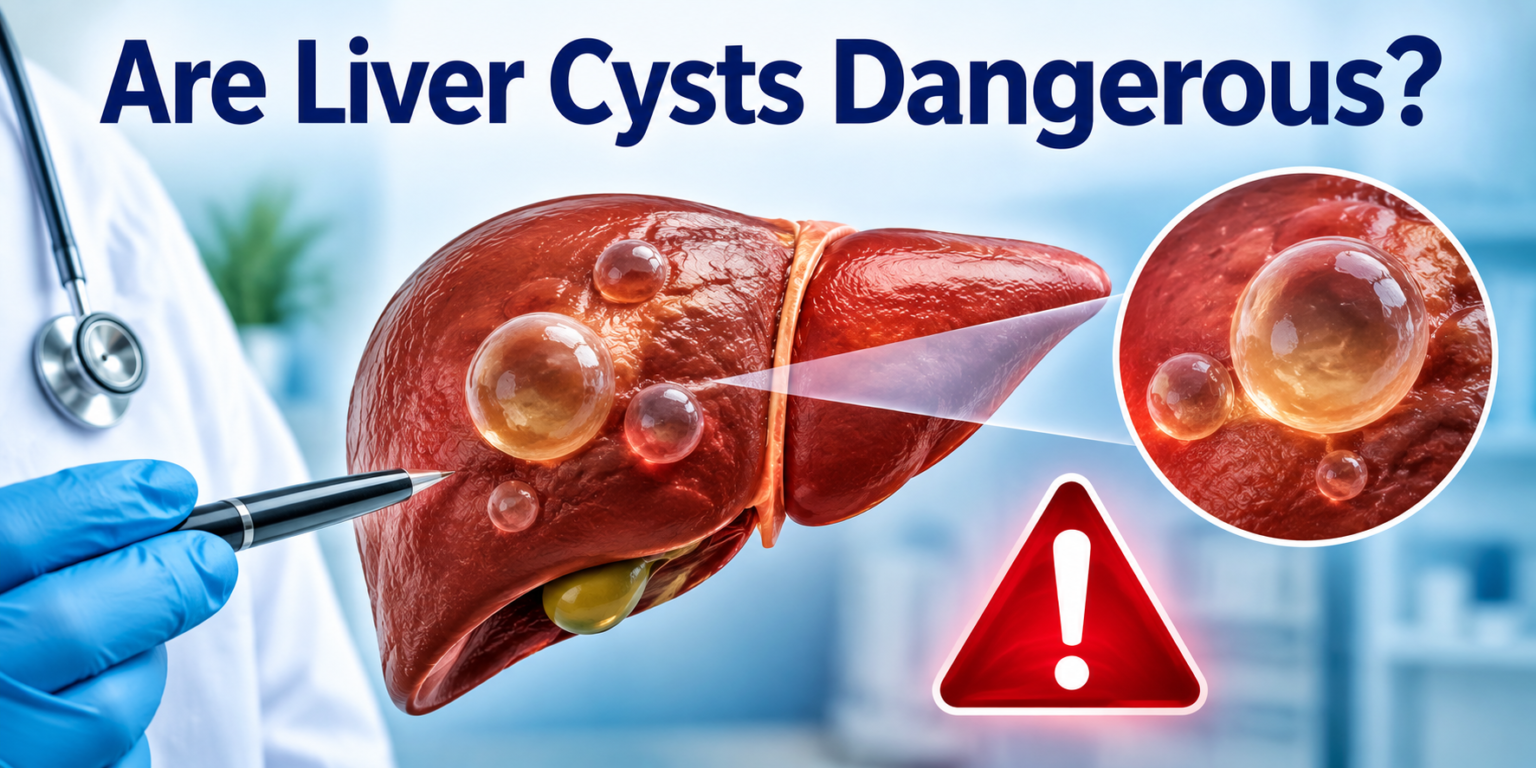
In most cases, liver cysts are not dangerous at all. They are small, fluid-filled sacs that form inside or on the surface of the liver, and the majority of people who have them never even know until a scan for something else picks them up by accident. These simple cysts usually stay small, grow very slowly if at all, and do not affect how the liver works.
However, in a small number of cases, cysts can become large, get infected, bleed, or show unusual features that need closer medical attention. So while the short answer is “no, not usually,” the full answer depends on the type, size, and behavior of the cyst.
This guide breaks down everything in easy words, so you understand when a liver cyst is nothing to worry about and when it needs a doctor’s attention.
Understanding the Liver and Its Function
The liver is one of the hardest-working organs in the body, and understanding its job helps explain why cysts forming inside it raise questions. Once you know how the liver works, it becomes easier to see why most cysts don’t interfere with it at all.
What the Liver Does in the Body?
The liver filters blood, breaks down toxins, produces bile for digestion, and stores energy in the form of glycogen. It also helps process medications and supports the immune system. Because the liver has such a large working capacity, small growths like cysts rarely disturb its overall performance.
Why Cysts Can Form on or in the Liver?
Cysts often form when small bile ducts inside the liver don’t develop or drain normally, leaving behind pockets of fluid. In some cases, they are present from birth, while in others they develop later due to genetic or unknown factors. Most of these pockets stay sealed off and cause no disruption.
Difference Between a Cyst and a Tumor
A cyst is a fluid-filled sac, while a tumor is a solid mass made of abnormal tissue growth. This difference matters a lot when doctors assess whether something is dangerous, since fluid-filled structures are far less likely to be cancerous than solid ones. Imaging tests can usually tell the two apart clearly.
Types of Liver Cysts
Not every liver cyst is the same, and the type plays a big role in answering whether are liver cysts dangerous for a specific person. Below is a quick comparison table, followed by a short explanation of each type.



| Type of Cyst | Common Cause | General Risk Level |
| Simple liver cyst | Congenital, unknown cause | Very low |
| Polycystic liver disease | Genetic condition | Low to moderate |
| Hydatid (parasitic) cyst | Tapeworm infection | Moderate |
| Cystadenoma | Abnormal bile duct growth | Moderate, needs monitoring |
| Cystadenocarcinoma | Rare cancerous change | High |
| Hemorrhagic cyst | Bleeding into a cyst | Depends on severity |
Simple Liver Cysts
These are the most common type and are almost always harmless. They have thin walls, contain clear fluid, and rarely cause any symptoms. Most people with a simple cyst never need treatment at all.
Polycystic Liver Disease
This condition involves many cysts scattered across the liver, often linked to a genetic disorder that also affects the kidneys. While individual cysts are usually benign, having a large number of them can gradually affect liver size and function. Regular monitoring is generally recommended for this group.
Hydatid (Parasitic) Cysts
These cysts form due to infection from a tapeworm, usually linked to contact with infected animals or contaminated food. They can grow larger than simple cysts and sometimes rupture, which may trigger a serious allergic reaction. Treatment often involves medication and, in some cases, surgery.
Cystadenoma
A cystadenoma is a benign growth, but it has the potential to change over time if left unchecked. Doctors usually recommend monitoring or removing it because of this possibility. It is one of the reasons imaging follow-up is important for certain cyst types.
Cystadenocarcinoma
This is a rare cancerous form that can develop from an untreated cystadenoma. It is uncommon, but it is the main reason doctors take unusual-looking cysts seriously. Early detection through imaging greatly improves outcomes.
Hemorrhagic Cysts
These occur when bleeding happens inside a cyst, which can cause sudden pain or discomfort. In most cases, hemorrhagic cysts resolve without major intervention. However, sudden or severe bleeding may need urgent evaluation.
Causes of Liver Cysts
Knowing what causes liver cysts helps explain why some people develop them and others don’t. The causes range from birth-related factors to infections, and each has a different link to risk.
Congenital Causes
Many liver cysts are present from birth, forming when bile ducts don’t join together properly during development. These cysts often stay small and undetected for years. They are usually discovered only through unrelated imaging scans.
Genetic Conditions
Some cysts are linked to inherited conditions, such as polycystic liver disease, which tends to run in families. These cases usually involve multiple cysts rather than just one. Genetic counseling may be suggested if a strong family history exists.
Parasitic Infection
Hydatid cysts specifically develop due to a parasite usually transmitted through contact with dogs or livestock in certain regions. Good hygiene and food safety practices lower this risk significantly. This cause is more common in specific geographic areas.
Unknown or Idiopathic Causes
In many simple cyst cases, doctors are unable to pinpoint an exact cause. These cysts are generally considered a natural, harmless variation rather than a disease process. This is one reason routine monitoring rather than treatment is the standard approach.
Symptoms to Watch For
Most people with liver cysts have no symptoms whatsoever, which is exactly why the question “are liver cysts dangerous” so often comes with uncertainty. Below are the situations where symptoms may appear.
Usually No Symptoms
Small, simple cysts almost never cause noticeable symptoms and are typically found by accident during an ultrasound or CT scan done for another reason. This silent nature is part of why they’re considered low risk. No action is generally needed when this is the case.
Abdominal Pain or Bloating
As cysts grow larger, they may start pressing against nearby organs or the abdominal wall, leading to discomfort, bloating, or a feeling of fullness. This is often the first noticeable sign that a cyst has become clinically significant. A doctor can assess whether the size warrants treatment.
Nausea or Feeling Full Quickly
Large cysts pressing on the stomach can make a person feel full after eating very little, sometimes accompanied by mild nausea. This happens because the cyst takes up space that would normally hold food. It typically resolves once the cyst is drained or reduced in size.
Signs of Complications
Sudden severe pain, fever, yellowing of the skin or eyes, or a rapidly swelling abdomen can indicate infection, rupture, or bleeding. These symptoms should never be ignored and require prompt medical evaluation. This is the clearest scenario where a liver cyst becomes an urgent concern.
Are Liver Cysts Dangerous? (Core Explanation)
This is the central question most people are searching for, and the honest answer sits between “rarely” and “sometimes,” depending entirely on the specific case. The next sections break down exactly when a cyst stays harmless and when it turns into something that needs closer care.
When They Are Harmless
Small, simple cysts with smooth walls and clear fluid are almost always harmless, even if a person has one for their entire life without knowing it. Doctors generally don’t recommend treatment unless the cyst starts causing symptoms. This covers the vast majority of diagnosed liver cysts.
When They Become a Concern
A cyst becomes worth watching closely if it grows large enough to press on organs, shows signs of bleeding or rupture, becomes infected, appears alongside many other cysts affecting liver function, or has irregular features on a scan. Any of these situations can shift a cyst from a passive finding to an active medical issue. Doctors typically use imaging and symptoms together to decide next steps.
Cancer Risk — How Rare Is It?
Cancerous transformation of a liver cyst is genuinely rare, and the vast majority of cysts never become cancerous at all. The main red flags doctors look for are irregular walls, internal solid components, or rapid growth on repeated scans. When these features are absent, cancer risk is considered very low.
How Liver Cysts Are Diagnosed?
Diagnosis relies mainly on imaging, and most tests used are painless and non-invasive. The list below outlines the common diagnostic tools used together to build a full picture.
- Ultrasound: usually the first test, showing the size, shape, and fluid content of the cyst
- CT scan: gives a more detailed cross-sectional view, useful for larger or complex cysts
- MRI: offers the clearest image of soft tissue, often used when a cyst looks unusual
- Blood tests: check liver function and rule out infection or other liver conditions
- Biopsy: rarely needed, only used when imaging findings are unclear or suspicious
Treatment Options
Not every liver cyst needs treatment, and the approach chosen depends on size, symptoms, and type. The following list covers the main options used by doctors today.
- Watchful waiting: periodic imaging to track size and shape without any active treatment
- Needle aspiration: draining fluid from the cyst using a fine needle, often for quick symptom relief
- Sclerotherapy: injecting a solution after drainage to reduce the chance of the cyst refilling
- Surgical removal: laparoscopic fenestration removes the cyst wall for long-term relief in larger cases
- Liver transplant: an extremely rare option, reserved for severe polycystic liver disease affecting function
Living With a Liver Cyst
For most people, living with a liver cyst means simply keeping an eye on it rather than changing daily life. A short follow-up plan and a few sensible habits are usually all that’s needed.
Regular follow-up imaging, often once a year or as advised by a doctor, helps confirm that a cyst isn’t growing or changing shape. A balanced diet and staying hydrated support general liver health, though no special diet is required purely because of a cyst. Sudden, severe abdominal pain, fever, or yellowing skin should always prompt an immediate visit to a doctor rather than waiting for a scheduled check-up.
Liver Cysts vs Other Liver Conditions
It’s easy to confuse liver cysts with other liver problems, so a quick comparison helps clear up the differences.
| Condition | Main Feature | Typical Danger Level |
| Liver cyst | Fluid-filled sac | Usually low |
| Fatty liver | Fat buildup in liver cells | Depends on stage |
| Liver tumor | Solid abnormal tissue growth | Varies, needs evaluation |
| Liver abscess | Pus-filled infection pocket | Requires urgent treatment |
Frequently Asked Questions
Can liver cysts turn into cancer? It’s rare. Most simple cysts never become cancerous, and cancer risk is mainly linked to unusual imaging features.
Do liver cysts go away on their own? Small simple cysts often stay stable for life without disappearing, but they also don’t usually need to shrink since they’re harmless.
Can liver cysts cause weight loss? Large cysts pressing on the stomach can reduce appetite, which may lead to mild weight loss in some cases.
Is surgery always needed? No, surgery is only used for large, symptomatic, or unusual cysts, while most small cysts just need monitoring.
Can pregnancy affect liver cysts? Hormonal changes during pregnancy can occasionally cause mild cyst growth, so monitoring may be recommended.
Conclusion
So, are liver cysts dangerous? For most people, the answer is no — simple cysts are common, harmless, and rarely need treatment.
Danger only enters the picture with large size, infection, bleeding, or unusual imaging features, all of which are uncommon. If you’ve been diagnosed with a liver cyst, regular check-ups and awareness of warning symptoms are enough to manage it safely alongside your doctor’s guidance.
Related Post’s
Can You Swim on Your Period? Everything You Need to Know
Can I Go to Urgent Care for Chest Pain? Know When to Act
Balance Care Health Insurance: Plans, Benefits, Costs, and Enrollment Guide