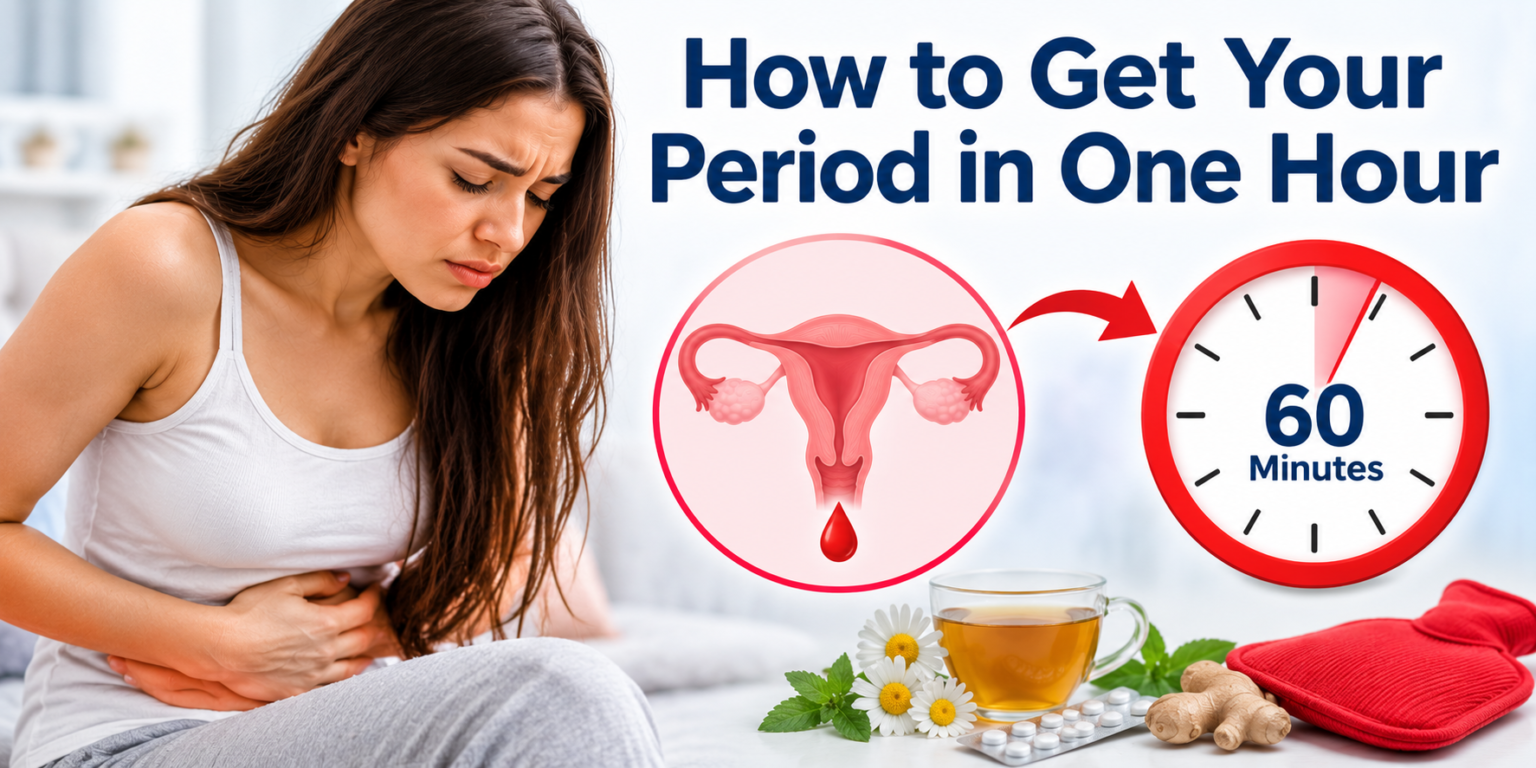
There is no proven or medically safe way to get your period in one hour. Your menstrual cycle is controlled by a slow hormonal process that cannot be switched on instantly, no matter what method you try. Many websites and social media posts claim that certain foods, exercises, or home remedies can trigger your period within sixty minutes, but these claims are not backed by science.
What you can do is understand the natural factors that influence your cycle timing and support your body in a healthy way if your period is late. This article breaks down the truth behind these quick-fix claims, explains what actually affects your cycle, and outlines safe, realistic steps you can take instead.
If you have been searching for how to get your period in one hour because your period is late and you are worried, it helps to first understand why this urgency exists and what your body is really doing behind the scenes.
Can You Actually Get Your Period in One Hour?
Getting your period in exactly one hour is not something your body is capable of doing, no matter which remedy or trick you follow. Your cycle depends on a chain of hormonal signals that take days, not minutes, to complete.
Why Periods Can’t Be Triggered Instantly?
Your period begins only after the lining of your uterus is signaled to shed, and this signal depends on a drop in progesterone that happens gradually near the end of your cycle. This process is timed by your body’s internal hormonal clock, not by anything you eat, drink, or do in a short span of time. Even methods that may nudge your cycle slightly need days to show any effect, so a one-hour result simply is not biologically possible.
What Actually Controls Your Menstrual Cycle?
Your menstrual cycle is managed by a communication system between your brain and your ovaries, involving hormones like estrogen and progesterone that rise and fall in a specific pattern each month. This entire cycle usually lasts between twenty-one and thirty-five days, and every phase within it depends on the one before it being completed properly. Because this process is sequential, skipping ahead by trying to “activate” your period early goes against how your reproductive system is designed to function.
Common Myths About Inducing Periods Quickly
Many quick-fix suggestions circulate online for starting your period faster, but most of them are based on tradition or guesswork rather than solid evidence. Below is a look at the most common ones and what is actually true about each.
Vitamin C and Period Onset
A popular belief is that taking a large dose of vitamin C can bring on your period the same day. While some people think vitamin C may influence estrogen and progesterone levels slightly, there is no reliable research proving it can start your period within hours, and taking excessive amounts can upset your stomach without any real benefit.



Exercise as a Period Trigger
Light physical activity is often suggested as a way to encourage your period to start, since movement can improve blood flow to the pelvic area. However, exercise does not change your hormone levels quickly enough to cause an instant period, and intense exercise can sometimes delay your cycle instead of speeding it up.
Heat, Baths, and Warm Compresses
Applying heat through a warm bath or a compress on your lower abdomen is a common home remedy believed to relax the uterus and encourage bleeding to begin. While warmth can ease cramps and improve comfort, it does not have the power to override your body’s hormonal timeline and bring your period on demand.
Natural Methods That May Help Bring Your Period Slightly Earlier
Although nothing works in an hour, a few lifestyle habits may support your cycle over a few days if your period is only slightly delayed due to stress or minor imbalances. These methods work with your body’s natural rhythm rather than against it.
Relaxation and Stress Reduction
High stress levels can interfere with the hormones that regulate ovulation and, in turn, delay your period. Practicing deep breathing, gentle stretching, or simply reducing your workload for a few days can help your body return to its normal hormonal balance, which may allow your period to arrive closer to its expected date.
Diet and Hydration Adjustments
Eating a balanced diet with enough iron, staying hydrated, and avoiding extreme calorie restriction can support healthy hormone production. Poor nutrition or sudden weight changes are known to disrupt menstrual timing, so correcting these factors over several days may help your cycle stay on track.
Herbal Remedies (Ginger, Parsley, etc.)
Ginger tea and parsley are traditional remedies that some people use to encourage period onset, as they are believed to have a mild effect on uterine contractions. These remedies are generally considered safe in normal food amounts, but there is limited scientific proof they work reliably, and results, if any, take days rather than minutes.
Medical Options for Regulating or Adjusting Your Cycle
For people who experience frequent irregular periods, there are actual medical options that can help manage cycle timing more predictably. These require a doctor’s guidance rather than a home attempt.
Hormonal Birth Control
Certain types of hormonal birth control, such as the pill, patch, or hormonal IUD, can be used under medical supervision to regulate cycle timing and make periods more predictable. These methods work by controlling hormone levels consistently over time, not by triggering an immediate period, and should only be started after consulting a healthcare provider.
When to Talk to a Doctor About Irregular Periods
If your periods are frequently late, unpredictable, or accompanied by unusual symptoms, it is worth discussing this pattern with a doctor rather than relying on home remedies. A healthcare provider can check for underlying causes such as thyroid issues, PCOS, or hormonal imbalances and recommend a proper treatment plan suited to your situation.
When a Late or Missed Period Needs Medical Attention
Occasional lateness is common and often harmless, but certain patterns of delay deserve closer medical evaluation. Recognizing these signs can help you decide when to seek professional care.
Possible Causes of Delayed Periods
A late period can result from various factors including stress, sudden weight changes, excessive exercise, thyroid disorders, polycystic ovary syndrome, or pregnancy. The table below summarizes some common causes and their general characteristics.
| Possible Cause | Typical Sign | When to See a Doctor |
| Stress | Sudden delay after a stressful event | If it continues for more than two cycles |
| Weight changes | Delay after rapid weight loss or gain | If periods stop completely |
| Thyroid imbalance | Irregular timing with fatigue or weight shifts | If symptoms persist |
| PCOS | Long gaps between periods | If cycles are consistently over 35 days |
| Pregnancy | Missed period with other early symptoms | Take a home test and consult a doctor |
Signs You Shouldn’t Ignore
If you experience severe pain, unusually heavy bleeding when your period does arrive, or a missed period along with symptoms like extreme fatigue or dizziness, these are signs that call for prompt medical attention. Ignoring persistent irregularities can delay the diagnosis of an underlying condition that may need treatment.
Frequently Asked Questions
Can stress delay your period?
Yes, high stress levels can disrupt the hormonal signals that regulate ovulation, which can push your period later than expected.
Does drinking water help start your period?
Staying hydrated supports overall hormonal balance, but drinking water alone will not trigger your period to start within a short time frame.
Is it safe to try to induce your period early?
Most natural methods are safe in normal amounts, but none are proven to work quickly, and it is best to avoid excessive doses of any remedy without medical advice.
Key Takeaways
There is no real method to get your period in one hour, since your cycle is controlled by a hormonal process that unfolds over days, not minutes. Myths involving vitamin C, exercise, and heat may offer comfort but do not speed up your biological timeline.
If your period is genuinely delayed, gentle lifestyle adjustments may help over a few days, while consistent irregularity is best addressed with a doctor’s guidance rather than home remedies alone.
RELATED POSTS
Can You Get Disability for Anxiety? Complete Approval Guide
Can IBS Cause Back Pain? Causes, Symptoms, Treatment, and Relief Tips
How Much Is an MRI Without Insurance? Full Cost Guide
How to Tell If You Have a Broken Bone in Your Hand?
Growing Pains Massage: Safe Techniques and Natural Ways to Relieve Leg Pain in Children