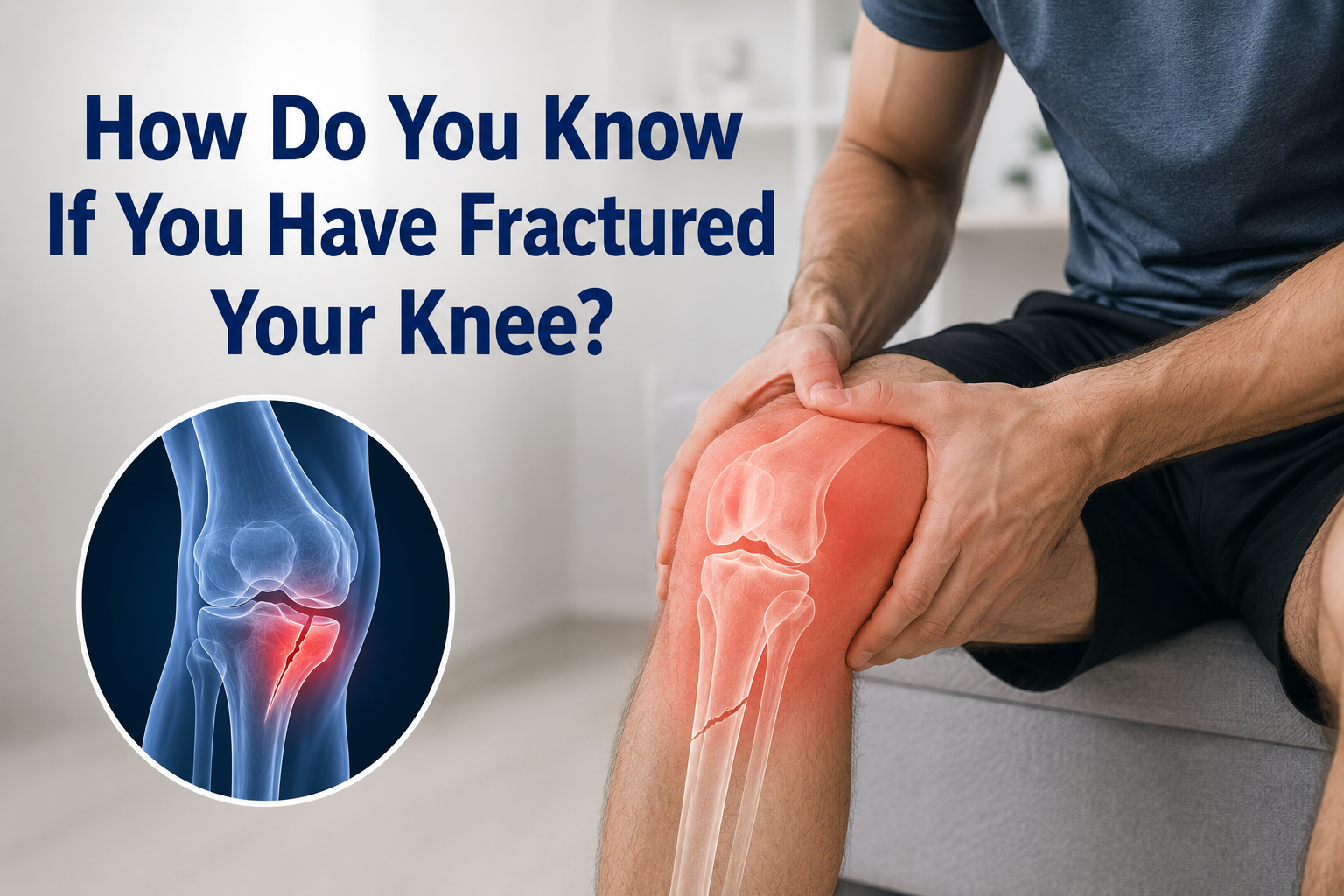
A knee fracture is a serious injury that happens when one or more bones forming the knee joint crack or break, and it often leaves people confused about what they are actually dealing with. Many patients search for how do you know if you have fractured your knee because the early signs can feel similar to a sprain or a bruise.
This guide walks you through the anatomy, causes, symptoms, diagnosis methods, treatment choices and recovery timeline in plain language. By the end, you will understand exactly what separates a minor knee injury from a true fracture and when you need to rush to a doctor.
Anatomy of the Knee
Before understanding any injury, it helps to know what the knee is actually made of, since the pain location often depends on which part is affected. The knee is not a single bone but a joint where several bones and soft tissues work together to allow bending and walking.
Bones Involved
The knee joint is formed by three main bones: the femur , the tibia, and the patella that sits in front of the joint. These bones meet at a point that carries almost the entire body weight during standing, walking and running. A fracture can occur in any one of these three bones depending on the direction and force of the injury.
Ligaments, Tendons, and Cartilage
Along with bones, the knee contains ligaments like the ACL and PCL, tendons connecting muscles to bone, and cartilage that cushions the joint surface. These soft tissues stabilize the knee and absorb shock during movement. Damage to them alone does not mean a fracture, but they are often injured alongside a broken bone in high-impact accidents.
How the Knee Joint Functions
The knee works like a hinge, allowing the leg to bend and straighten while also supporting body weight during standing and movement. Muscles around the thigh and calf control this motion, while the bones and cartilage handle the load. When a fracture disrupts this structure, even simple actions like standing up become painful or impossible.
What Is a Knee Fracture?
A knee fracture simply means one of the bones in the knee joint has cracked or broken due to force greater than the bone can handle. It is different from a sprain, which involves stretched or torn ligaments rather than broken bone.
Fracture vs Sprain vs Dislocation
A fracture involves a broken bone, a sprain involves damaged ligaments, and a dislocation means the bones have shifted out of their normal joint position without necessarily breaking. All three can cause pain and swelling, which is exactly why people often ask how do you know if you have fractured your knee instead of assuming it is just a sprain. The key difference usually lies in the severity of pain, visible deformity and the inability to move the joint at all.



Types of Knee Fractures
Knee fractures are classified based on which bone is affected and how the break occurred. Below is a simple breakdown of the common types:
| Fracture Type | Bone Affected | Common Cause |
| Patellar fracture | Kneecap | Direct fall or blow to the front of the knee |
| Distal femur fracture | Lower end of thigh bone | High-impact trauma or fall from height |
| Tibial plateau fracture | Top of shin bone | Car accidents, sports collisions |
| Stress fracture | Any knee bone | Repetitive strain from running or overuse |
Each type has slightly different symptoms and treatment paths, but severe pain and swelling remain common across all of them.
Causes of Knee Fractures
Knee fractures rarely happen without a clear triggering event, and identifying the cause often helps confirm whether a fracture is likely.
Falls and Trauma
A direct fall onto the knee, especially on a hard surface, is one of the most common reasons for a patellar or tibial fracture. The force of landing directly on the joint concentrates stress on the bone rather than spreading it across muscles.
Sports Injuries
Contact sports like football, rugby and basketball often lead to knee fractures due to collisions, sudden twists or awkward landings. Athletes are also at risk of stress fractures from repeated impact over time.
Car Accidents
In vehicle collisions, the knee often strikes the dashboard with significant force, leading to what doctors call a dashboard fracture affecting the femur or tibia. This type of injury usually comes with additional soft tissue damage.
Osteoporosis and Weak Bones
People with osteoporosis have thinner, more fragile bones, which means even a minor fall or twist can cause a fracture that would not affect a healthy bone. This is especially common in older adults.
Repetitive Stress or Overuse
Runners and athletes who repeat the same motion for long periods can develop tiny cracks in the bone known as stress fractures. These build up gradually rather than from a single injury.
Signs and Symptoms
This section directly answers how do you know if you have fractured your knee, since recognizing the right symptoms is the first step toward proper treatment.
Pain Characteristics
Fracture pain is usually sharp, intense and gets worse with any movement or attempt to put weight on the leg. Unlike a mild sprain, the pain does not improve with rest within a short time and often feels centered directly over the bone rather than spread across the joint.
Swelling and Bruising
Swelling usually appears quickly after a fracture, often within minutes to hours, and is frequently accompanied by visible bruising around the knee. The swelling tends to be more severe and persistent compared to a simple soft tissue injury.
Deformity or Misalignment
A visibly bent, twisted or oddly shaped knee is one of the clearest signs of a fracture and should never be ignored. If the knee looks different in shape compared to the other leg, this points strongly toward a broken bone rather than a sprain.
Inability to Move or Bear Weight
If you cannot straighten your leg, bend your knee, or stand on it at all, this is a strong indicator of a fracture rather than a minor strain. Most sprains still allow some limited movement, while fractures often make the joint feel locked or unstable.
Sounds at the Time of Injury
Many patients report hearing a popping, cracking or grinding sound at the exact moment of injury, which can indicate bone breakage. This sound alone is not a confirmed diagnosis, but combined with pain and swelling, it raises strong suspicion of a fracture.
When Symptoms Indicate an Emergency
If the leg looks deformed, the skin over the injury is broken with bone visible, or there is numbness and loss of blood flow to the foot, this is a medical emergency requiring immediate attention. Delaying care in these situations can lead to permanent damage.
Risk Factors
Certain groups of people are more likely to experience a knee fracture due to lifestyle, age or existing health conditions.
Age-Related Bone Weakening
As people age, bone density naturally decreases, making fractures more likely even from minor falls. This is particularly true for individuals over 60 who may already have reduced bone strength.
Athletes and High-Impact Activities
Individuals involved in contact sports or high-speed activities face a higher chance of sudden trauma to the knee. Repeated impact over years also increases the risk of stress fractures.
Pre-Existing Bone Conditions
Conditions like osteoporosis, osteopenia or previous knee injuries can weaken the bone structure, making future fractures more likely. People with these conditions should take extra precautions during physical activity.
Occupational Hazards
Jobs that involve heavy lifting, working at heights or operating heavy machinery increase the chances of a fall or direct impact injury to the knee. Construction and factory workers are commonly affected.
Diagnosis
Since symptoms alone cannot always confirm a fracture, doctors rely on both physical examination and imaging tests to reach an accurate diagnosis.
Physical Examination
A doctor will check for swelling, tenderness, deformity and range of motion by gently examining the knee and asking about how the injury occurred. This initial exam helps decide which imaging test is needed next.
Imaging Tests
Imaging is the most reliable way to confirm a fracture and rule out other injuries. The table below summarizes the common tests used:
| Imaging Test | Purpose | Best For |
| X-ray | Detects most bone fractures | First-line test for suspected fractures |
| CT Scan | Provides detailed 3D bone images | Complex or hairline fractures |
| MRI | Shows soft tissue and bone detail | Detecting ligament damage alongside fracture |
When to See a Doctor Immediately
If you experience severe pain, visible deformity, or inability to bear any weight after an injury, you should see a doctor immediately rather than waiting to see if it improves. Early diagnosis prevents complications and speeds up recovery.
First Aid and Immediate Care
Knowing what to do right after a suspected fracture can prevent the injury from getting worse before you reach a hospital.
What to Do Right After Injury
Keep the leg still, avoid putting any weight on it, and support the knee in the position it is most comfortable in until help arrives. Moving the joint unnecessarily can worsen the break or damage surrounding tissue.
Immobilization Tips
Using a splint, rolled towel or rigid support around the knee can help keep the joint stable during transport to a hospital. The goal is to prevent any bending or twisting motion at the injury site.
Ice, Elevation, and Pain Management
Applying ice wrapped in cloth and elevating the leg slightly can help reduce swelling and pain while waiting for medical care. Over-the-counter pain relief may be used cautiously, but a doctor should confirm dosage based on the injury.
What Not to Do
Avoid trying to straighten a visibly deformed knee, avoid walking on the injured leg, and never ignore numbness or loss of sensation in the foot. These actions can turn a manageable fracture into a more complicated injury.
Treatment Options
Treatment depends on how severe the fracture is, which bone is affected, and whether the joint alignment has been disturbed.
Non-Surgical Treatment
Non-surgical treatment is used when the fracture is stable and the bones remain properly aligned.
Casting
A cast keeps the knee completely still, allowing the bone to heal naturally over several weeks without movement interference. This is common for simpler patellar or tibial fractures.
Bracing
A knee brace offers more flexibility than a cast while still limiting movement enough for the bone to heal properly. Doctors often use this for less severe fractures or during the later stages of recovery.
Rest and Immobilization
Complete rest combined with restricted movement allows the natural healing process to take place without added stress on the bone. Follow-up X-rays confirm whether the bone is healing as expected.
Surgical Treatment
Surgery becomes necessary when the fracture is severe, displaced, or involves multiple bone fragments.
When Surgery Is Needed
Surgery is typically required when the bone fragments are misaligned, the fracture involves the joint surface, or there is damage to surrounding ligaments and blood vessels. Waiting too long in these cases can lead to poor healing.
Types of Surgical Procedures
Common procedures include inserting metal plates, screws or rods to hold the bone fragments in place while they heal. In severe cases, a knee replacement may be discussed if the joint surface is too damaged to repair.
Recovery After Surgery
Post-surgical recovery involves a combination of rest, physical therapy and gradual weight-bearing exercises under medical supervision. Full recovery timelines vary based on the surgery type and the patient’s overall health.
Recovery and Healing Process
Recovery from a knee fracture is gradual and requires patience, since rushing the process can lead to reinjury or improper healing.
Healing Timeline
Most simple knee fractures take around six to eight weeks to heal, while more complex fractures involving surgery can take three to six months for full recovery. The exact timeline depends on age, bone health and how well the treatment plan is followed.
Factors Affecting Recovery Speed
Age, nutrition, smoking habits, and the severity of the original fracture all influence how quickly the bone heals. Younger patients with good bone density generally recover faster than older adults with weaker bones.
Physical Therapy and Rehabilitation
Physical therapy helps restore strength, flexibility and range of motion in the knee after the bone has healed enough to tolerate movement. A structured rehabilitation plan reduces the risk of long-term stiffness or weakness.
Frequently Asked Questions
Can you walk on a fractured knee? Walking on a fractured knee is generally not possible or safe, since most fractures cause severe pain and instability that prevent weight-bearing.
How long does a knee fracture take to heal? Simple fractures typically heal in six to eight weeks, while more complex or surgical cases can take three to six months.
Is a knee fracture the same as a broken kneecap? A broken kneecap, or patellar fracture, is one specific type of knee fracture, but knee fractures can also involve the femur or tibia.
Can a knee fracture heal without surgery? Many stable fractures heal well with casting or bracing alone, but displaced or complex fractures usually require surgical repair.
Conclusion
Recognizing the signs of a knee fracture early can make a major difference in recovery time and long-term joint health.
If you were wondering how do you know if you have fractured your knee, the clearest indicators are intense pain, rapid swelling, visible deformity, and an inability to bear weight on the leg.
Prompt medical evaluation through physical examination and imaging remains the safest way to confirm a fracture and begin the right treatment plan.
RELATED ARTICLES
Endometriosis Flare Up Symptoms: What They Feel Like and How to Cope
How Much Does an MRI Cost? A Complete Price Guide
Why Is My Stomach Bigger After Hernia Surgery? Causes, Recovery, and When to Worry
Does Beer Help Kidney Stones? What Science Actually Says
Ear Piercing Pain Scale: A Complete Guide to Pain Levels for Every Piercing