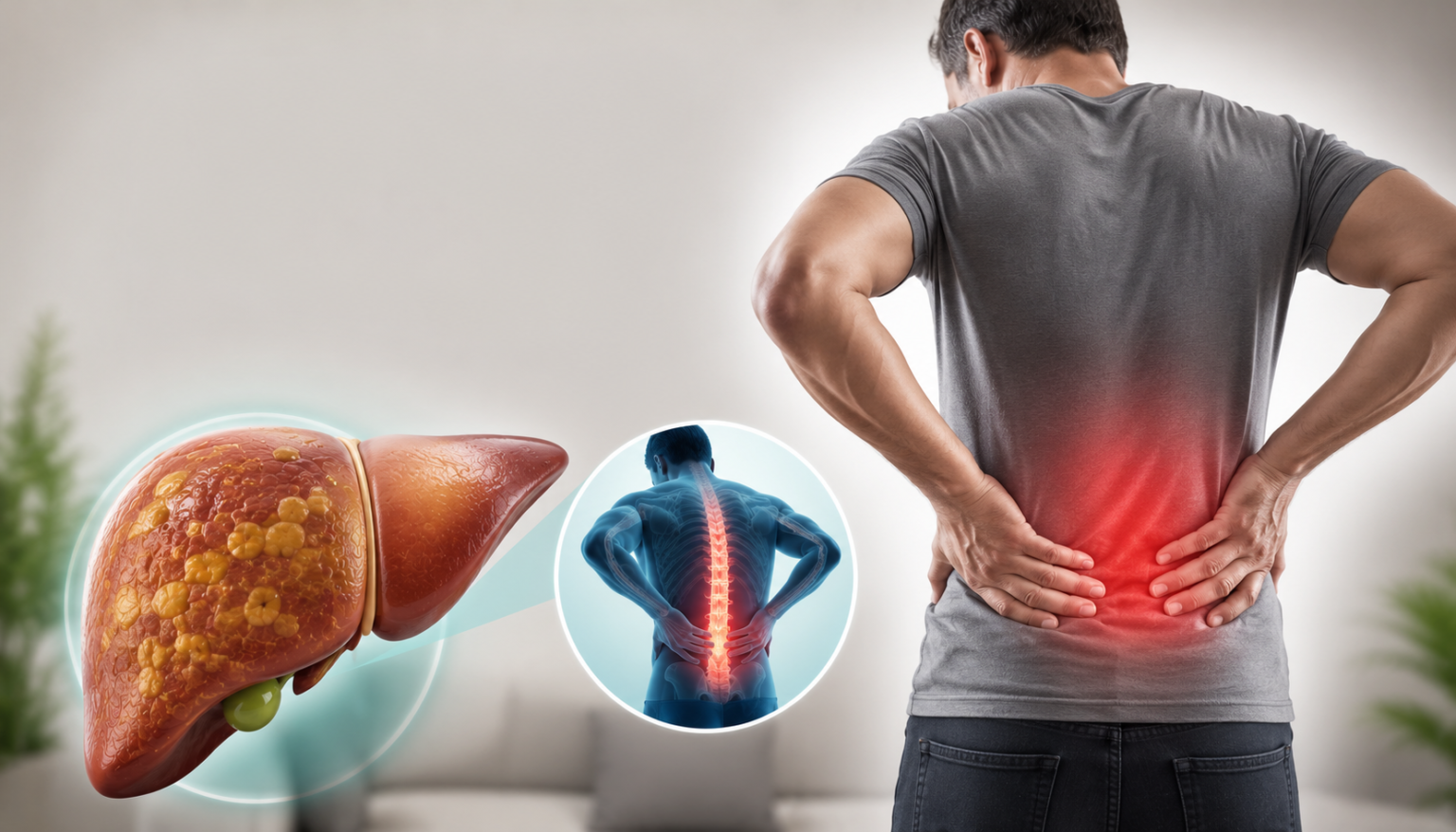
Many people ask will a fatty liver cause back pain when they feel discomfort in their upper body and start worrying about their liver health. The honest answer is that fatty liver does not directly cause typical back pain in most cases, especially in the early stages when the condition is silent.
However, as fat builds up and the liver becomes enlarged or inflamed, some people do feel a dull ache that can radiate from the right side of the abdomen toward the back or shoulder blade area. This article breaks down exactly what fatty liver disease is, how its pain actually feels, and how to tell it apart from ordinary back problems.
Understanding Fatty Liver Disease
Before figuring out will a fatty liver cause back pain, it helps to understand what this condition actually is. Fatty liver happens when excess fat builds up inside liver cells, and it can range from a harmless condition to a more serious disease depending on how far it progresses.
What Is Fatty Liver
Fatty liver is a condition where fat accumulates in liver tissue beyond what is considered normal. A small amount of fat in the liver is common, but when it exceeds five to ten percent of the liver’s weight, doctors classify it as fatty liver disease. In its early stage, it rarely produces noticeable symptoms, which is why many people only discover it during routine blood work or an unrelated ultrasound scan.
Types of Fatty Liver Disease
There are two broad categories doctors use to classify this condition. Non-alcoholic fatty liver disease, or NAFLD, develops in people who drink little or no alcohol and is usually linked to obesity, diabetes, or poor diet choices. Alcoholic fatty liver disease, on the other hand, develops from consistent heavy alcohol consumption over time, and it tends to progress faster if drinking continues.
Stages of Fatty Liver Disease
Fatty liver disease does not stay the same forever; it can move through distinct stages if left unmanaged. The table below summarizes these stages clearly.
| Stage | What Happens | Symptom Level |
| Simple Steatosis | Fat builds up but no inflammation | Usually none |
| NASH | Fat plus inflammation and cell damage | Mild fatigue, discomfort |
| Fibrosis | Scar tissue starts forming | Occasional pain, tiredness |
| Cirrhosis | Severe scarring, liver function drops | Pain, swelling, jaundice |
Common Causes and Risk Factors
Several everyday lifestyle and health factors increase the chances of developing fatty liver. Obesity, insulin resistance,Hypertriglyceridemia, poor diet, lack of physical activity, and regular alcohol use are among the most common contributors. People with type 2 diabetes are particularly prone to this condition because their bodies struggle to process fat and sugar efficiently.
Does Fatty Liver Really Cause Back Pain?
This is the core question people search for, and the answer depends heavily on how advanced the fatty liver has become. In simple terms, early fatty liver rarely causes any pain at all, while more progressed stages can create discomfort that spreads toward the back.



Direct Answer: Myth vs Fact
The idea that fatty liver directly causes classic lower back pain is largely a myth. What actually happens is that an enlarged or inflamed liver can press against surrounding tissue and nerves, creating referred pain that some people describe as back discomfort, even though the real source is the liver itself.
Why Fatty Liver Is Often Silent
The liver does not have many pain receptors on its surface, which is why fatty liver often stays silent for years. Pain typically only appears once the liver swells enough to stretch its outer capsule or when inflammation reaches a noticeable level, which usually happens in the NASH or fibrosis stage rather than in simple fatty liver.
How Liver Enlargement Affects Nearby Areas
When the liver becomes enlarged, it can push against the diaphragm and nearby muscles, and this pressure sometimes translates into a dull sensation felt near the lower right ribs or upper back. This is different from muscular back pain because it usually does not worsen with movement or posture changes.
Difference Between Liver Pain and True Back Pain
True back pain generally worsens with bending, lifting, or sitting for long periods, while liver-related discomfort tends to stay steady regardless of posture and often comes with digestive symptoms like bloating or nausea. Recognizing this difference helps people decide whether their pain needs a liver check or a musculoskeletal one.
How Fatty Liver Pain Actually Feels?
People who do experience liver-related discomfort describe it in fairly consistent ways, and knowing this pattern helps separate it from other causes of pain. This pain has a specific location and behavior that sets it apart from ordinary back strain.
Location of the Discomfort
Fatty liver discomfort is usually felt in the upper right side of the abdomen, just below the ribs, since this is where the liver sits. Some people notice it radiating slightly toward the right side of the back or between the shoulder blades, though it rarely spreads to the lower back.
Radiating Pain Pattern
Because nerves in this area share pathways with the back and shoulder region, liver-related discomfort can sometimes be felt as a referred ache rather than staying confined to the abdomen. This referred pattern is one reason people mistakenly think their back is the problem when the liver is actually involved.
Dull Ache vs Sharp Pain
Fatty liver discomfort is almost always described as a dull, heavy, or pressing sensation rather than a sharp or stabbing pain. Sharp pain in this region is more commonly linked to gallbladder issues or other conditions, so its presence should not automatically be blamed on fatty liver.
Common Pain Triggers
Certain activities can make liver-related discomfort more noticeable, including eating heavy or fatty meals, lying on the right side, or sitting in a hunched position for long periods. Recognizing these triggers can help someone track whether their discomfort is genuinely related to liver strain.
Other Symptoms That Often Come With Fatty Liver
Back or abdominal discomfort rarely appears alone, and fatty liver usually brings a cluster of related symptoms. Watching for these additional signs gives a clearer overall picture of liver health.
Fatigue and General Weakness
Persistent tiredness is one of the most commonly reported symptoms of fatty liver disease, even in its earlier stages. This happens because the liver plays a central role in energy metabolism, and when it is not functioning at full efficiency, the entire body can feel drained.
Digestive Discomfort and Bloating
Many people with fatty liver report bloating, mild indigestion, or a feeling of fullness after eating even small meals. This occurs because fat buildup can slightly affect how efficiently the liver processes nutrients and bile.
Appetite and Weight Changes
Unexplained weight loss or gain, along with reduced appetite, can accompany fatty liver disease as it progresses. These changes are often gradual, which is why many people overlook them until a doctor points out the connection during a checkup.
Advanced Symptoms Like Jaundice and Swelling
In more serious stages such as cirrhosis, symptoms like yellowing of the skin or eyes, swelling in the legs, and fluid buildup in the abdomen can appear. These symptoms indicate the liver is struggling significantly and require prompt medical attention.
When Back Pain Is NOT Related to Fatty Liver?
Since fatty liver rarely causes true back pain, it is worth understanding the more common reasons people experience it. Ruling these out often brings much-needed clarity and peace of mind.
Muscle Strain and Posture Issues
Sitting for long hours, poor lifting technique, or weak core muscles are among the most frequent causes of everyday back pain. This type of pain typically worsens with specific movements and improves with rest or stretching.
Spinal and Joint Problems
Conditions like herniated discs, arthritis, or general wear and tear on the spine can cause chronic back pain that has nothing to do with liver health. These issues are usually confirmed through physical examination or imaging like an X-ray or MRI.
Kidney-Related Pain
Kidney problems, including infections or stones, often cause pain in the mid to lower back, sometimes on just one side. This pain is usually sharper and may come with other symptoms like changes in urination.
Gallbladder and Pancreas Issues
Since the gallbladder sits close to the liver, gallstones or gallbladder inflammation can also cause upper right abdominal pain that spreads to the back, closely resembling liver discomfort. Pancreatitis can produce similar referred pain patterns as well, which is why proper diagnosis matters.
How to Tell the Difference Between Liver Pain and Back Pain?
Because these two types of pain can feel similar, comparing their patterns side by side makes the distinction much clearer. This comparison also helps people decide when a liver test versus a spinal check might be more appropriate.
Location and Pattern Comparison
| Feature | Liver-Related Pain | Musculoskeletal Back Pain |
| Location | Upper right abdomen, sometimes upper back | Lower or mid back |
| Pain Type | Dull, steady ache | Sharp, movement-related |
| Triggers | Heavy meals, lying on right side | Bending, lifting, sitting |
| Other Symptoms | Fatigue, bloating, nausea | Stiffness, limited mobility |
Associated Symptoms to Watch
Liver-related discomfort almost always comes paired with digestive symptoms or fatigue, while muscular back pain is more often isolated to the back and worsens with specific physical actions. Paying attention to this combination of symptoms is often more revealing than the pain location alone.
Diagnosis: How Doctors Confirm Fatty Liver?
Since fatty liver often hides without clear symptoms, proper diagnosis requires specific medical tests rather than guesswork. Doctors typically combine several methods to confirm the condition accurately.
Blood Tests and Physical Exams
Liver function tests measure enzyme levels in the blood, and elevated results often prompt further investigation into fatty liver disease. A physical exam may also reveal an enlarged liver, which doctors can sometimes detect through gentle abdominal palpation.
Imaging and Advanced Testing
Ultrasound is usually the first imaging tool used because it is quick and non-invasive, while a FibroScan can measure liver stiffness to check for scarring. In more uncertain cases, doctors may recommend a CT scan, MRI, or in rare situations, a liver biopsy for a definitive diagnosis.
When to See a Doctor
While mild fatty liver rarely needs urgent care, certain warning signs should never be ignored. Recognizing these red flags early can prevent more serious liver complications down the road.
Warning Signs That Need Attention
Severe or worsening abdominal pain, persistent yellowing of the skin or eyes, unexplained swelling, confusion, or extreme fatigue are signals that require prompt medical evaluation. These symptoms suggest the liver may be under significant stress and should not be self-managed at home.
Treatment and Management of Fatty Liver
The encouraging news about fatty liver disease is that it is often reversible, especially when caught early and managed through consistent lifestyle changes. Treatment usually focuses on removing the root causes rather than just easing symptoms.
Lifestyle and Dietary Changes
Gradual weight loss, regular physical activity, and a balanced diet rich in vegetables, lean protein, and whole grains are the foundation of fatty liver management. Cutting back on sugar, refined carbohydrates, and fried foods also plays a major role in reducing liver fat over time.
Medical Support and Monitoring
Doctors may recommend managing related conditions like diabetes, high cholesterol, or high blood pressure alongside liver care, since these often worsen fatty liver together. Regular checkups and blood tests help track improvement and catch any progression early.
Prevention Tips for Long-Term Liver Health
Preventing fatty liver largely comes down to sustainable daily habits rather than short-term fixes. The following list highlights practical steps that support long-term liver health.
- Maintain a healthy body weight through gradual, steady changes rather than extreme dieting.
- Limit alcohol consumption or avoid it entirely if you already have liver concerns.
- Reduce intake of sugary drinks, processed snacks, and fried foods.
- Stay physically active with regular walking, strength training, or cardio exercise.
- Schedule routine health checkups to catch early liver changes before symptoms appear.
Frequently Asked Questions
Can fatty liver cause lower back pain specifically? Fatty liver rarely causes true lower back pain, since its discomfort is usually centered in the upper right abdomen and occasionally the upper back or shoulder blade area.
Can fatty liver cause pain between the shoulder blades? In some advanced cases, referred pain from an inflamed liver can be felt between the shoulder blades, though this is less common than upper right abdominal discomfort.
How long does fatty liver related pain usually last? Discomfort tends to come and go depending on diet and liver inflammation levels, rather than being constant, and it often improves once lifestyle changes are made.
Is fatty liver disease reversible? Yes, particularly in its earlier stages, fatty liver can often be reversed through consistent weight management, dietary changes, and reduced alcohol intake.
Conclusion
So, will a fatty liver cause back pain? In most cases, no, not in the way people typically imagine back pain, but advanced fatty liver can create referred discomfort near the upper back through liver enlargement and inflammation.
Anyone experiencing persistent pain alongside fatigue, bloating, or digestive changes should get proper testing rather than assuming the cause. Early lifestyle changes remain the most effective way to protect liver health and prevent complications down the line.
Related Articles
Why does my stomach hurt when I cough? Causes, warning signs & when to see a doctor
Can a Torodol Shot Help Neck Pain? Benefits, Risks, and What to Expect
Ear Piercing Pain Scale: A Complete Guide to Pain Levels for Every Piercing