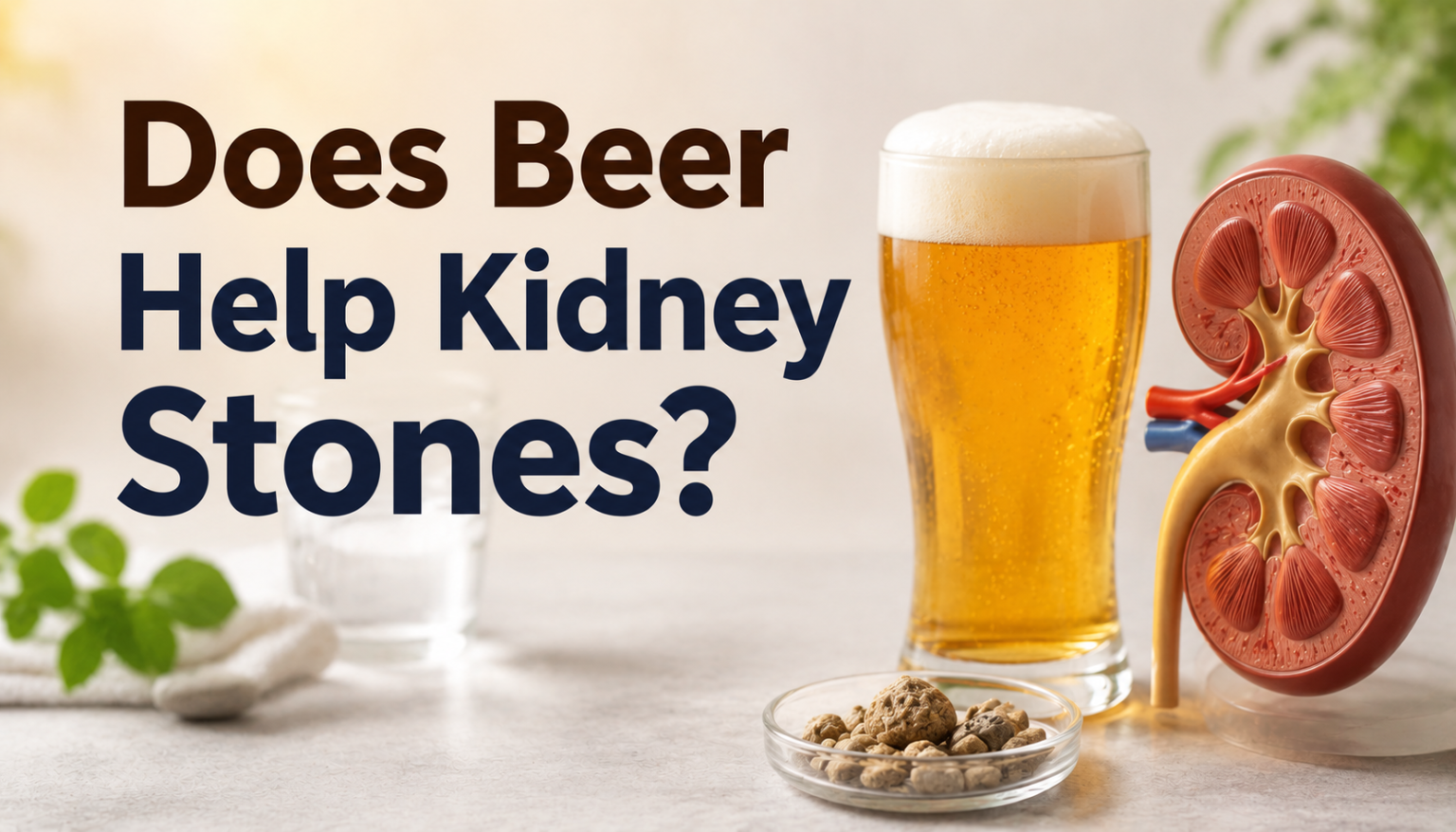
Many people believe that drinking beer can help kidney stones faster because of its diuretic effect on the body. This idea has been repeated for years, especially among people searching for a quick home remedy during a painful episode.
However, the real answer is more complicated than a simple yes or no. Beer may increase urine flow, but it also carries risks that can outweigh any short-term benefit. Understanding how kidney stones form, how beer actually affects the body, and what medical research says will help you make a safer and more informed decision the next time this question comes to mind.
Key Takeaways
- Beer’s diuretic effect may help move very small kidney stones, but it is not a proven treatment.
- Beer contains oxalates and purines, both of which are linked to stone formation.
- Alcohol’s dehydrating effect can work against the body’s natural stone-prevention process.
- Water and citrate-rich fluids are the medically preferred choices for prevention and passage.
- No major clinical study confirms beer as a safe or reliable remedy for kidney stones.
What Are Kidney Stones and How Do They Form?
Kidney stones are hard deposits made of minerals and salts that form inside the kidneys when urine becomes too concentrated. This concentration allows crystals to stick together over time, gradually forming a solid mass that can range from the size of a grain of sand to a small pebble. The sections below explain the common types of stones, the factors that raise a person’s risk, and the symptoms that usually signal their presence.
Common Types of Kidney Stones
The most frequent type is the calcium oxalate stone, which forms when calcium combines with oxalate in the urine. Uric acid stones develop when the body produces too much uric acid, often linked to diet or metabolic conditions. Struvite and cystine stones are less common and usually tied to infections or inherited disorders.
Main Risk Factors for Stone Formation
Low fluid intake is one of the biggest contributors, since it allows minerals to concentrate rather than flush out naturally. A diet high in sodium, animal protein, or oxalate-rich foods like spinach and nuts also raises the risk. Family history, certain medications, and underlying health conditions such as obesity can further increase the likelihood of developing stones.
Common Symptoms to Watch For
A kidney stone often causes sharp pain in the back or side, sometimes spreading toward the lower abdomen. Other signs include blood in the urine, nausea, and a frequent or painful urge to urinate. When these symptoms appear suddenly and intensely, medical evaluation is strongly recommended rather than waiting it out at home.
The Beer-and-Kidney-Stones Theory Explained
The belief that beer helps kidney stones is based mainly on its diuretic properties, which increase urine production. This section breaks down why the idea became popular, what the diuretic effect really accomplishes, and where its usefulness stops working in practice.
Why People Believe Beer Helps
The theory spread because increased urination is often associated with “flushing out” the body, and beer is known to make people urinate more frequently. Since passing more urine can sometimes carry small stones out naturally, people assumed beer must be actively helping the process. This idea, however, oversimplifies how stone movement actually works inside the urinary tract.



The Diuretic Effect — What It Actually Does
Beer’s alcohol content signals the kidneys to reduce water reabsorption, leading to more frequent urination. This does increase total urine volume for a short period, which can create enough pressure to help a very small stone move along. But this effect is temporary and does not address the underlying causes of stone formation in any meaningful way.
Limitations of Passage Based on Stone Size
Even with increased urine flow, a stone larger than about five millimeters is unlikely to pass through the urinary tract, since the exit passage is only around three millimeters wide. Attempting to force passage in these cases can lead to severe pain, blockage, or complications requiring emergency care. This size limitation is one of the most important facts often left out of casual beer remedies.
How Beer May Contribute to Kidney Stones?
While beer is often discussed as a possible aid, several of its properties can actually work against kidney health. This section explains the main compounds and effects in beer that raise concern for people prone to stones.
Oxalate Content in Beer
Beer naturally contains oxalates, the same compound responsible for the most common type of kidney stone. Regular consumption can add to the body’s overall oxalate load, especially when combined with an already oxalate-rich diet. Over time, this may increase the chances of new calcium oxalate stones forming rather than preventing them.
Purines and Uric Acid Stones
Beer, particularly regular and craft varieties, contains purines that break down into uric acid once metabolized. Elevated uric acid levels are a direct risk factor for uric acid stones, one of the more painful and recurring types. People who already have gout or high uric acid levels should be especially cautious with beer intake.
Dehydration Risk from Alcohol
Although beer increases urination in the short term, alcohol is ultimately dehydrating to the body as a whole. Reduced hydration concentrates the very minerals that lead to stone formation, working directly against the goal of prevention. This is why relying on beer for hydration is considered counterproductive by most medical professionals.
Weight Gain and Metabolic Risk Factors
Regular beer consumption contributes to excess calorie intake, which can lead to weight gain over time. Obesity is a well-documented risk factor for kidney stones due to its effect on urine composition and metabolic function. Combining this risk with beer’s oxalate and purine content further weakens the case for beer as a helpful remedy.
What Medical Research Says?
Medical literature on beer and kidney stones is limited and often inconclusive, but several patterns are consistently observed by researchers and physicians. This section reviews what studies suggest, why correlation should not be mistaken for causation, and what urologists generally recommend to patients.
Studies on Moderate Alcohol and Stone Risk
Some observational research has noted a possible association between moderate alcohol consumption and lower stone recurrence in certain populations. However, these studies typically do not isolate beer as a standalone factor, making it difficult to draw firm conclusions. The findings are considered preliminary rather than a basis for recommending beer as prevention.
Why Correlation Isn’t Causation Here
Just because moderate drinkers show slightly different stone rates does not mean beer directly causes the difference. Other lifestyle factors, such as overall diet, physical activity, and fluid intake, likely play a much larger role in the outcomes observed. Treating beer as a direct cause based on this kind of data oversimplifies a complex health picture.
Expert Consensus from Urologists
Most urologists and nephrologists do not recommend beer as a treatment or prevention method for kidney stones. Instead, they consistently point to plain water, dietary adjustments, and medical management as the safest and most effective approaches. Any perceived benefit from beer is generally viewed as incidental rather than intentional or reliable.
Beer vs. Water vs. Other Fluids for Kidney Stones
Choosing the right fluid matters more than most people realize when it comes to kidney stone prevention and management. The table below compares common fluid choices and their actual effect on stone risk.
| Fluid | Effect on Kidney Stones | Recommended? |
| Water | Dilutes urine and reduces concentration of stone-forming minerals | Yes |
| Lemon Water | Contains citrate, which helps prevent calcium from binding into stones | Yes |
| Orange Juice | High in citrate, similar protective effect to lemon water | Yes, in moderation |
| Beer | Diuretic short-term, but high in oxalates and purines | No |
| Soda | Dehydrating and linked to higher sugar-related stone risk | No |
| Coffee | Evidence is mixed; moderate intake appears roughly neutral | Caution |
Safer, Evidence-Based Ways to Pass or Prevent Kidney Stones
Rather than relying on beer, several proven strategies exist for reducing stone risk and supporting natural passage. This section outlines hydration targets, dietary changes, and when professional care becomes necessary.
Hydration Guidelines
Most medical guidelines recommend drinking enough fluid to produce close to two to three liters of urine per day. Plain water remains the most effective and safest option for achieving this consistently. Spreading fluid intake evenly throughout the day is more helpful than drinking large amounts at once.
Dietary Adjustments
Reducing sodium intake helps limit calcium excretion into the urine, lowering the risk of calcium-based stones. Moderating animal protein and being mindful of oxalate-rich foods, such as spinach and certain nuts, also supports prevention. These small, consistent changes tend to have a greater long-term impact than any single beverage choice.
When to See a Doctor
Severe pain, fever, blood in the urine, or inability to urinate are signs that require immediate medical attention rather than home remedies. A doctor can confirm stone size and location through imaging and recommend appropriate treatment, which may include medication or minimally invasive procedures. Waiting too long in serious cases can lead to complications affecting long-term kidney function.
FAQ Section
Can beer dissolve kidney stones? No, beer cannot dissolve existing kidney stones in any documented medical sense. Its diuretic effect may assist with very small stones, but it does not break down mineral deposits already formed.
Is any type of alcohol safe when you have a kidney stone? Alcohol in general is not recommended during an active kidney stone episode due to its dehydrating effects. If pain or blockage is present, alcohol can worsen discomfort and should be avoided until cleared by a doctor.
What is the fastest way to pass a small kidney stone naturally? Drinking plenty of water throughout the day remains the most effective natural method for encouraging passage. Light physical activity and pain management, as advised by a doctor, can also support the process safely.
Does beer cause kidney stones, or does it simply fail to help? Beer does not directly cause stones in every case, but its oxalate and purine content can contribute to risk over time. For people already prone to stones, regular beer consumption is more likely to add risk than provide benefit.
How much water should I drink daily to help prevent kidney stones? Most guidelines suggest enough water to produce roughly two to three liters of urine daily, though individual needs vary. Consulting a doctor for a personalized hydration target is recommended, especially for those with a history of stones.
Conclusion
The idea that beer helps kidney stones is only partly true and comes with significant risks attached.
While its diuretic effect may assist in passing very small stones, its oxalate content, purine levels, and dehydrating nature make it an unreliable and potentially harmful choice overall.
Water, dietary care, and timely medical attention remain the safest and most effective path for anyone dealing with kidney stones.
Related Posts
How to Sleep with a Pinched Nerve in a Shoulder Blade?
Mental Health Retreat Covered by Insurance: Complete Guide to Coverage, Costs, and Approval
Does a Yeast Infection Cause Cramps? Symptoms, Causes
Vege Health Foods: Complete Guide to Products, Benefits, Quality, and Plant-Based Living
Can Lack of Sleep Cause Nausea? Here’s What’s Really Going On