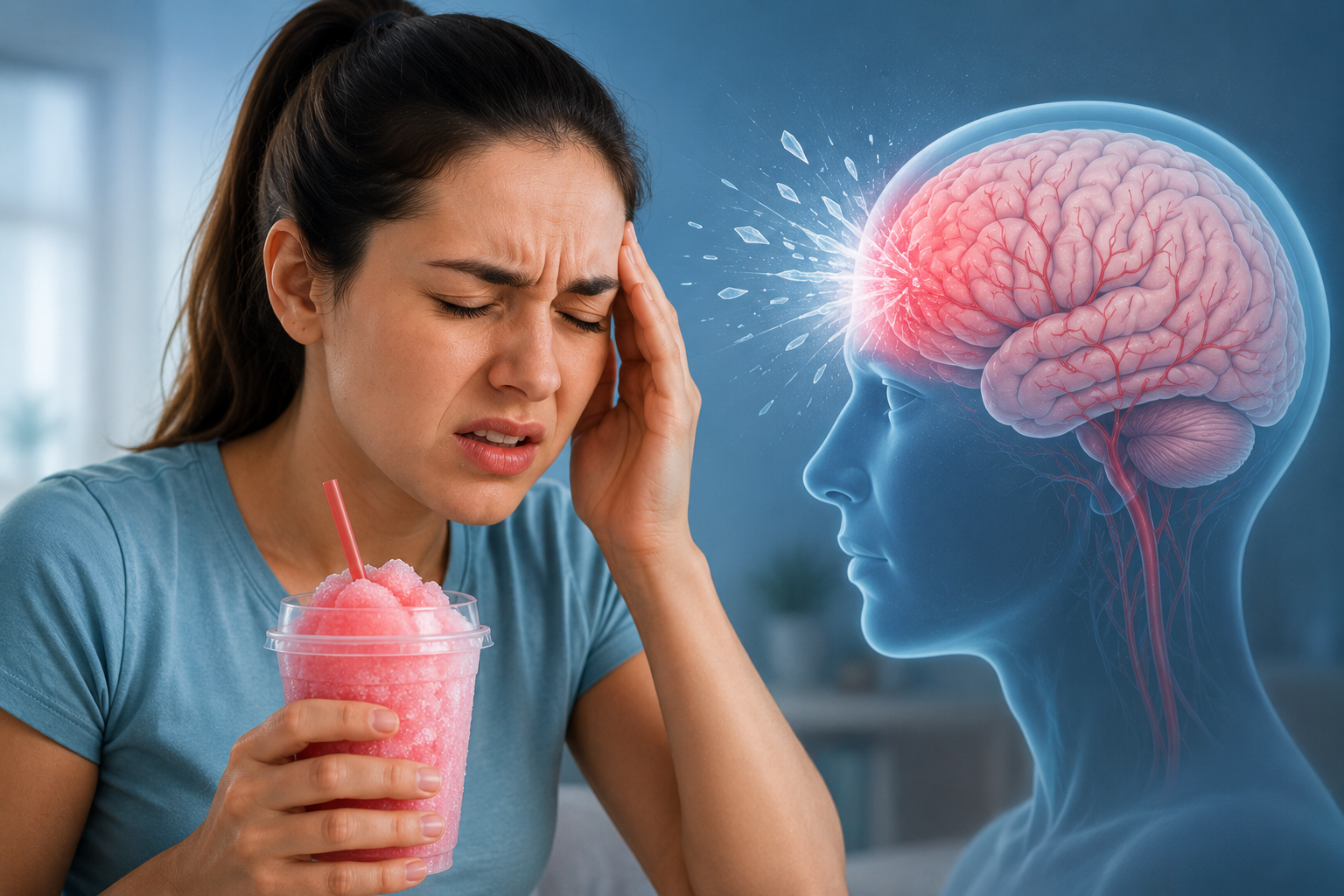
That sudden stabbing pain behind your forehead after a big bite of ice cream or a fast gulp of a slushy is something almost everyone has felt at least once. If you have ever wondered how do I get rid of brain freeze the moment it hits, the answer lies in a quick nerve reaction, not anything actually happening inside your brain.
Medically known as sphenopalatine ganglioneuralgia, brain freeze occurs when something very cold touches the roof of your mouth too fast. The good news is that it is completely harmless and usually fades within a minute or two on its own.
Still, when you are in the middle of it, those seconds can feel much longer, which is exactly why this reaction sends so many people searching for relief in the moment. This guide explains why it happens, how to stop it fast, and how to avoid it altogether so your next cold treat stays enjoyable from start to finish.
Key Takeaways
Brain freeze is a temporary nerve reaction caused by cold touching the roof of the mouth, not a sign of anything dangerous.
It usually lasts under a minute and responds well to simple warming tricks like pressing your tongue to your palate or sipping something warm.
Eating and drinking cold foods slowly is the most reliable way to prevent it from happening in the first place.
Children and people prone to migraines tend to experience it more often and more intensely than others.
In very rare cases, sudden head pain unrelated to cold food may need medical attention, which this guide also touches on briefly.



What Is Brain Freeze? Understanding the Science Behind the Name
Brain freeze is not actually your brain freezing at all. It is a nerve response triggered in the roof of your mouth that your body misreads as pain coming from your head.
Why Doctors Call It Sphenopalatine Ganglioneuralgia
The formal medical term, sphenopalatine ganglioneuralgia, refers to the cluster of nerves near the roof of the mouth that reacts to sudden cold. When these nerves are triggered, they send a pain signal toward the trigeminal nerve, which also carries sensation from the face and forehead. Because the trigeminal nerve covers such a wide area, the brain interprets the signal as pain in the forehead rather than the mouth, which is why the discomfort feels like a headache instead of a mouth issue.
What Causes Brain Freeze — The Science Behind the Chill
Brain freeze happens because of a rapid temperature change against sensitive tissue, not because anything is actually harmed inside your head. Understanding the mechanism makes it much easier to see why the quick-relief tricks in the next section actually work.
How Cold Temperature Triggers the Response
When something very cold touches the roof of your mouth, the blood vessels there react almost instantly. According to Cleveland Clinic, this sudden cold exposure causes the blood vessels in the palate to constrict and then rapidly widen again as the area tries to warm back up. This fast shift in blood vessel size is what irritates the nearby nerves and sets off the pain signal people recognize as brain freeze.
The Role of Blood Vessels and Nerve Signals
Once the blood vessels widen quickly, the nerves surrounding them become temporarily oversensitive. This oversensitivity is what sends the sharp signal up through the trigeminal nerve toward the forehead. The whole process happens within seconds, which explains why brain freeze appears almost instantly after a cold bite or sip rather than building up gradually like a typical headache.
How Long Does the Brain Freeze Usually Last?
For most people, brain freeze peaks within about ten to twenty seconds and fully disappears within one to two minutes, even without doing anything.
The intensity usually depends on how cold the food or drink was and how quickly it touched the palate. W
Arming techniques, covered in detail below, can shorten this window significantly, sometimes cutting the discomfort down to just a few seconds.
How Do I Get Rid of Brain Freeze Immediately?
Since brain freeze is caused by rapid cooling, the fastest way to stop it is to warm the roof of the mouth back up as quickly as possible. The methods below are simple, require no equipment, and can be done anywhere.
Press Your Tongue Against the Roof of Your Mouth
This is the single most recommended trick for a reason. Pressing your tongue firmly against the roof of your mouth transfers warmth directly to the area that triggered the nerve response. Hold it there for about ten to fifteen seconds, and most people notice the pain fading almost immediately.
Sip Something Warm Right Away
If warm water, tea, or even room-temperature water is nearby, taking a small sip helps counteract the cold that caused the reaction. The warmth reaches the same nerves that were just irritated, calming them down faster than simply waiting it out. This works especially well after a large gulp of a very cold drink.
Cup Your Hands Over Your Mouth and Nose
Cupping your hands over your mouth and nose and breathing normally raises the temperature of the air you inhale. This warmer air passes over the roof of the mouth and helps ease the nerve irritation from the inside. It is a useful option when no warm drink is available.
Pause and Let Your Mouth Warm Up Naturally
Simply stopping the cold food or drink and giving your mouth a short break allows natural body warmth to restore balance on its own. Combined with any of the tricks above, this pause usually shortens the entire episode to well under a minute.
The steps above can also be followed in this quick order when brain freeze hits:
- Stop eating or drinking the cold item immediately.
- Press your tongue to the roof of your mouth for ten to fifteen seconds.
- Sip something warm if it is available.
- Cup your hands over your mouth and nose and breathe normally until the discomfort fades.
How to Prevent Brain Freeze Before It Starts?
Prevention is far easier than treatment, and it mostly comes down to how quickly cold food or drink reaches the roof of your mouth. A few small habit changes can make a noticeable difference over time.
Eat and Drink Cold Items Slowly
Taking smaller bites or sips gives your mouth time to adjust gradually instead of being hit with a sudden temperature drop. This single habit change prevents the majority of brain freeze episodes for most people, especially with ice cream, slushies, and iced drinks consumed quickly on a hot day.
Warm the Food Slightly in Your Mouth First
Letting a small bite or sip sit near the front of your mouth for a second before swallowing gives it a moment to warm slightly before reaching the more sensitive roof area. This small pause reduces the shock to the nerves and lowers the chance of triggering the reaction altogether.
Who Is More Prone to Getting a Brain Freeze?
Not everyone experiences brain freeze the same way. Children tend to report it more often, possibly because they eat quickly and are more sensitive to sudden sensations.
People who already experience migraines are also known to be more prone to frequent or more intense brain freeze episodes, since their nerve pathways may already be more reactive to sudden triggers.
When Brain Freeze Could Signal Something More Serious
In the vast majority of cases, brain freeze is completely harmless and resolves on its own within minutes.
However, if head pain occurs without any cold food or drink involved, lasts far longer than a couple of minutes, or comes with other symptoms like vision changes or confusion, it is worth speaking with a healthcare provider, since this would no longer match the typical pattern of a cold-triggered reaction.
Quick Comparison: Home Relief Methods
| Method | How It Works | Typical Speed of Relief |
| Tongue on roof of mouth | Transfers body warmth directly to the affected area | 10–15 seconds |
| Warm sip of water or tea | Counteracts the cold that triggered the nerves | 15–20 seconds |
| Cupped hands over mouth/nose | Warms the air reaching the roof of the mouth | 20–30 seconds |
| Simply pausing | Allows natural body warmth to restore balance | Up to 1–2 minutes |
Frequently Asked Questions
How do I get rid of brain freeze fast? Press your tongue against the roof of your mouth for about ten to fifteen seconds, which is the quickest way to ease the pain for most people.
Is brain freeze dangerous? No, it is a harmless, short-lived nerve reaction and is not linked to any lasting damage.
Why do kids get brain freeze more often? Children often eat or drink quickly and may be more sensitive to sudden sensations, which makes the reaction more noticeable in them.
Can drinking water prevent brain freeze? Sipping room-temperature or warm water between cold bites can help reduce the chance of triggering the nerve response.
Does brain freeze mean something is wrong with my brain? No, the term is misleading. The reaction happens in the mouth and nerves, not inside the brain itself.
Conclusion
Brain freeze is a quick, harmless nerve reaction that responds well to simple warming tricks like pressing your tongue to the roof of your mouth or taking a warm sip of water.
Eating cold treats a little slower is usually enough to prevent it from happening again. With these easy steps, you can enjoy your favorite cold foods and drinks without the icy interruption.