


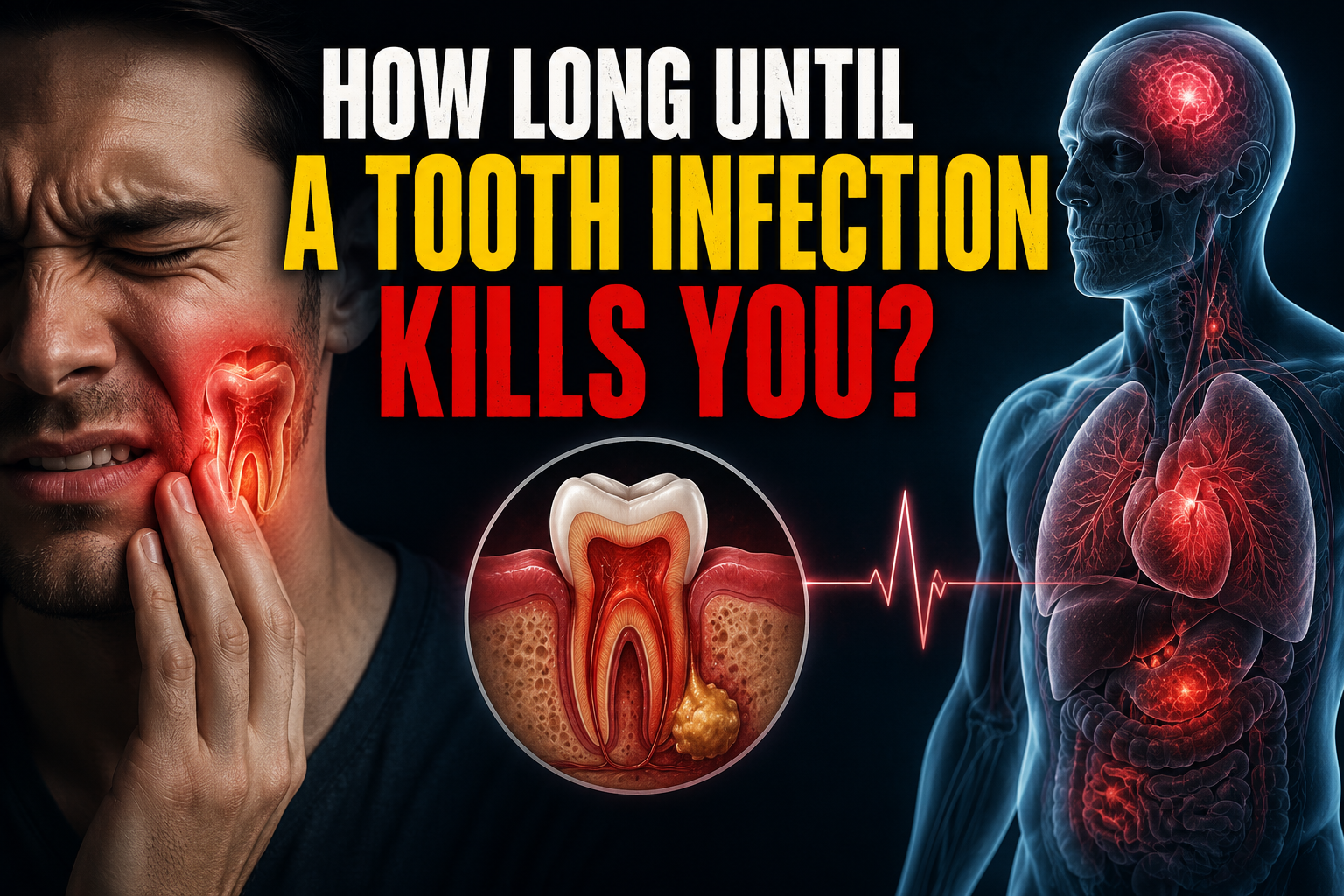
How long until a tooth infection kills you is a question worth taking seriously, not dismissing. A throbbing tooth, a swollen jaw, or a fever that won’t break can feel terrifying when you don’t know if you’re facing a routine dental problem or a true emergency. This guide walks you through the real timeline — from early abscess to life-threatening sepsis — so you know exactly which symptoms mean “call your dentist tomorrow” and which mean “go to the ER right now.”
Most tooth infections never become life-threatening, but the ones that do can turn dangerous within days once they spread past the tooth. Below, you’ll find the stages of infection, the warning signs doctors want you to know, and the specific window where waiting becomes risky.
How Long Until a Tooth Infection Kills You? The Two-Phase Timeline
The honest answer to how long until a tooth infection kills you depends on which phase the infection is in. There are really two very different clocks running here, and confusing them is what makes this topic so unsettling.
Phase one is slow. A dental abscess — a pocket of pus that forms when bacteria invade the tooth’s inner pulp — typically takes weeks to months to develop from an untreated cavity, crack, or gum infection. This is the safest window for treatment.
Phase two is fast. Once bacteria escape the tooth and enter the bloodstream or deep tissue spaces of the neck, the situation can become life-threatening in a matter of days. This is the phase that turns a dental problem into a medical emergency.
Pro Tip: Pain that suddenly decreases during an active infection isn’t always good news. It can mean the nerve tissue inside the tooth has died — not that the infection resolved.
| Stage | Typical Timeline | Risk Level |
| Cavity or crack allows bacteria in | Weeks to months before symptoms | Low |
| Abscess forms, pain and swelling begin | Ongoing if untreated | Moderate — treatable |
| Infection spreads to jaw, neck, or soft tissue | Can begin within days to 1-2 weeks | High — urgent |
| Bloodstream infection (sepsis) or airway involvement | Hours to days once established | Critical — emergency |
Warning Signs That Mean Emergency Room Now, Not Dentist Tomorrow
Knowing the difference between a “see your dentist this week” symptom and a “go to the ER tonight” symptom can genuinely save a life. This is the single most important section on this page.
Go to an emergency room immediately if you have a tooth infection along with any of these:



- Facial or neck swelling that’s spreading or affecting your airway — especially under the jaw or down toward the collarbone.
- Fever above 101°F (38.3°C), or alternatively a body temperature that drops unusually low.
- Difficulty breathing or swallowing, or a sensation that your throat is closing.
- Confusion, extreme fatigue, or a rapid heartbeat — these can signal the infection has entered your bloodstream.
- Skin that feels unusually clammy or cool despite a fever, which can be a sign of early septic shock.
Warning: Do not wait for a dental appointment if you have any of the symptoms above. Call 911 or go directly to an emergency room — these signs can indicate sepsis, Ludwig’s angina, or another complication that progresses faster than a dental office can respond to.
What Happens Inside Your Body Once an Infection Spreads?
Understanding why the timeline accelerates helps explain why this danger window closes so quickly once an infection breaks containment. Three complications account for nearly all dental infection deaths.
Sepsis: The Body’s Overreaction to Infection
Sepsis happens when your immune system’s response to infection spirals out of control and starts damaging your own organs instead of just fighting bacteria. It’s not the infection itself that becomes the biggest threat — it’s your body’s reaction to it.
Sepsis carries serious risk even with treatment. It’s the most expensive medical condition to treat in the U.S., costing an estimated $62 billion annually in hospitalizations and skilled nursing care, which reflects just how aggressively it needs to be managed.
Time matters enormously here: every hour of delayed treatment raises the risk of death by 4% to 9%, according to research highlighted by the Association of American Medical Colleges, which draws on CDC sepsis data.
Ludwig’s Angina: When Swelling Threatens Your Airway
This is a fast-moving infection of the floor of the mouth that can push the tongue upward and backward, physically blocking the airway. It’s one reason facial or under-jaw swelling from a tooth infection should never be ignored.
Cavernous Sinus Thrombosis: When Infection Reaches the Brain
In rare cases, bacteria can travel from the jaw or sinuses toward the brain’s venous drainage system, forming a blood clot. This complication can cause severe headaches, vision changes, or confusion and requires immediate hospital-level care.
Who Is Most at Risk of a Tooth Infection Turning Fatal?
The timeline for this kind of danger isn’t the same for everyone. Certain health factors shrink the safety window considerably.
People in the following groups face a higher risk of rapid complications:
- People with diabetes — elevated blood sugar can impair the immune response needed to contain a bacterial infection.
- Anyone who is immunocompromised — including those on immunosuppressive medication or undergoing cancer treatment.
- Older adults — age-related immune decline plays a measurable role; sepsis-related death rates rise sharply with age, and three-fourths of all U.S. sepsis deaths occur among adults 65 and older.
- Malnourished individuals — the body needs adequate nutritional reserves to mount an effective infection response.
- Young children — their smaller airways make swelling from infections like Ludwig’s angina especially dangerous.
If you fall into one or more of these groups and suspect a tooth infection, treat the timeline as shorter than average and seek care sooner rather than later.
Historical Context: Why Does This Question Feels So Urgent?
Tooth infections weren’t always a manageable problem. Before antibiotics existed, dental infections were genuinely lethal on a large scale — which helps explain why the fear behind this question runs so deep.
Pro Tip: Modern dentistry and antibiotics have transformed this risk dramatically. The danger today comes almost entirely from delayed treatment, not from tooth infections being inherently untreatable.
The shift from “common cause of death” to “rare complication” happened because of three things working together: antibiotic availability, widespread access to dental extraction and root canal therapy, and faster recognition of sepsis symptoms in hospital settings. Removing any one of those three brings risk back up — which is exactly why uninsured or underserved populations face disproportionately higher complication rates today.
What to Do Right Now If You Suspect a Spreading Tooth Infection?
If you’re reading this because you currently have symptoms, here’s the practical path forward.
Step 1: Check for emergency symptoms first. Review the warning signs list above. If any apply, stop and go to an ER — don’t continue trying to schedule a routine appointment.
Step 2: If no emergency symptoms are present, call a dentist the same day. Describe your symptoms clearly, including pain level, swelling, and how long you’ve had them.
Step 3: Don’t rely on antibiotics alone. Antibiotics can calm an infection temporarily, but they don’t remove its source. Once the prescription ends, the infection can return from the same site inside the tooth — and repeated antibiotic courses without definitive treatment also raise the risk of resistant bacteria developing.
Step 4: Get definitive treatment. This usually means a root canal, drainage of the abscess, or extraction, depending on how damaged the tooth is.
Warning: Never attempt to drain a dental abscess yourself, and avoid relying solely on home remedies like saltwater rinses for anything beyond very mild, early symptoms. These can mask symptoms temporarily while the underlying infection continues to spread.
Comparing Mild vs. Severe Tooth Infection Symptoms
| Feature | Mild / Localized Infection | Severe / Spreading Infection |
| Pain pattern | Throbbing, localized to one tooth | May decrease suddenly (nerve death) then worsen broadly |
| Swelling | Limited to gum near the tooth | Spreads to face, jaw, or neck |
| Fever | Absent or low-grade | Above 101°F or unusually low body temp |
| Breathing/swallowing | Normal | Difficulty breathing or swallowing |
| Mental state | Normal alertness | Confusion, extreme fatigue |
| Appropriate action | Dentist appointment within days | Emergency room immediately |
Frequently Asked Questions
How long can a tooth infection go untreated before it becomes dangerous?
An abscess can take weeks to months to form, but once it spreads beyond the tooth, complications can develop within days. The safe window shrinks dramatically once swelling, fever, or fatigue appear.
What are the signs that a tooth infection is spreading?
Watch for spreading facial or neck swelling, fever, chills, rapid heartbeat, confusion, and difficulty swallowing or breathing. Any of these warrant same-day medical attention, not a wait-and-see approach.
Can a tooth infection actually cause sepsis?
Yes. Bacteria from an untreated dental abscess can enter the bloodstream and trigger sepsis, a body-wide inflammatory response that can damage major organs. It’s rare but well-documented in dental and medical literature.
How do you know if a tooth infection has reached your bloodstream?
Signs include high fever, rapid heartbeat, rapid breathing, confusion, extreme fatigue, and clammy skin. These symptoms together suggest a systemic infection and require emergency evaluation, not a dental appointment.
Can you die from a tooth infection overnight?
It’s uncommon but not impossible, particularly if airway-blocking swelling (Ludwig’s angina) or rapid sepsis develops. This is why sudden severe swelling or breathing trouble should never wait until morning.
What happens if you ignore a tooth infection for months?
The bacteria continue destroying tissue and can eventually breach the jawbone, sinuses, or bloodstream. Pain may fluctuate, misleading people into thinking it’s resolving when the infection is actually still active.
Is a swollen face from a tooth infection an emergency?
Often, yes — especially if the swelling is spreading, located below the jaw, or affecting your ability to open your mouth or swallow. Call your dentist immediately, and go to the ER if it affects breathing.
Conclusion
A tooth infection rarely turns fatal when it’s caught early, but the timeline compresses fast once it spreads — from a slow, weeks-long abscess to a days-long medical emergency. The single most useful thing you can do is recognize the warning signs covered above and act on them without delay.
If you currently have tooth pain along with fever, swelling, or breathing difficulty, don’t wait to finish this article — seek emergency care now.
Related Articles
How to Heal Cavities in 2 Days at Home: What Actually Works?
Burning Eyes: Causes, Relief, and When to See a Doctor
Can a Torodol Shot Help Neck Pain? Benefits, Risks, and What to Expect
15 Health Benefits of Soursop Leaves: Nutrition, Uses, Tea Recipe, and Safety Guide
Vege Health Foods: Complete Guide to Products, Benefits, Quality, and Plant-Based Living